

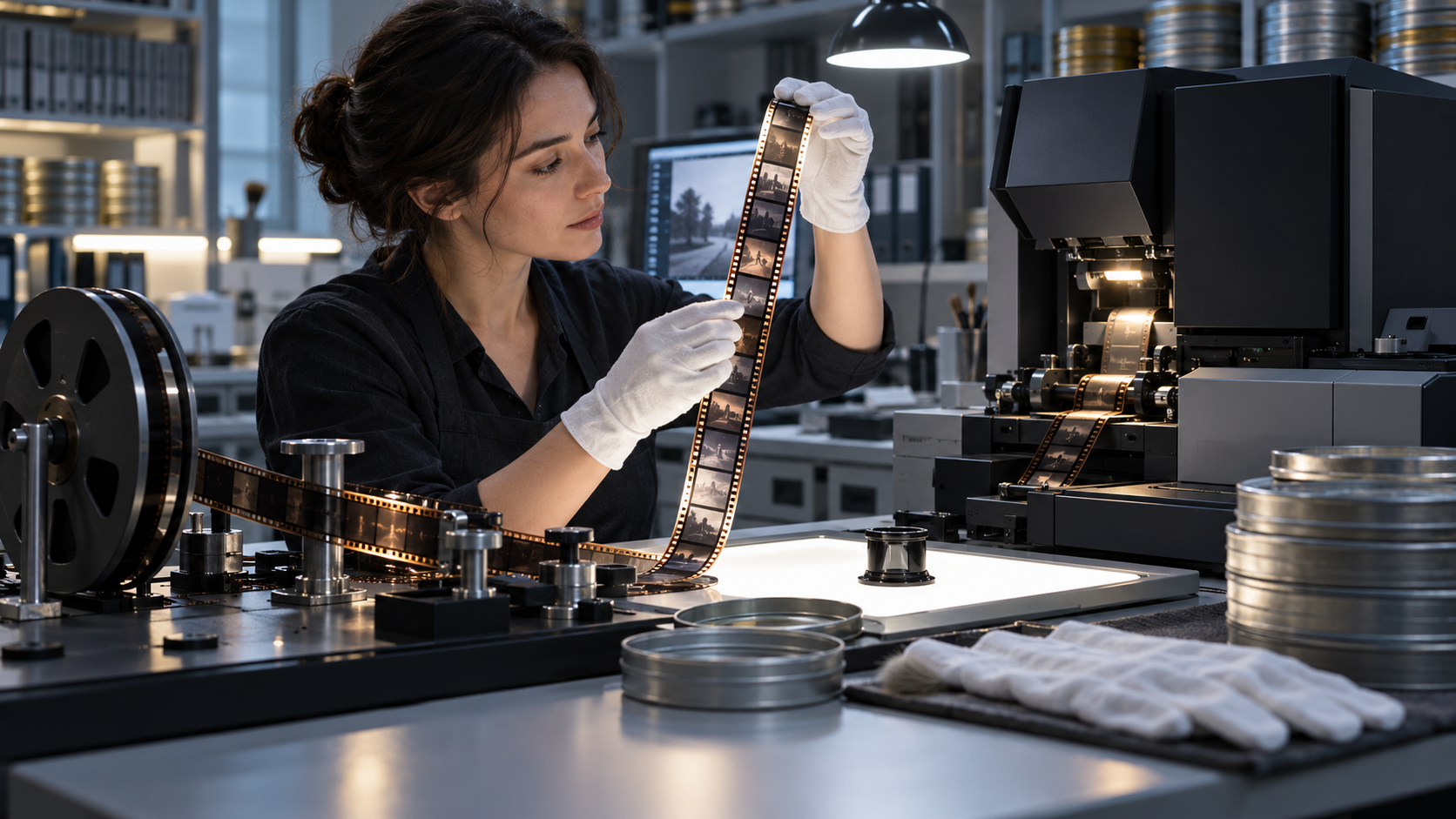
Film Restoration Explainer
Film restoration is the careful process of turning surviving motion-picture materials into a stable, viewable version while preserving evidence about how the work reached us. A restoration can involve physical film, magnetic sound, digital scans, or several generations of copies. The goal is not to make every old image look newly photographed. Archivists first identify what elements survive, how they differ, and which version they represent, because a release print, camera negative, censored export copy, and later reissue may contain different frames, colors, titles, or sound.
Inspection comes before correction. Specialists examine shrinkage, tears, broken perforations, mold, fading dyes, scratches, splices, and chemical decay. Nitrate and acetate stocks demand controlled handling, and cool, dry storage slows further deterioration. Catalog records, edge codes, laboratory markings, cue sheets, censorship files, and earlier releases can help establish provenance. When several elements exist, the team compares completeness, image quality, framing, and soundtrack synchronization rather than automatically choosing the cleanest-looking copy.
A modern workflow may repair film mechanically, clean it, scan it frame by frame, and align picture with sound. Digital tools can stabilize weave, reduce flicker, conceal dirt, and repair damaged frames. Colorists use surviving prints, timing records, and expert judgment to reconstruct contrast and color. Sound specialists address clicks, hum, distortion, and missing passages. Each intervention carries a risk of erasing real texture, altering timing, or creating detail that the original process never captured, so restraint and documentation are essential.
Restoration and preservation are related but not identical. A restored digital master can make a film accessible, yet the original elements still contain information that future technology may recover differently. Archives therefore preserve source materials, new film separations when appropriate, high-quality digital files, checksums, documentation, and playback equipment or format knowledge. A restoration may also have to present more than one historically significant version instead of declaring a single definitive cut. Viewers can evaluate restoration claims by asking which elements were used, what version was reconstructed, whether missing material was replaced, and how changes were documented. A bright, smooth image is not automatically more authentic than one with grain or visible age. The strongest restoration explains its evidence and uncertainties. It treats the film as both an artwork to be experienced and a historical object whose surviving marks, limits, and competing versions should remain available for later study. A practical way to read or discuss Film Restoration is to begin with the basic definition and then identify the choices made in a particular example. Restoration rebuilds a usable presentation from surviving picture and sound elements; preservation keeps those sources stable and documented for the future. Next, ask who sets the relevant rules, who performs the work, and which results follow from creative judgment, law, contracts, technology, budget, or production limits. Similar-looking examples can operate differently because their audience, market, format, timing, and agreements are different. Original film remains valuable after a digital master is made because later tools may recover information or support a different interpretation. It also helps to distinguish a formal industry category from an informal critical label or one organization's current practice. That separation keeps a memorable anecdote from becoming a false universal rule. Dates and territories matter: tools, distribution systems, audience behavior, and standard agreements change, while older examples can preserve assumptions that no longer apply everywhere. When a claim sounds absolute, compare it with a second kind of source and look for the conditions under which the claim is true. Then trace the process from the visible result back through the less visible decisions, handoffs, and quality checks that produced it. A trustworthy restoration identifies its sources, distinguishes fact from judgment, and preserves alternate versions when the evidence supports them. Finally, compare the example with a contrasting case and note which part of the definition still holds. This method keeps the explanation grounded, highlights the people and systems behind the outcome, and leaves room for reasonable disagreement about hybrid or borderline cases.
Restoration rebuilds a usable presentation from surviving picture and sound elements; preservation keeps those sources stable and documented for the future.
Archivists inspect stock condition, provenance, completeness, framing, color, and soundtrack synchronization before choosing or combining elements.
Scanning and digital repair can stabilize motion, remove dirt, mend frames, and balance color, but every correction should be reversible or recorded.
Original film remains valuable after a digital master is made because later tools may recover information or support a different interpretation.
Grain, soft focus, and production artifacts are not necessarily damage, so making an image cleaner can sometimes make it less historically faithful.
A trustworthy restoration identifies its sources, distinguishes fact from judgment, and preserves alternate versions when the evidence supports them.
Explore more "Explainers"
Discover additional explainers across politics, science, business, technology, and other fields. Each explainer breaks down a complex idea into clear, everyday language—helping you better understand how major concepts, systems, and debates shape the world around us.