

“Instead of making a $200 million movie, try making 20 $10 million movies.”
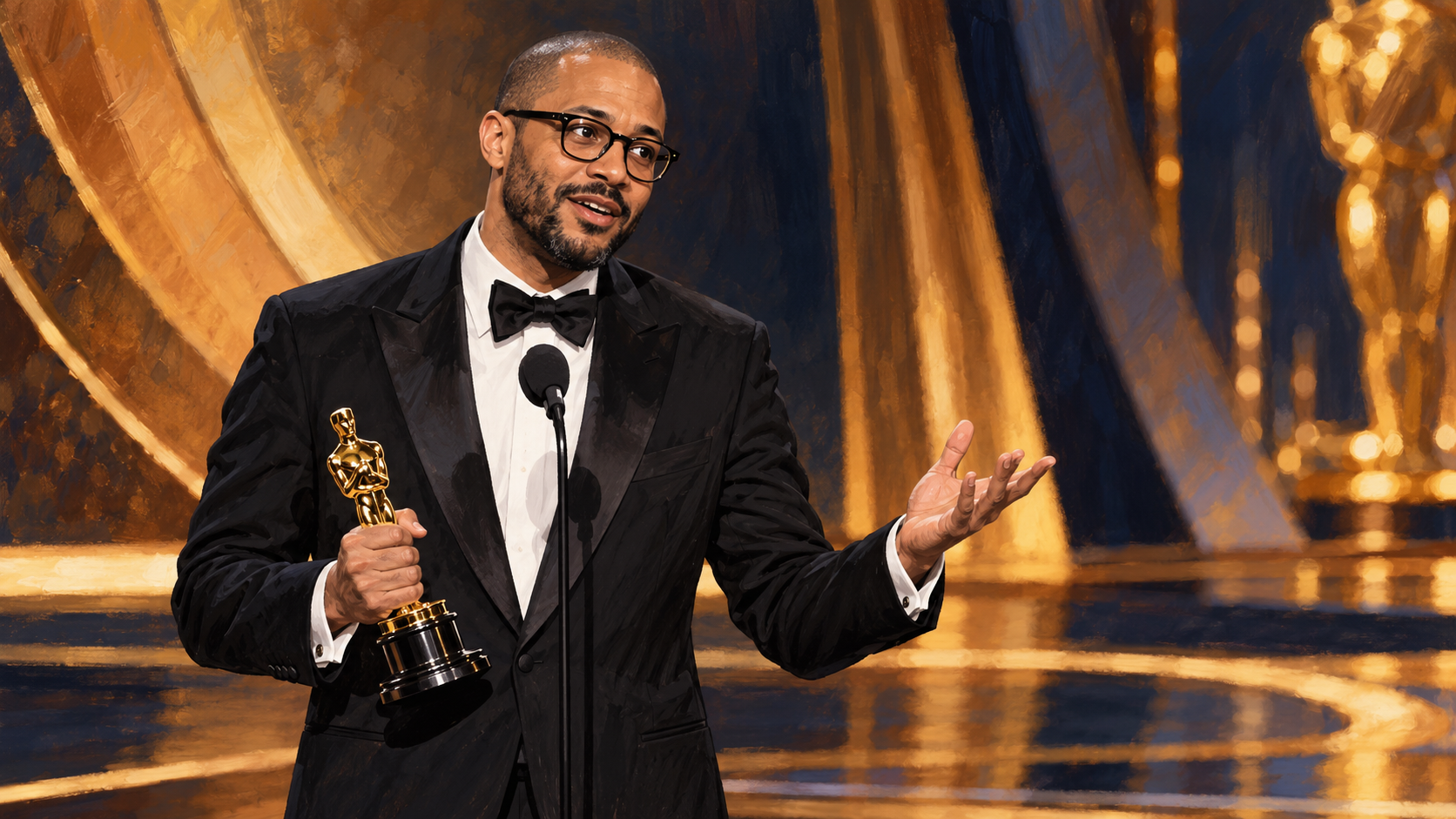
Cord Jefferson offered this proposal in his 2024 Oscar speech after American Fiction won adapted screenplay. After thanking collaborators, he appealed to the industry to recognize more people instead of concentrating enormous resources in a small number of productions. The arithmetic made the argument memorable: one blockbuster-scale budget could become many opportunities for filmmakers whose stories do not fit the safest franchise model. Jefferson was not speaking abstractly about diversity; he connected creative range to how capital is divided before a camera begins recording.
A portfolio of smaller films can distribute risk and widen the range of voices, genres, and audiences a studio learns to understand. It can also create more leading roles, crews, mentorship paths, and second chances. Popular culture becomes brittle when every release must justify a vast budget by appealing to the broadest possible market. Moderate budgets may permit greater specificity because no single project is required to satisfy every demographic, launch several products, and protect a corporation’s entire quarterly narrative.
The numbers are rhetorical, not a universal production formula. Twenty films still need fair wages, responsible schedules, marketing, distribution, and audiences able to find them. Smaller budgets can become an excuse to underpay labor or transfer risk to creators with less bargaining power. Large-scale filmmaking can also support ambitious art and thousands of jobs. Jefferson’s argument is best read as a challenge to concentration: does the current allocation create a healthy creative ecosystem, or does it repeatedly place too much money behind too few assumptions?
Apply the quote by examining a slate, grant program, or personal budget as a portfolio rather than a single bet. Ask what could be learned from several bounded experiments and what support each would need to reach an audience. Reserve room for follow-through, because funding production without visibility only multiplies unseen work. Jefferson’s acceptance speech turns representation into resource design. The question is not merely who gets invited to celebrate after success, but how many creators receive a real, adequately supported chance to discover what their work can become. Evaluation should include what the portfolio learns, not only which title becomes a hit. One project may develop a crew, prove an audience, or establish a visual approach that strengthens later work. Distributed opportunity produces knowledge the single giant wager can never generate. Public reporting can keep the principle honest: count who received funding, how the projects were marketed, and whether promising collaborators were invited back after an imperfect first result.
Jefferson made the remark at the 2024 Oscars after winning adapted screenplay for American Fiction. He used his acceptance speech to argue for distributing film investment across more projects and creators.
The statement responded to an industry increasingly organized around very expensive releases. Jefferson suggested that a wider portfolio could create opportunity while reducing the demand that every story behave like a global blockbuster.
The proposal remains relevant to studio strategy and representation. Its limit is that lower budgets must not mean worse labor conditions, inadequate marketing, or risk pushed onto filmmakers with the least power.
Explore more "Quotes of The Day"
Discover more notable quotes from influential voices across politics, science, business, technology, sports, and culture. Each quote offers insight into how ideas, beliefs, and decisions shape the world around us.