

On This Day in Sports: May 30, 1911
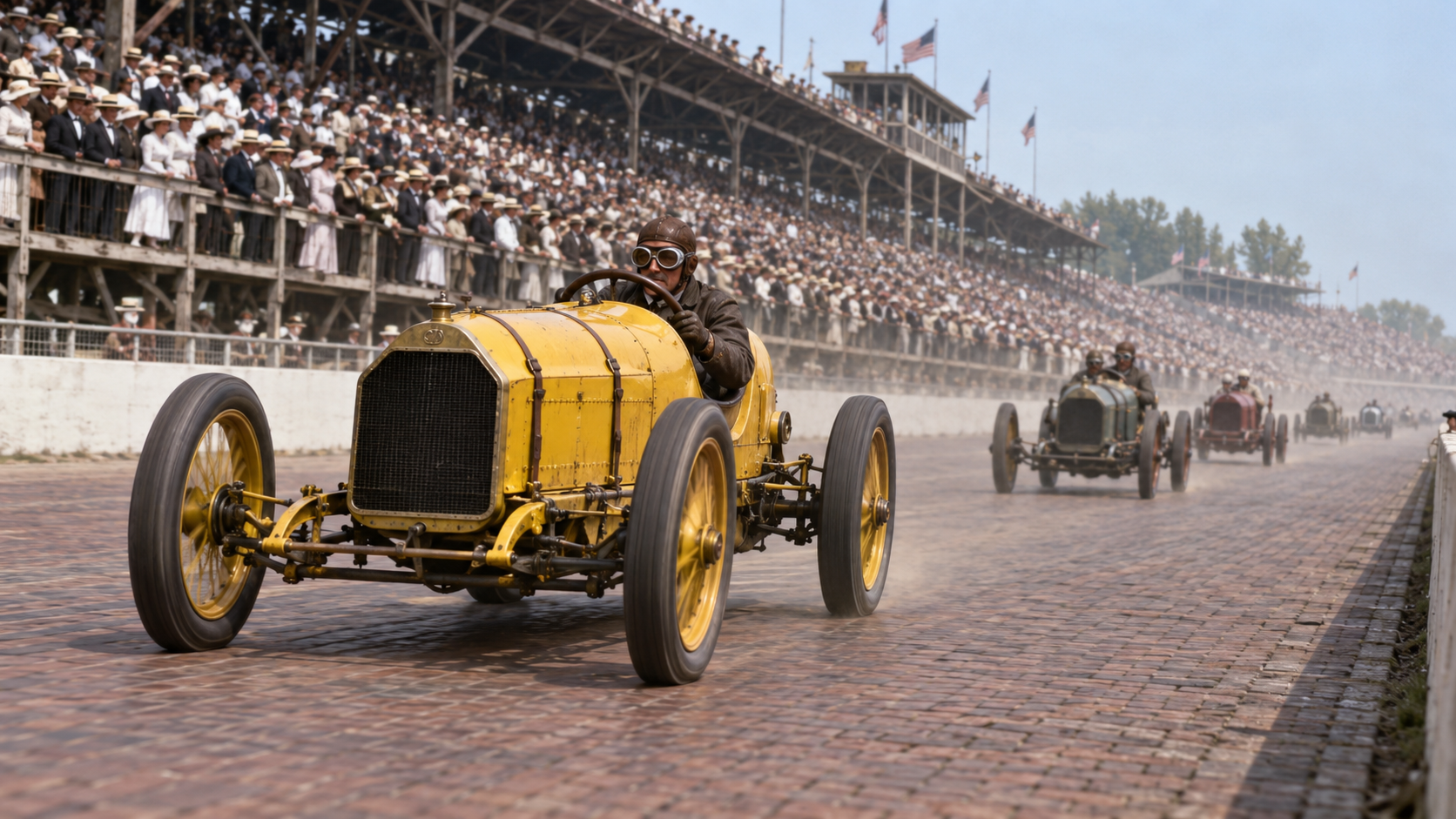
On May 30, 1911, forty cars started the inaugural Indianapolis 500 before a crowd estimated as high as 85,000. Ray Harroun won in the locally built Marmon Wasp, completing two hundred laps in 6 hours 42 minutes. The event consolidated the track’s earlier short races into one long test of speed, durability and organization, establishing a Memorial Day tradition that became one of motor racing’s central institutions. The public record fixes the central details with unusual clarity: Forty cars started the race. Ray Harroun won in the Marmon Wasp. Together, those facts explain why May 30, 1911 stands apart from the ordinary flow of a season and deserves to be remembered as a distinct historical moment.
Harroun started twenty-eighth and followed a strategy based on conserving tires and fuel while rivals pushed harder. His yellow single-seat car lacked the riding mechanic commonly carried by competitors. To address concerns about visibility behind him, Harroun mounted a small mirror above the cowling, an innovation often connected with early automotive rearview-mirror use even though the broader invention history is more complex. Two further details help reconstruct how the achievement unfolded: His time was 6 hours 42 minutes. Harroun started 28th. They move the story beyond a headline by showing the pressure, setting and competitive choices that shaped the decisive action in real time.
The race itself was chaotic by modern standards. Dust and oil limited visibility, timing officials struggled to track the large field and an accident caused fatal injuries to mechanic Sam Dickson. Ralph Mulford later disputed the scoring and argued that he had actually finished first, but officials confirmed Harroun as the winner. The uncertainty revealed how quickly race management needed to evolve alongside the machines. The wider context is equally important. The crowd was estimated as high as 85,000. The race covered 500 miles over 200 laps. Those points connect one day’s performance to a longer career, institution or rivalry and clarify why the event continued to matter after the immediate celebration had ended.
Harroun retired from competition after the victory, while the Indianapolis 500 grew into an annual measure of engineering and nerve. Rolling starts, pace cars and the 500-mile distance became part of its identity. The first edition lasted nearly seven hours, yet it established the compact promise that still defines the race: one oval, two hundred laps and a place in history for the driver who completes them first. Seen from today, the milestone remains compelling because it joins a measurable result with the uncertainty of live competition. Nothing about the outcome was guaranteed beforehand. That combination of preparation, opportunity and execution is what transformed the date from another entry on the schedule into lasting sports history.
Forty cars started the race.
Ray Harroun won in the Marmon Wasp.
His time was 6 hours 42 minutes.
Harroun started 28th.
The crowd was estimated as high as 85,000.
The race covered 500 miles over 200 laps.
Explore more "On This Day in Sports"
Discover more landmark games, records, championships, and turning points from sports history. Each day revisits the athletes, teams, and moments that shaped competition and culture.