

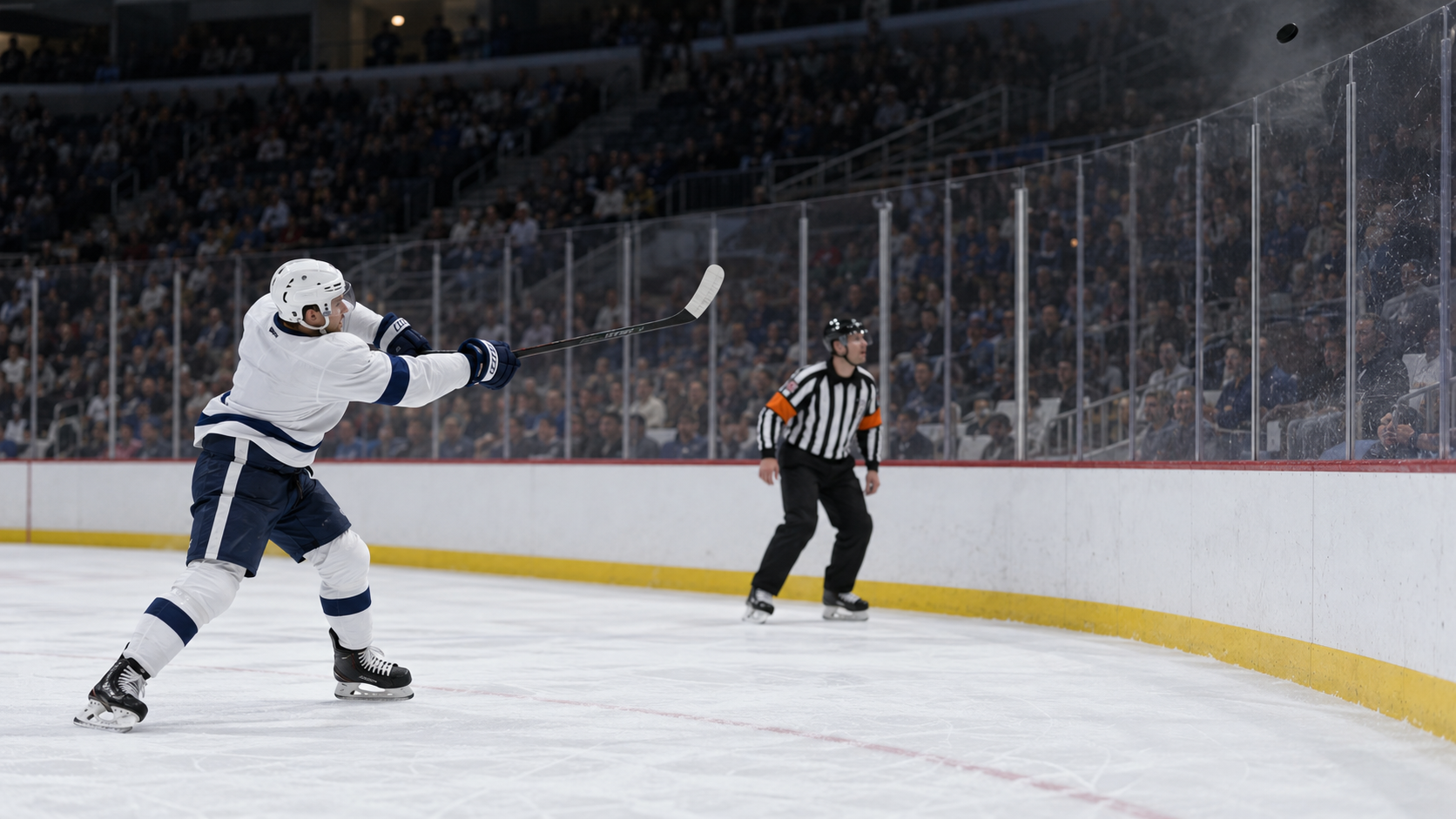
How Puck-Over-Glass Penalties Work Explainer
An NHL skater receives a delay-of-game minor when the player shoots or bats the puck directly out of the playing surface from the defending zone. The puck's position at the moment of contact controls the ruling. If it was inside the defending zone, crossing the blue line afterward does not erase the violation.
The puck must leave directly, without being deflected by another player, stick, glass, or boards. A puck shot into the players' bench is treated differently, and a puck that goes out directly from a faceoff does not produce this penalty. Rinks without glass also have an exception.
Shooting the puck over the glass behind the players' bench still counts. The penalty is not based on whether the player intended to delay the game; the direct path from the defensive zone is enough. That objective structure lets officials make the call without judging motive.
Current challenge procedures can review whether the puck was deflected before leaving the surface, but not every judgment surrounding the play becomes reviewable. The offending team plays shorthanded for the minor, turning a rushed clearance into a significant power-play opportunity.
No. A direct puck out from the defending zone triggers the rule.
Yes. A deflection can remove the automatic penalty.
A minor penalty for delay of game.
Explore more "Explainers"
Discover additional explainers across politics, science, business, technology, and other fields. Each explainer breaks down a complex idea into clear, everyday language—helping you better understand how major concepts, systems, and debates shape the world around us.