

How Volleyball Timeouts Work Explainer
Under standard FIVB indoor rules, each team may request two regular timeouts per set. A timeout is requested while the ball is out of play and before the authorization for service, normally by the coach through the official procedure. Each regular timeout lasts 30 seconds.
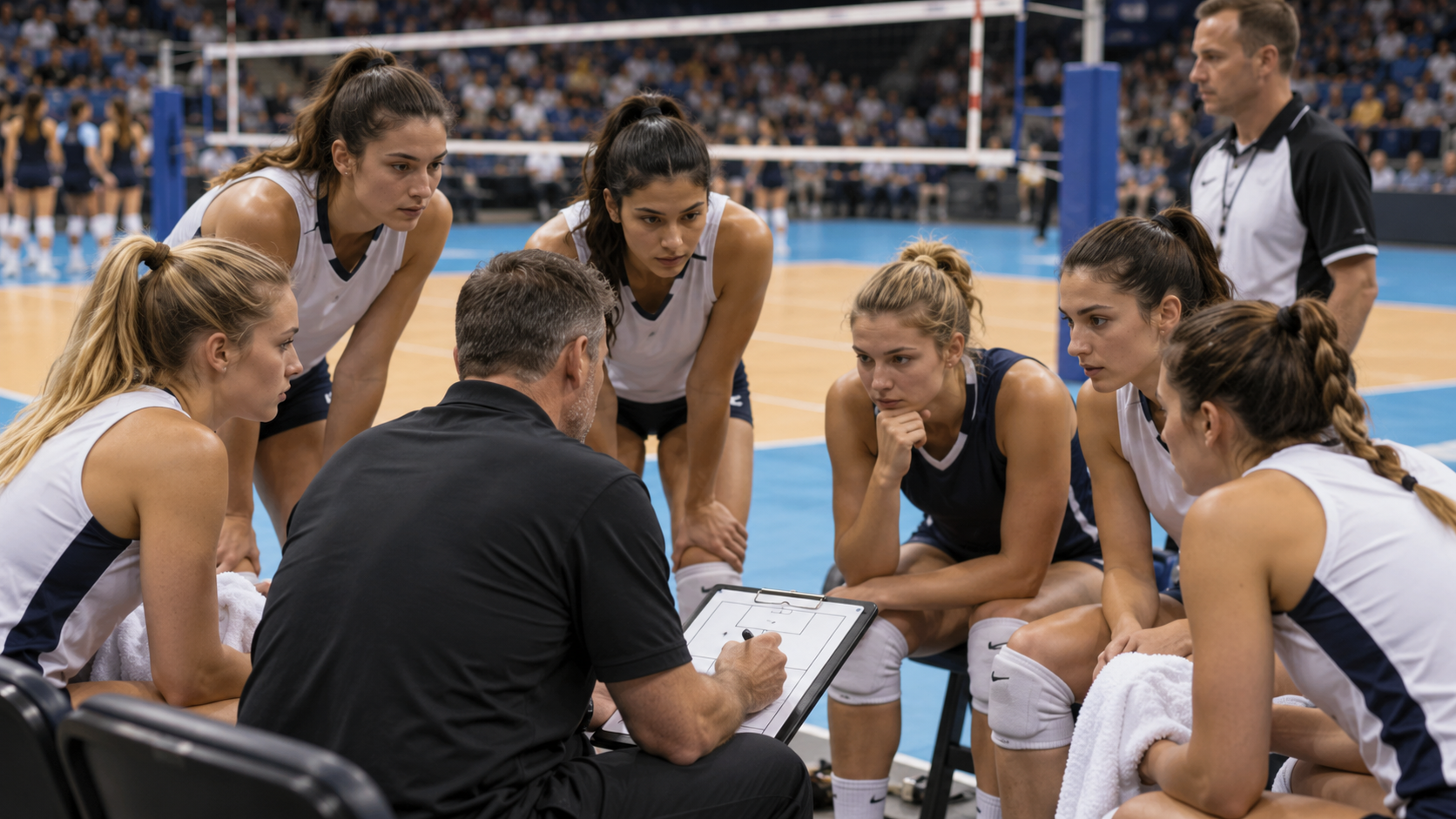
Players go to the free zone near their bench, where the coach can give tactical instructions. Substitutes and staff remain within the permitted area, and teams must be ready when the second referee signals the end. The interruption cannot be extended simply because a discussion is unfinished.
Timeouts are separate from substitutions, exceptional injury interruptions, and any technical timeouts used by a particular competition. Event regulations may add broadcast procedures or remove automatic technical breaks, so viewers should not assume every tournament follows the same television schedule.
Coaches often use a timeout to break an opponent's serving run, adjust blocking assignments, or settle reception patterns. Because the supply resets with each set and unused timeouts do not carry over, the decision is strategic: intervene early enough to change momentum while preserving an option for a close finish.
Two per set under standard FIVB indoor rules.
Thirty seconds.
No. The allowance resets for each set.
Explore more "Explainers"
Discover additional explainers across politics, science, business, technology, and other fields. Each explainer breaks down a complex idea into clear, everyday language—helping you better understand how major concepts, systems, and debates shape the world around us.