

On This Day in Pop: June 22, 2001
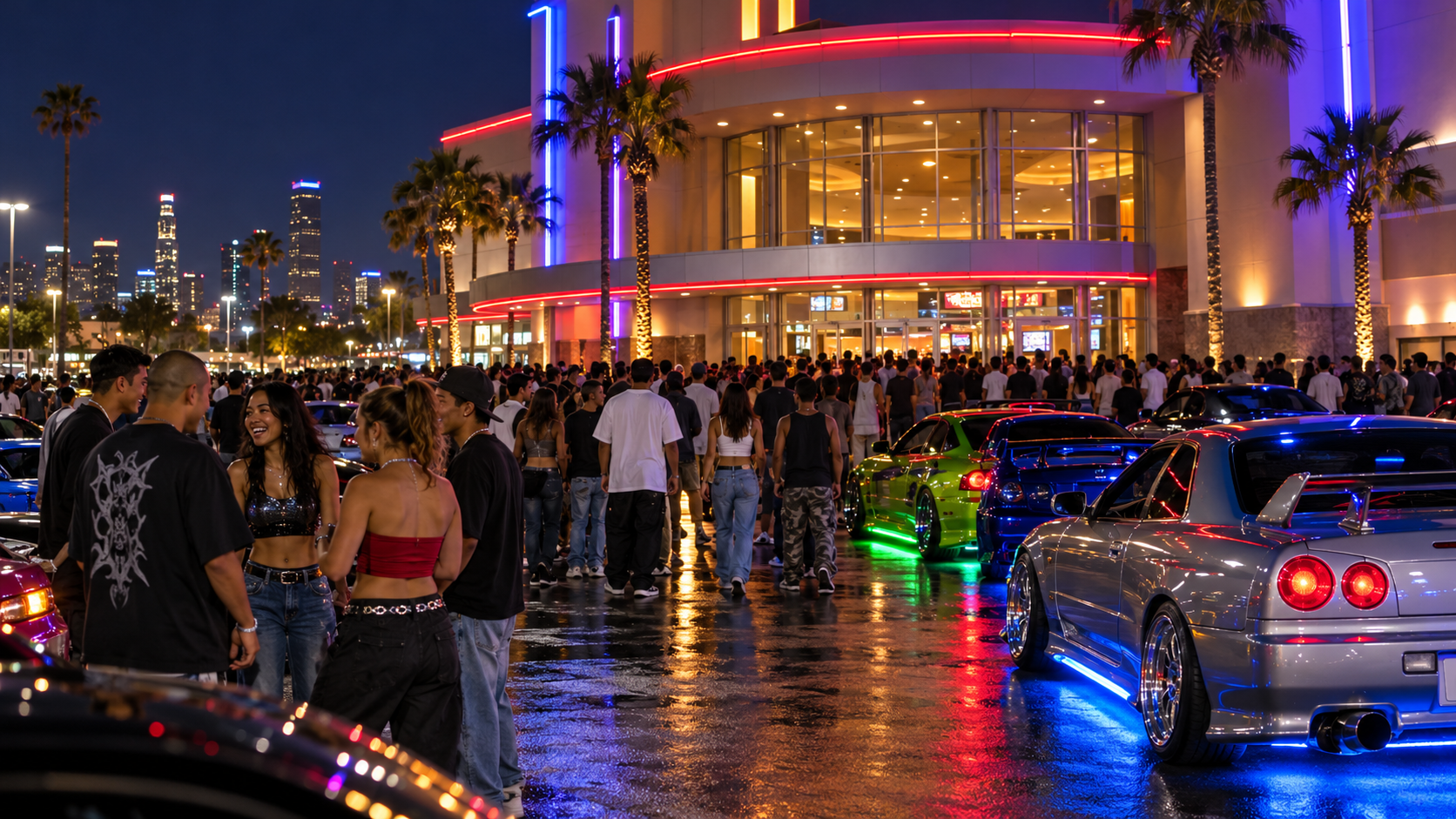
On June 22, 2001, The Fast and the Furious opened in American theaters. Directed by Rob Cohen, the film followed undercover Los Angeles police officer Brian O’Conner, played by Paul Walker, as he entered a street-racing circle led by Vin Diesel’s Dominic Toretto. Michelle Rodriguez and Jordana Brewster completed a story in which an investigation into truck hijackings became a test of loyalty. The premise drew inspiration from magazine reporting on underground racing culture, while the production filled the screen with customized imports, glowing dashboards, nitrous systems and communities built around garages and night streets. Its title borrowed the name of a 1954 film, but the new movie’s identity came from turn-of-the-century car culture and a diverse ensemble rarely centered in a mainstream action release.
The opening mattered because the movie arrived without the profile of an established mega-franchise and exceeded expectations. It earned about forty million dollars during its first weekend, confirming that youth audiences would respond to a world defined by machines, style and belonging rather than traditional star power. Racing scenes used practical cars, aggressive editing and visual effects that imagined speed from inside engines and along city pavement. More important than the mechanics was the emotional structure: Dom’s crew called itself a family, and Brian’s divided allegiance made admission to that family the real prize. That theme gave the property room to evolve after street racing stopped being its only subject.
The film launched sequels that expanded from Los Angeles races into heists, espionage and globe-spanning spectacle. Cast members left and returned, timelines bent, and the series rebuilt itself around ensemble continuity, memorial and chosen kinship. The franchise became one of Universal’s most valuable properties and elevated multiple performers to international stardom. It also affected car culture, increasing attention to Japanese imports and customization while attracting criticism over reckless imitation on public roads. The original now looks smaller and more local than its descendants, which is part of its appeal. Before submarines, satellites and impossible stunts, the stakes were a race, a garage and a decision about whom to trust. June 22 marks the modest-looking start of a pop phenomenon that learned to grow without abandoning its central word: family.
Remembering the fast and the furious opens on June 22 is valuable because anniversaries turn a familiar cultural object back into a specific decision, release or broadcast. The surrounding technology, business and audience conditions explain why the moment could happen then, while its later uses show that meaning never stops changing. Seen at that scale, the date is not trivia. It is a checkpoint between creation and memory: a place to separate what occurred from the legend accumulated around it and to ask why the work still attracts attention.
The Fast and the Furious opened across the United States on June 22, 2001.
The moment reached audiences through the media and distribution systems of 2001, influencing how the initial response developed.
Paul Walker played undercover officer Brian O'Conner opposite Vin Diesel's racer and crew leader Dominic Toretto.
Its early impact was substantial but not universal, and later retellings sometimes compressed a more complicated contemporary response.
A strong opening weekend launched a franchise that expanded from street racing into global action spectacles.
Anniversary coverage continues to place Fast & Furious Starts within the broader history of popular culture while distinguishing documented evidence from later legend.
Explore more of "On This Day ..."
Discover more events from the same date across news, politics, technology, sports, and other fields. Each link highlights significant moments that shaped history on different fronts.