

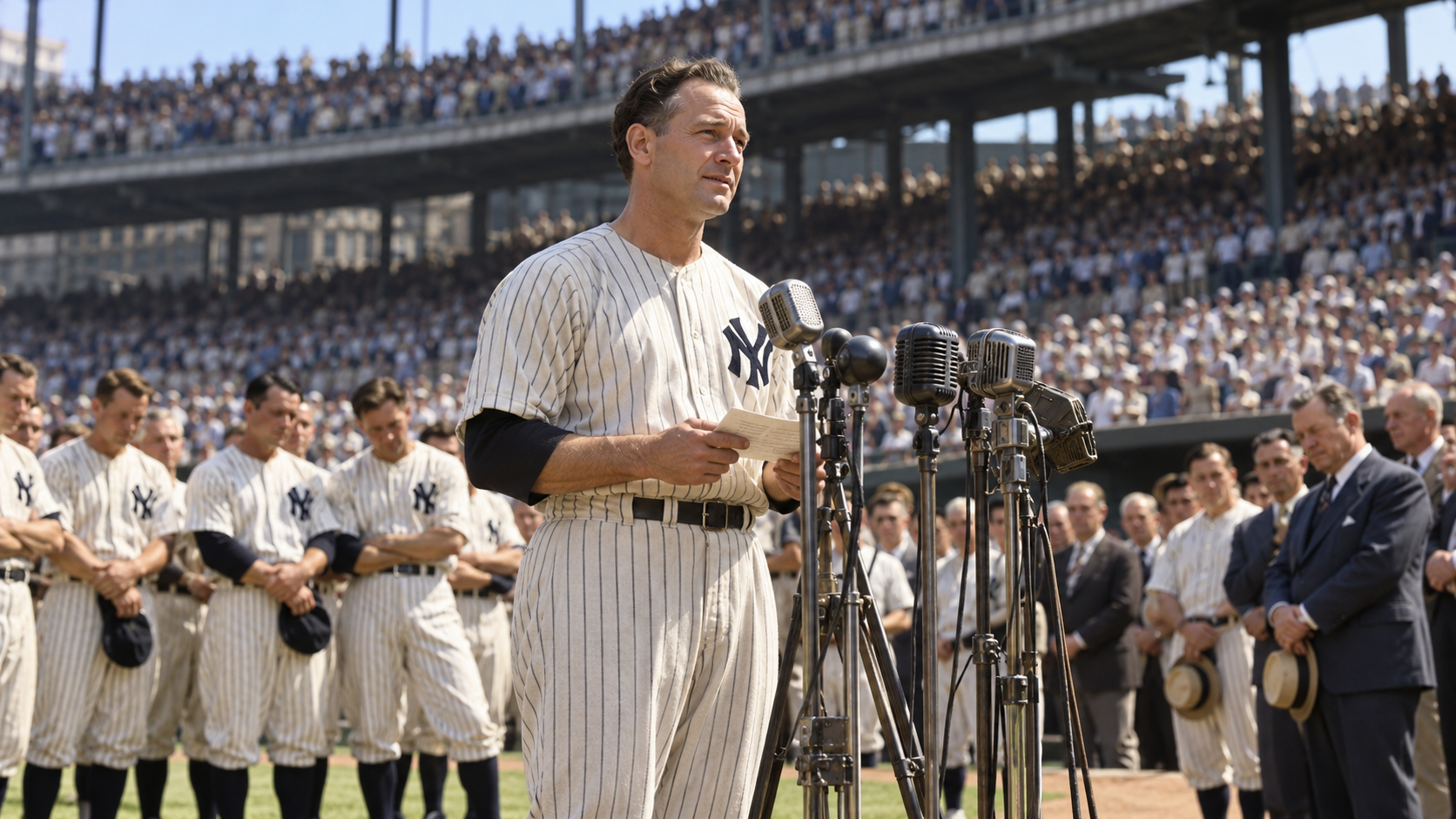
On This Day in Sports: July 4, 1939
On July 4, 1939, Lou Gehrig addressed a packed Yankee Stadium during Lou Gehrig Appreciation Day, weeks after amyotrophic lateral sclerosis ended his playing career. Standing near home plate between games of a doubleheader, the Yankees captain expressed gratitude rather than bitterness. His description of himself as fortunate became one of the most enduring public moments in American sports. The public record fixes the central details with unusual clarity: The ceremony was held at Yankee Stadium. Gehrig had been diagnosed with ALS in June. Together, those facts explain why July 4, 1939 stands apart from the ordinary flow of a season and deserves to be remembered as a distinct historical moment.
Gehrig had removed himself from the lineup on May 2, ending a record streak of 2,130 consecutive games. Doctors at the Mayo Clinic confirmed his diagnosis on his 36th birthday in June. The Yankees quickly organized a ceremony that brought former teammates, officials and the 1927 championship club back to the field. Two further details help reconstruct how the achievement unfolded: His consecutive-games streak ended at 2,130. Joe McCarthy encouraged him to speak. They move the story beyond a headline by showing the pressure, setting and competitive choices that shaped the decisive action in real time.
Speakers praised Gehrig and presented gifts before the crowd called for him to speak. Initially overcome, he stepped to the microphones after manager Joe McCarthy encouraged him. Babe Ruth embraced him after the brief address, creating a final public image of two stars whose relationship had often been complicated. The wider context is equally important. The Yankees retired number 4. Gehrig died on June 2, 1941. Those points connect one day’s performance to a longer career, institution or rivalry and clarify why the event continued to matter after the immediate celebration had ended.
Gehrig died less than two years later, and ALS became widely known as Lou Gehrig’s disease. The Yankees retired his number 4, the first such honor in major-league history. The ceremony remains a model of dignity under pressure and continues to connect baseball remembrance with ALS awareness. Seen from today, the milestone remains compelling because it joins a measurable result with the uncertainty of live competition. Nothing about the outcome was guaranteed beforehand. That combination of preparation, opportunity and execution transformed the date from another entry on the schedule into lasting sports history. It also reveals how records and championships depend on teammates, opponents, officials, venues and rules that shape the opportunity. Preserving those surrounding details helps explain both the achievement itself and the reason later generations still discuss it. The date therefore offers a useful window into how sporting excellence is created, witnessed and remembered.
The ceremony was held at Yankee Stadium.
Gehrig had been diagnosed with ALS in June.
His consecutive-games streak ended at 2,130.
Joe McCarthy encouraged him to speak.
The Yankees retired number 4.
Gehrig died on June 2, 1941.
Explore more "On This Day in Sports"
Discover more landmark games, records, championships, and turning points from sports history. Each day revisits the athletes, teams, and moments that shaped competition and culture.