

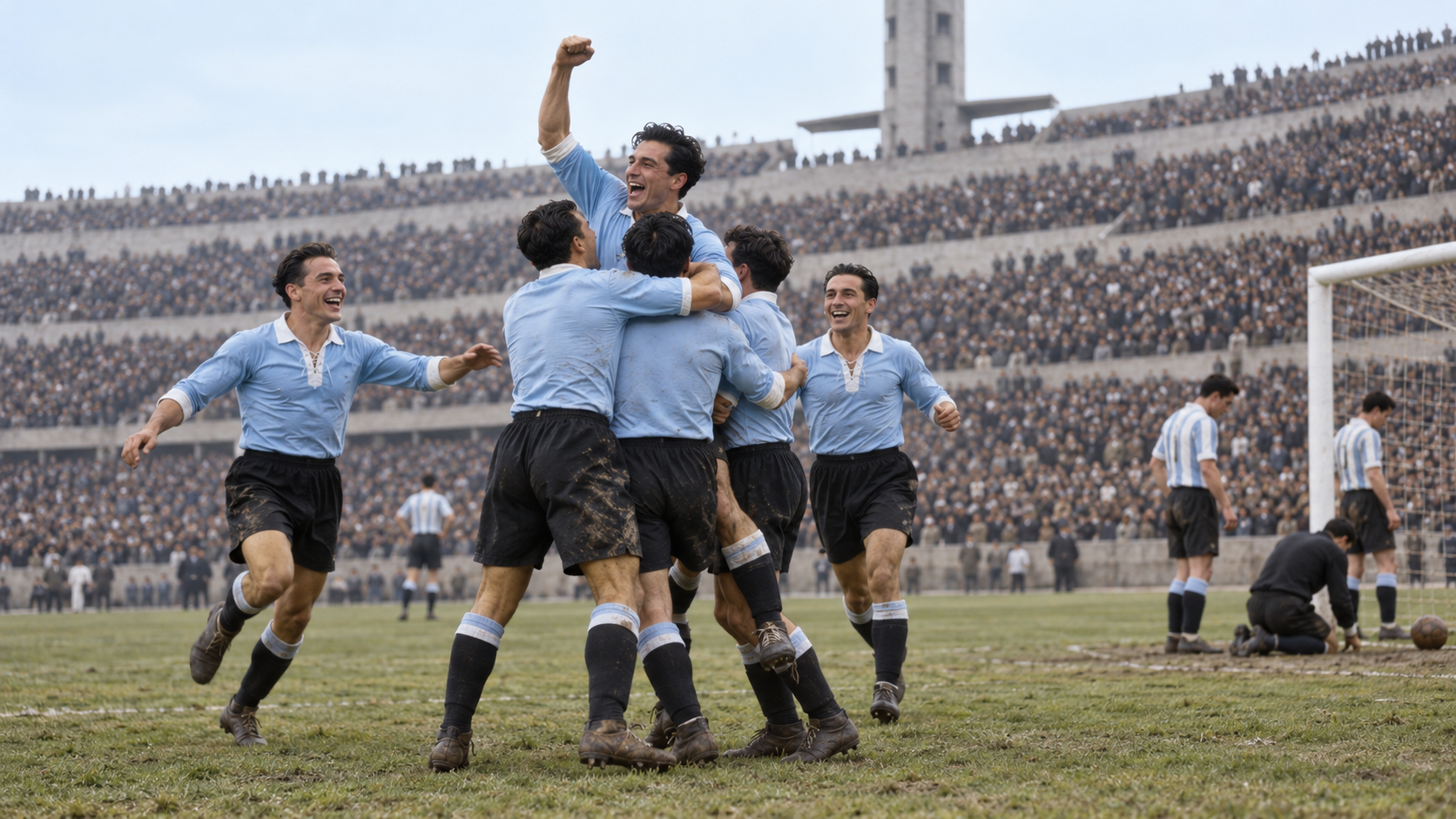
On This Day in Sports: July 30, 1930
On July 30, 1930, Uruguay defeated Argentina 4-2 at the Estadio Centenario in Montevideo to become the first FIFA World Cup champion. The host nation trailed 2-1 at halftime before scoring three times in the second half. Héctor Castro completed the comeback in the final minutes. The public record fixes the central details with unusual clarity: Uruguay won 4-2. Argentina led 2-1 at halftime. Together, those facts explain why July 30, 1930 stands apart from the ordinary flow of a season and deserves to be remembered as a distinct historical moment.
The neighbors were already fierce rivals and had contested the 1928 Olympic final. Disagreement over the match ball produced a compromise: Argentina’s ball was used in the first half and Uruguay’s in the second. A vast crowd filled the recently opened stadium. Two further details help reconstruct how the achievement unfolded: The final was played at the Estadio Centenario. Pedro Cea scored the equalizer. They move the story beyond a headline by showing the pressure, setting and competitive choices that shaped the decisive action in real time.
Pablo Dorado scored first for Uruguay, but Carlos Peucelle and Guillermo Stábile put Argentina ahead. Pedro Cea equalized after halftime, Victoriano Iriarte drove in the go-ahead goal and Castro’s header made the title secure. Captain José Nasazzi received the trophy. The wider context is equally important. Héctor Castro scored the final goal. Uruguay became the first world champion. Those points connect one day’s performance to a longer career, institution or rivalry and clarify why the event continued to matter after the immediate celebration had ended.
Uruguay declared a national holiday, while disappointment across the river in Argentina emphasized the rivalry’s intensity. The thirteen-team experiment created a world champion outside the Olympic movement and established a competition that would grow into football’s largest event. Seen from today, the milestone remains compelling because it joins a measurable result with the uncertainty of live competition. Nothing about the outcome was guaranteed beforehand. That combination of preparation, opportunity and execution transformed the date from another entry on the schedule into lasting sports history. It also reveals how records and championships depend on teammates, opponents, officials, venues and rules that shape the opportunity. Preserving those surrounding details helps explain both the achievement itself and the reason later generations still discuss it. The date therefore offers a useful window into how sporting excellence is created, witnessed and remembered.
Uruguay won 4-2.
Argentina led 2-1 at halftime.
The final was played at the Estadio Centenario.
Pedro Cea scored the equalizer.
Héctor Castro scored the final goal.
Uruguay became the first world champion.
Explore more "On This Day in Sports"
Discover more landmark games, records, championships, and turning points from sports history. Each day revisits the athletes, teams, and moments that shaped competition and culture.