

How Rugby Scrum Resets Work Explainer
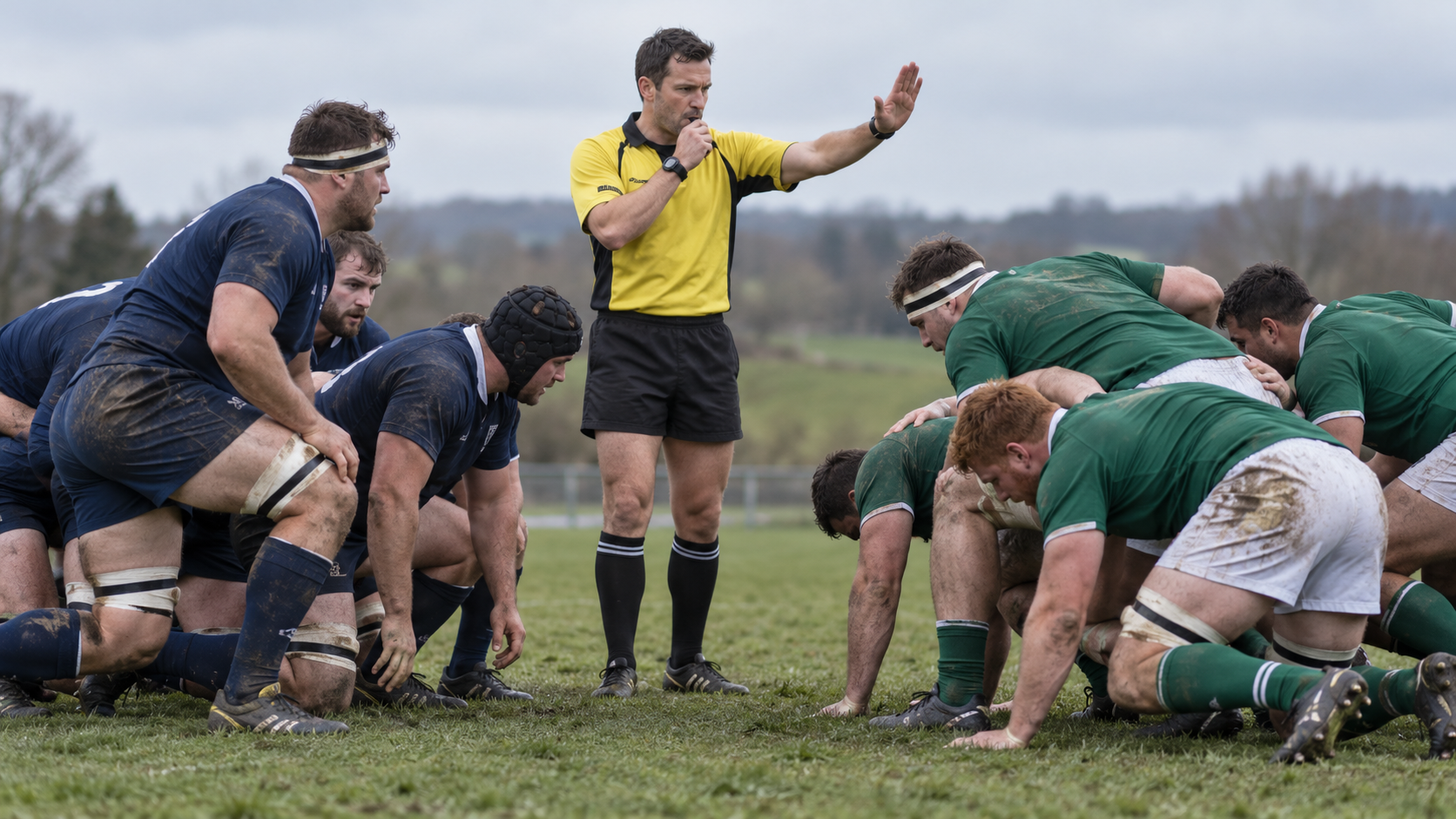
A scrum reset in rugby restarts the same contest after the referee stops it without identifying an infringement. The original team normally throws the ball in again. A reset preserves the intended restart while giving both front rows another safe opportunity to form and compete.
Reset reasons include the ball coming out either end of the tunnel, the scrum collapsing or breaking up without a fault being assigned, neither side winning possession, or the scrum wheeling more than 90 degrees. An unintentionally kicked ball leaving the tunnel can also prompt a reset.
A reset is not the outcome when the referee identifies dangerous or illegal conduct. Intentionally collapsing, lifting an opponent, failing to bind, or pushing before the scrum begins can bring a penalty or free kick. Repeated conduct may also influence the referee's judgment and discipline.
Safety controls the decision. The referee uses the crouch, bind, and set sequence, requires stability, and stops play when continuing would be dangerous. Teams reform at the mark, correct their shape, and wait for the next feed. The reset is neutral; a sanction assigns responsibility.
The team that threw in before the reset normally throws in again.
No. An intentional or identifiable illegal collapse can result in a penalty.
The law requires an immediate stop and reset because the contest is no longer safely aligned.
Explore more "Explainers"
Discover additional explainers across politics, science, business, technology, and other fields. Each explainer breaks down a complex idea into clear, everyday language—helping you better understand how major concepts, systems, and debates shape the world around us.