

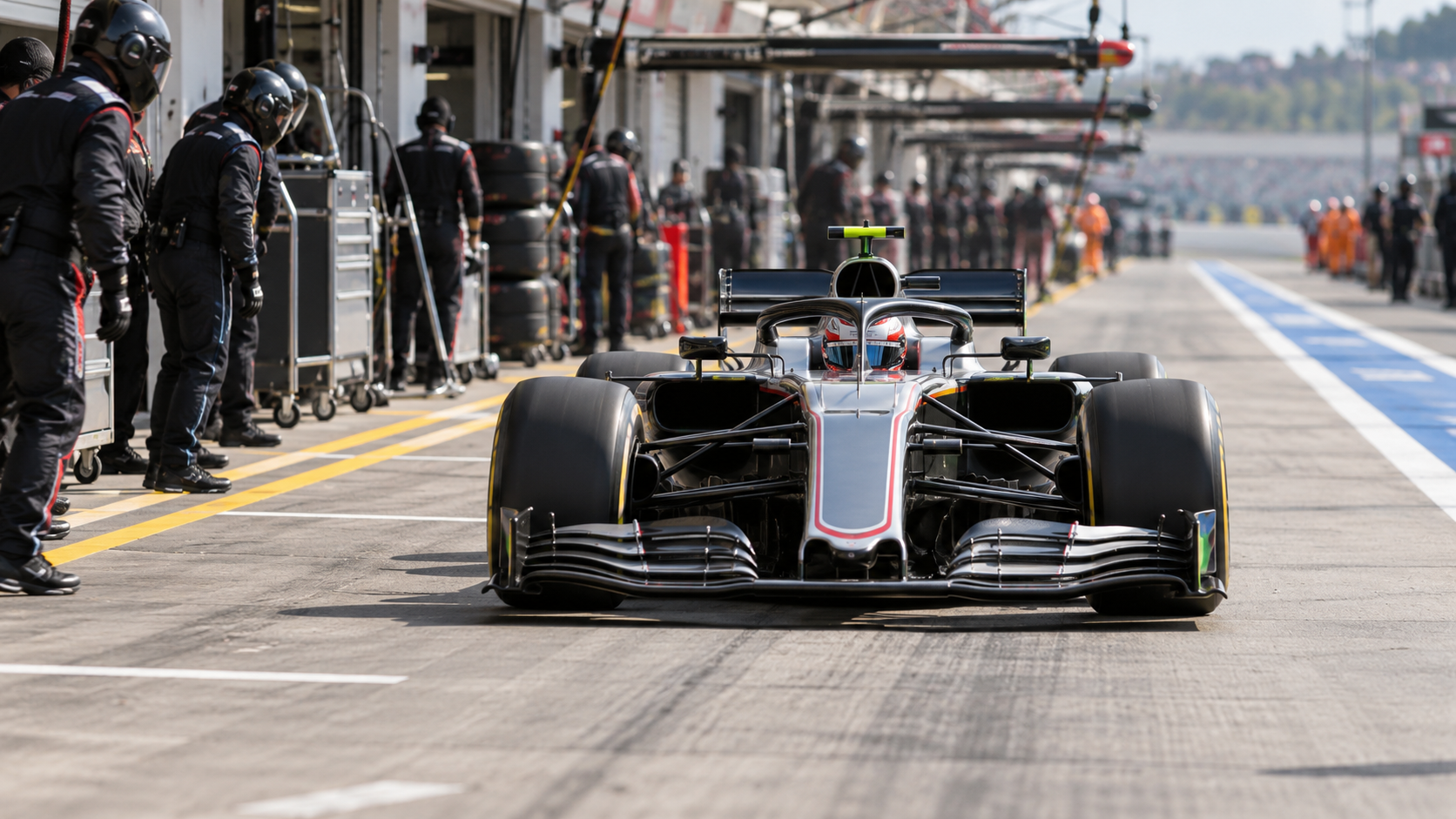
How Formula 1 Pit-Lane Speed Limits Work Explainer
Formula 1 imposes a speed limit through the designated pit lane for the entire competition. The standard limit is 80 kilometres per hour, although the race director may lower it for a circuit whose pit lane is especially narrow, short, or otherwise safety-sensitive.
Drivers press a steering-wheel control that limits the car near the required speed, but they remain responsible for entering below the limit and not releasing the system too early. Timing loops measure the car between the official pit-entry and pit-exit control lines rather than relying on visual judgment.
During practice and qualifying, speeding normally produces a monetary fine calculated for each kilometre per hour over the limit, subject to the regulatory cap. During a race or sprint, stewards can impose sporting penalties such as five or ten seconds, a drive-through, or a stop-and-go.
The rule protects mechanics, officials, and other cars in a crowded working lane. It also shapes strategy because driving more slowly adds time to every pit stop. Teams therefore optimize braking at entry and acceleration at exit without crossing the measured threshold.
It is normally 80 km/h, but the race director may amend it for safety.
Electronic timing loops measure cars between the official pit-lane control lines.
No. Practice and qualifying usually bring fines, while race sessions can bring sporting penalties.
Explore more "Explainers"
Discover additional explainers across politics, science, business, technology, and other fields. Each explainer breaks down a complex idea into clear, everyday language—helping you better understand how major concepts, systems, and debates shape the world around us.