

On This Day in Pop: July 7, 2007
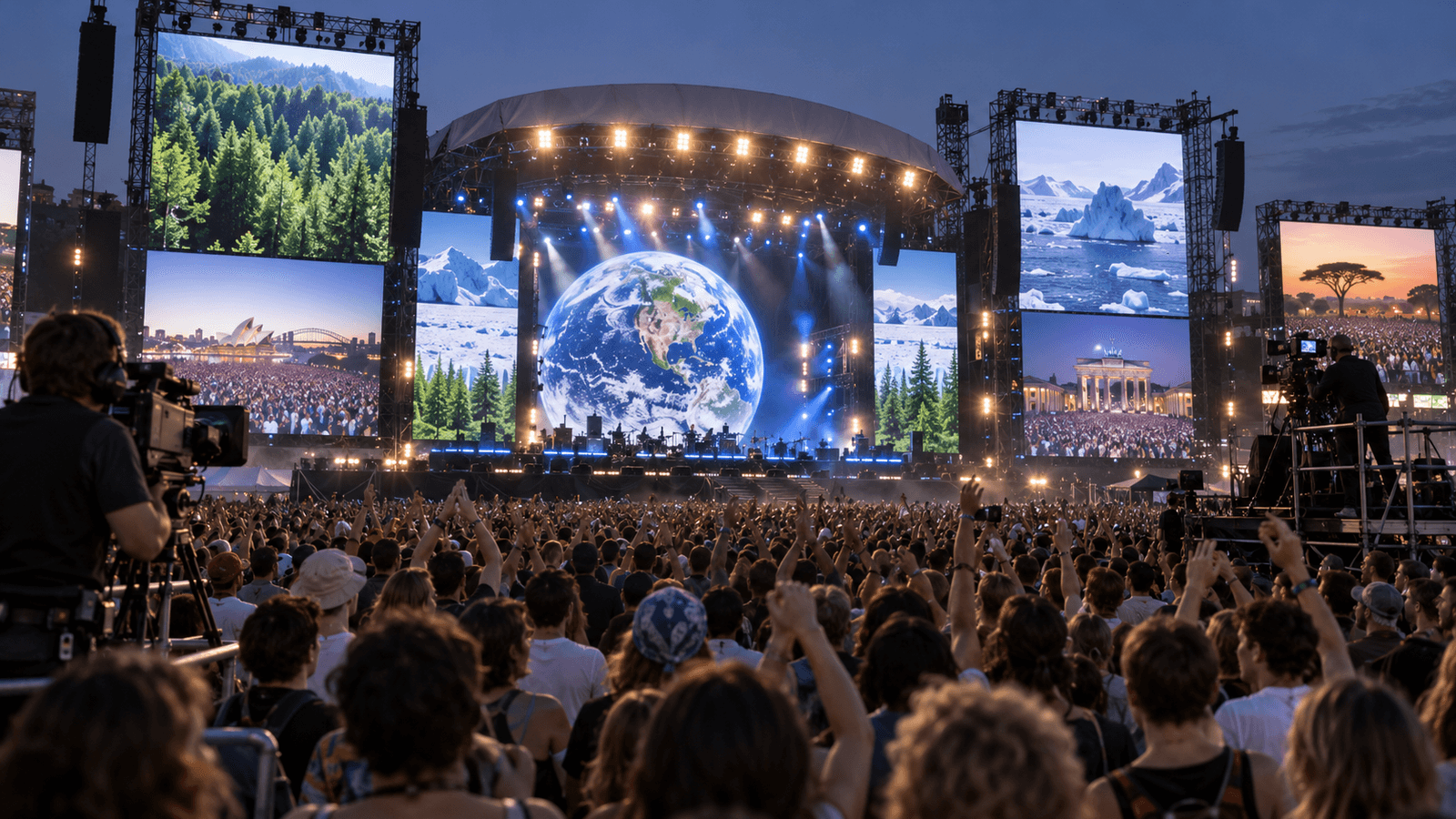
On July 7, 2007, Live Earth staged concerts across seven continents as a twenty-four-hour appeal for action on climate change. Major events took place near New York, London, Sydney, Tokyo, Shanghai, Johannesburg, Hamburg and Rio de Janeiro, with a small performance by scientists in Antarctica completing the geographic claim. Producer Kevin Wall, who had worked on Live 8, organized the broadcasts with support from Al Gore and the Alliance for Climate Protection. Stages used enormous screens and recurring environmental messages between performances, while television networks and MSN carried streams to viewers around the world. The date’s sequence—7/7/07—gave the event a simple identity that could travel across languages and time zones.
The concerts mattered because they attempted to translate climate science into the emotional scale of global entertainment. Music could gather attention quickly, and the linked broadcast made warming appear as a shared planetary issue rather than a distant specialist concern. The production also faced an obvious contradiction: transporting artists, crews and audiences consumed energy and generated emissions. Organizers published sustainability plans and a carbon report, but critics argued that spectacle could not substitute for policy or ordinary behavioral change. That criticism was not separate from Live Earth’s meaning; it exposed the difficulty of using carbon-intensive media systems to advocate for a lower-carbon future.
Live Earth reached large online audiences and helped normalize climate language in mainstream entertainment, though it did not become a recurring institution on the scale first imagined. Its model—global stages, branded commitments, streaming participation and celebrity advocacy—continued in later benefit broadcasts and digital campaigns. The day also arrived before social platforms fully reorganized live events, making its internet distribution an important transitional experiment. July 7 is worth remembering for both ambition and tension. Popular music can make a scientific issue visible, memorable and emotionally immediate, but attention must connect to trustworthy information, equitable leadership and measurable action. The concerts provided a worldwide spotlight; the harder work began when the lights went down.
Remembering live earth concerts unite seven continents around climate action on July 7 is valuable because anniversaries turn a familiar cultural object back into a specific decision, release or broadcast. The surrounding technology, business and audience conditions explain why the moment could happen then, while its later uses show that meaning never stops changing. Seen at that scale, the date is not trivia. It is a checkpoint between creation and memory: a place to separate what occurred from the legend accumulated around it and to ask why the work still attracts attention. That perspective also restores the labor of collaborators, distributors and audiences whose choices helped a single event travel beyond its first setting. Cultural history becomes clearer when the remembered icon is reconnected to the systems and people that made it visible.
Live Earth staged linked concerts on July 7, 2007, including performances associated with all seven continents.
The remembered moment placed Live Earth Goes Global inside the technology, audience habits and creative choices of 2007. Those conditions explain why it could happen then and why contemporary reactions differed from later memory.
Television and MSN streams carried music and climate messages to a worldwide audience.
Its immediate importance came from the way audiences, distributors and other creators responded. The event gained force beyond its first release or appearance as people repeated, debated and reinterpreted it.
The event's own carbon footprint became part of a broader debate about celebrity environmental advocacy.
Over time, the event became a reference point for later work in popular culture. Its legacy includes both the achievement itself and the changing arguments about what should be celebrated, questioned or rediscovered.
Explore more of "On This Day ..."
Discover more events from the same date across news, politics, technology, sports, and other fields. Each link highlights significant moments that shaped history on different fronts.