

On This Day in Pop: July 6, 1964
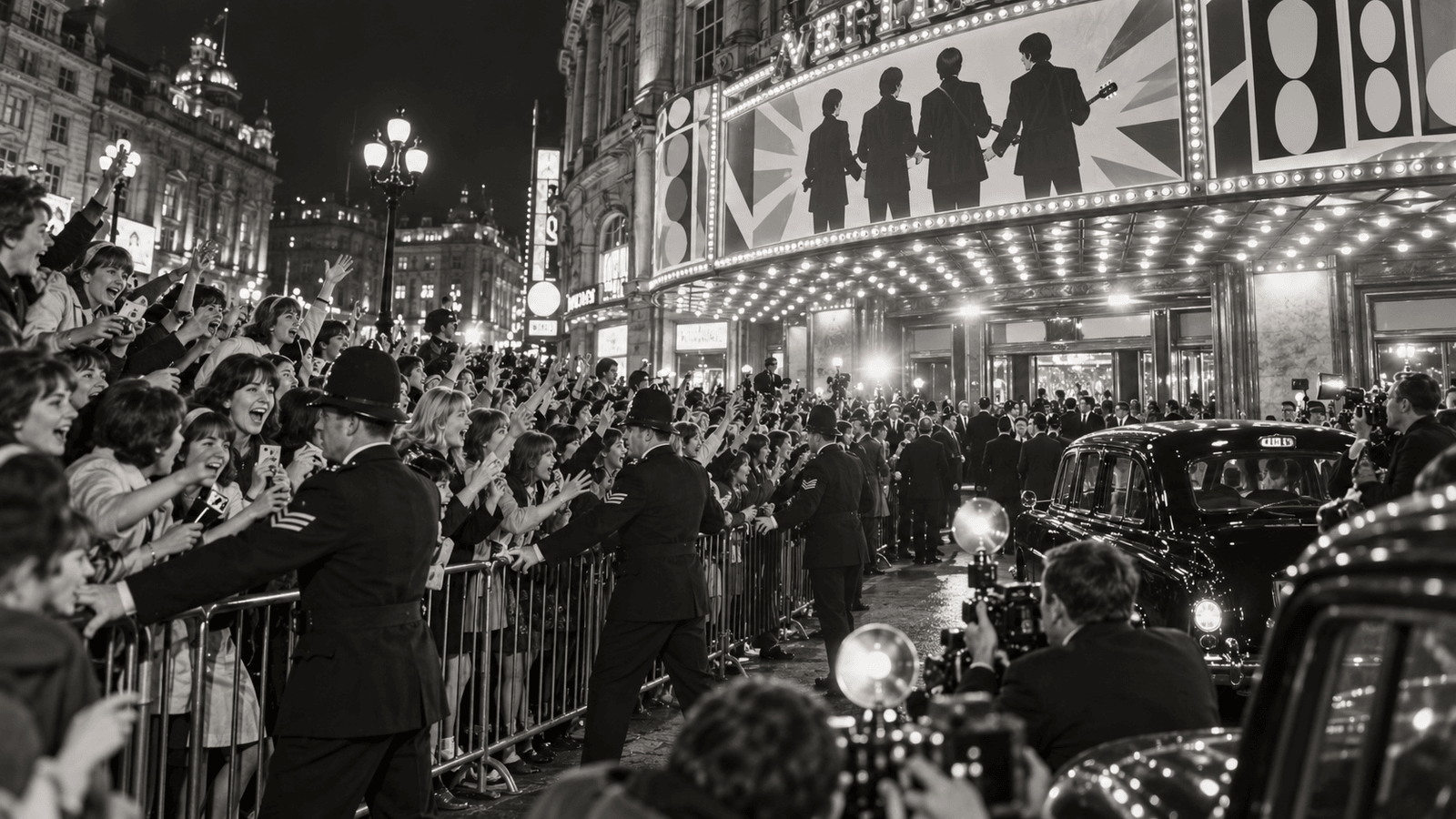
On July 6, 1964, A Hard Day’s Night received its world premiere at the London Pavilion in Piccadilly Circus. Thousands of fans crowded the surrounding streets for the Beatles’ first feature film, while Princess Margaret and the Earl of Snowdon attended the royal premiere. Directed by Richard Lester from Alun Owen’s screenplay, the movie followed John Lennon, Paul McCartney, George Harrison and Ringo Starr through a heightened version of two days in their working lives. Trains, hotel rooms, press conferences and a television studio became settings for rapid jokes and musical escape. Shot in black and white under a tight schedule, the film used handheld cameras, quick editing and the band’s dry responses to make the frenzy around them feel both immediate and absurd.
The premiere mattered because the film refused to treat a pop group as stiff promotional decoration. Earlier rock movies often paused a thin story so performers could deliver songs; A Hard Day’s Night let music, movement and personality shape the filmmaking itself. Lester’s visual energy anticipated later music videos, while Owen’s dialogue captured distinct public characters without pretending to reveal unmediated private selves. The Beatles appear trapped by schedules and security yet capable of turning any corridor or field into play. That balance gave fans access without dissolving the distance that made the group fascinating. It also presented youth culture as quick, self-aware and capable of outmaneuvering the adults who attempted to organize it.
The film opened more widely in Britain and then internationally, received Academy Award nominations for screenplay and musical scoring, and became a lasting model for musician-centered cinema. Its songs were central to albums issued in different forms in Britain and the United States, extending the project across film and records. Later directors repeatedly borrowed its documentary looseness, direct address and montage of performers running through public space. The premiere’s crowds now look like a perfect image of Beatlemania, but the movie remains more than a souvenir of fame. It understood that the band members were already living inside a mass-media construction and made that condition the source of comedy. July 6 marks the night four musicians became convincing film performers by playing witty versions of themselves.
Remembering a hard day’s night receives its london world premiere on July 6 is valuable because anniversaries turn a familiar cultural object back into a specific decision, release or broadcast. The surrounding technology, business and audience conditions explain why the moment could happen then, while its later uses show that meaning never stops changing. Seen at that scale, the date is not trivia. It is a checkpoint between creation and memory: a place to separate what occurred from the legend accumulated around it and to ask why the work still attracts attention. That perspective also restores the labor of collaborators, distributors and audiences whose choices helped a single event travel beyond its first setting. Cultural history becomes clearer when the remembered icon is reconnected to the systems and people that made it visible.
A Hard Day's Night had its world premiere at the London Pavilion on July 6, 1964.
The remembered moment placed A Hard Day's Night inside the technology, audience habits and creative choices of 1964. Those conditions explain why it could happen then and why contemporary reactions differed from later memory.
Richard Lester's fast, handheld style and Alun Owen's script built the film around the Beatles' public personalities.
Its immediate importance came from the way audiences, distributors and other creators responded. The event gained force beyond its first release or appearance as people repeated, debated and reinterpreted it.
Its editing and performance sequences became major influences on later music films and videos.
Over time, the event became a reference point for later work in popular culture. Its legacy includes both the achievement itself and the changing arguments about what should be celebrated, questioned or rediscovered.
Explore more of "On This Day ..."
Discover more events from the same date across news, politics, technology, sports, and other fields. Each link highlights significant moments that shaped history on different fronts.