

On This Day in Pop: July 12, 1962
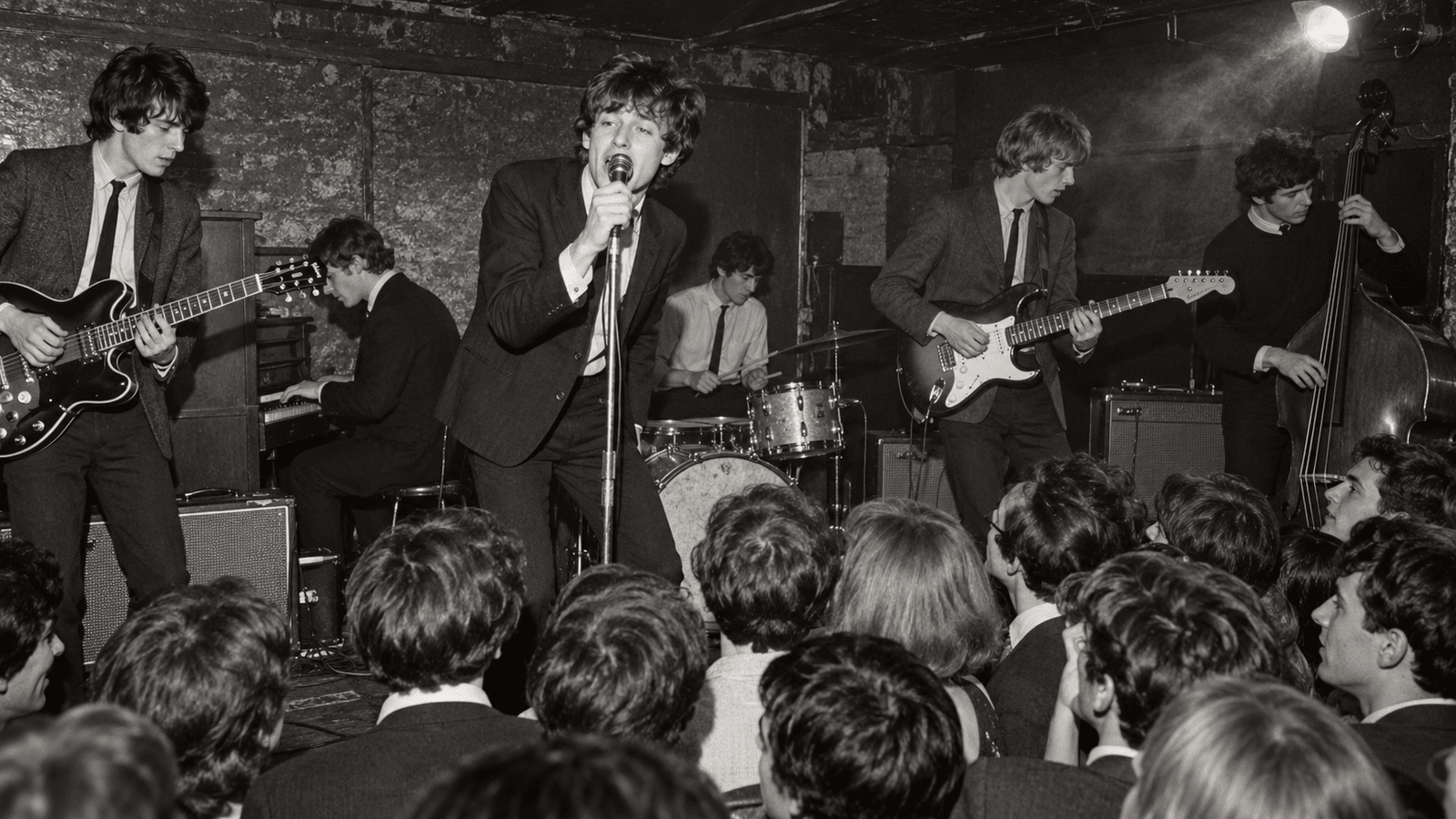
On July 12, 1962, a group billed as the Rollin’ Stones performed at the Marquee Club on Oxford Street in London. The lineup included Mick Jagger, Keith Richards, Brian Jones, Ian Stewart and Dick Taylor, with accounts differing over the drummer that night. They filled a booking normally associated with Alexis Korner’s Blues Incorporated and built the set from American rhythm-and-blues material by artists such as Muddy Waters, Jimmy Reed and Chuck Berry. The spelling of the name was not yet fixed, the personnel would continue to change, and no audience recording survives. What exists is the club listing and the memory of young British musicians publicly committing themselves to music that remained a specialist interest in their country.
The performance mattered because the Stones’ identity formed through interpretation before original songwriting. Brian Jones had placed the advertisement that helped assemble the group and pushed a blues-centered repertory; Jagger and Richards brought a friendship renewed through shared records. Their early club sound treated Black American music with deep admiration, but later success also raises questions about how British performers received wealth and visibility that many originators were denied. The band eventually used its platform to name influences and bring artists onto bills, yet the imbalance remains essential context. The first show captures both sincere musical apprenticeship and the unequal transatlantic marketplace that made the British blues boom possible.
Charlie Watts joined in 1963, Andrew Loog Oldham shaped the group’s public image, and Jagger and Richards developed into a major songwriting partnership. The Rolling Stones went on to record defining singles and albums, survive lineup changes and carry a deliberately dangerous image into stadium-scale longevity. Their first night at the Marquee has acquired the neatness of an origin myth, although the band emerged from many rehearsals, guest appearances and London blues networks. July 12 is useful precisely because it fixes one public threshold. Before the records, tours and iconography, there was a small stage, a borrowed repertory and musicians testing whether devotion to a sound could become a life. More than six decades later, the answer remains one of popular music’s most improbable continuities.
Remembering the rollin’ stones play their first public show on July 12 is valuable because anniversaries turn a familiar cultural object back into a specific decision, release or broadcast. The surrounding technology, business and audience conditions explain why the moment could happen then, while its later uses show that meaning never stops changing. Seen at that scale, the date is not trivia. It is a checkpoint between creation and memory: a place to separate what occurred from the legend accumulated around it and to ask why the work still attracts attention. That perspective also restores the labor of collaborators, distributors and audiences whose choices helped a single event travel beyond its first setting. Cultural history becomes clearer when the remembered icon is reconnected to the systems and people that made it visible.
The band billed as the Rollin' Stones played London's Marquee Club on July 12, 1962.
The remembered moment placed Rolling Stones Take Stage inside the technology, audience habits and creative choices of 1962. Those conditions explain why it could happen then and why contemporary reactions differed from later memory.
Their early set drew heavily from American blues and rhythm-and-blues performers.
Its immediate importance came from the way audiences, distributors and other creators responded. The event gained force beyond its first release or appearance as people repeated, debated and reinterpreted it.
The lineup and spelling evolved, but the date is recognized as the group's first public concert.
Over time, the event became a reference point for later work in popular culture. Its legacy includes both the achievement itself and the changing arguments about what should be celebrated, questioned or rediscovered.
Explore more of "On This Day ..."
Discover more events from the same date across news, politics, technology, sports, and other fields. Each link highlights significant moments that shaped history on different fronts.