

On This Day in Pop: July 13, 1985
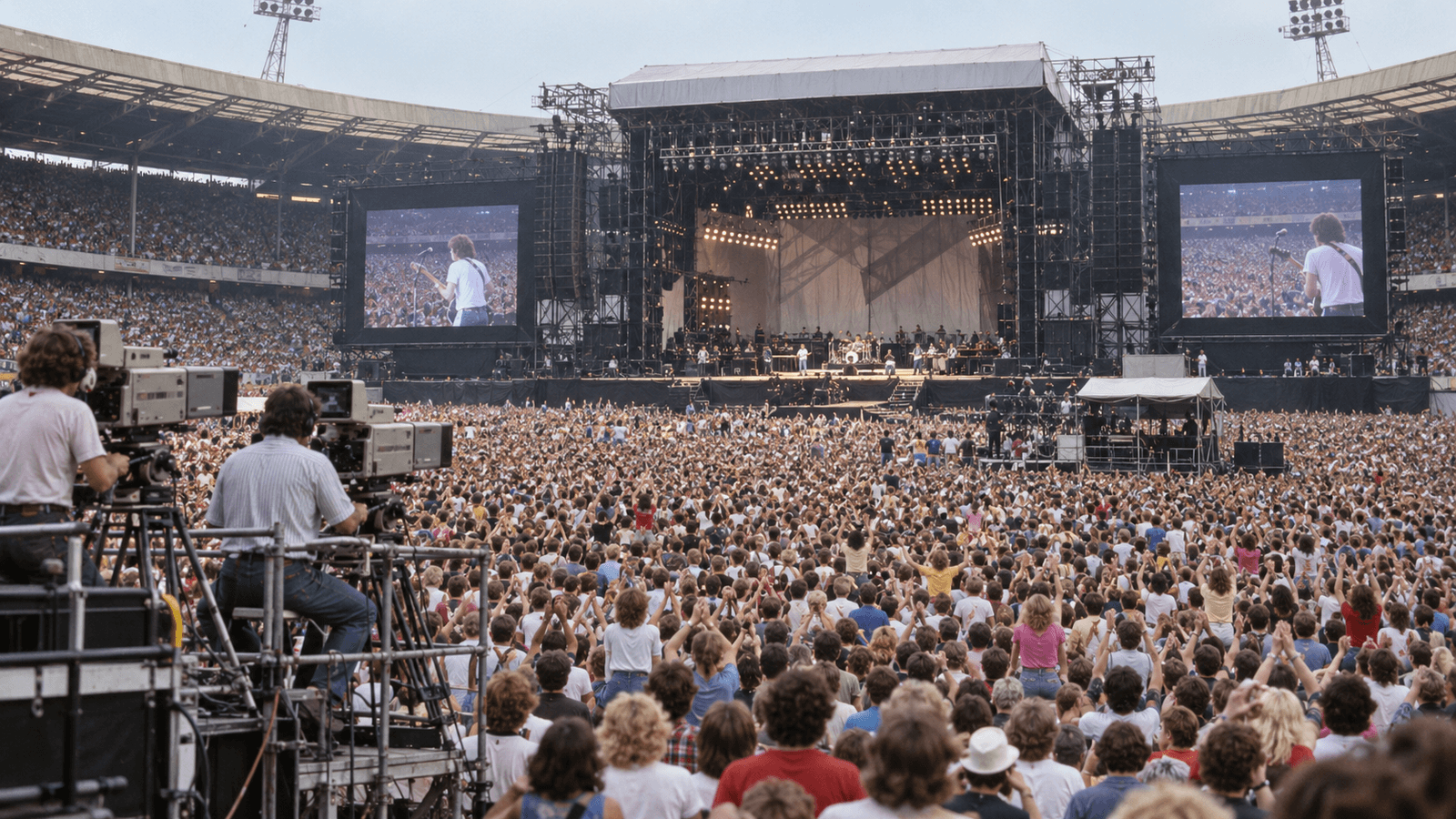
On July 13, 1985, Live Aid unfolded from Wembley Stadium in London and John F. Kennedy Stadium in Philadelphia, with additional performances connected by satellite. Bob Geldof and Midge Ure organized the concerts after the Band Aid single Do They Know It’s Christmas? raised money for famine relief in Ethiopia. A procession of major performers appeared across roughly sixteen hours, and broadcasters assembled feeds for an audience spread across many countries. The London program opened at noon, Philadelphia continued into the American evening, and technical imperfections became part of the feeling that the world was watching something happen in real time. Viewers donated by telephone while music, appeals and news images competed for attention.
The event mattered because it demonstrated the power of global television to turn popular music into an immediate humanitarian platform. Queen’s compact Wembley set became the most celebrated performance, while U2, David Bowie, Madonna, Led Zeppelin, Paul McCartney and many others supplied moments later replayed as rock history. The broadcast raised substantial funds and made famine relief a mass-cultural concern, but its legacy also requires scrutiny. Simplified images of Africa, limited African control over representation and questions about how aid was distributed complicated the triumphant narrative. Celebrity urgency could mobilize generosity, yet it could also reduce political conflict and economic history to a single emotional appeal.
Live Aid influenced later benefit concerts, telethons and cause-driven entertainment, including Live 8 twenty years later. It showed sponsors, broadcasters and artists that a simultaneous international audience could be coordinated around a moral event long before digital platforms made global streaming ordinary. The Band Aid archive and continuing anniversary coverage preserve both the achievement and the arguments surrounding it. July 13 remains a day when entertainment infrastructure was redirected toward relief on extraordinary scale. Its enduring lesson is double: music can make strangers feel connected and willing to act, but responsible solidarity requires listening to affected communities, examining where money goes and continuing the work after the broadcast’s emotional climax.
Remembering live aid broadcasts concerts from london and philadelphia on July 13 is valuable because anniversaries turn a familiar cultural object back into a specific decision, release or broadcast. The surrounding technology, business and audience conditions explain why the moment could happen then, while its later uses show that meaning never stops changing. Seen at that scale, the date is not trivia. It is a checkpoint between creation and memory: a place to separate what occurred from the legend accumulated around it and to ask why the work still attracts attention. That perspective also restores the labor of collaborators, distributors and audiences whose choices helped a single event travel beyond its first setting. Cultural history becomes clearer when the remembered icon is reconnected to the systems and people that made it visible.
Live Aid staged major concerts in London and Philadelphia on July 13, 1985.
The remembered moment placed Live Aid Goes Global inside the technology, audience habits and creative choices of 1985. Those conditions explain why it could happen then and why contemporary reactions differed from later memory.
The satellite broadcast raised money for famine relief and reached audiences in many countries.
Its immediate importance came from the way audiences, distributors and other creators responded. The event gained force beyond its first release or appearance as people repeated, debated and reinterpreted it.
Its musical legacy is accompanied by debate about representation, aid systems and celebrity advocacy.
Over time, the event became a reference point for later work in popular culture. Its legacy includes both the achievement itself and the changing arguments about what should be celebrated, questioned or rediscovered.
Explore more of "On This Day ..."
Discover more events from the same date across news, politics, technology, sports, and other fields. Each link highlights significant moments that shaped history on different fronts.