

On This Day in Business: February 27, 1996
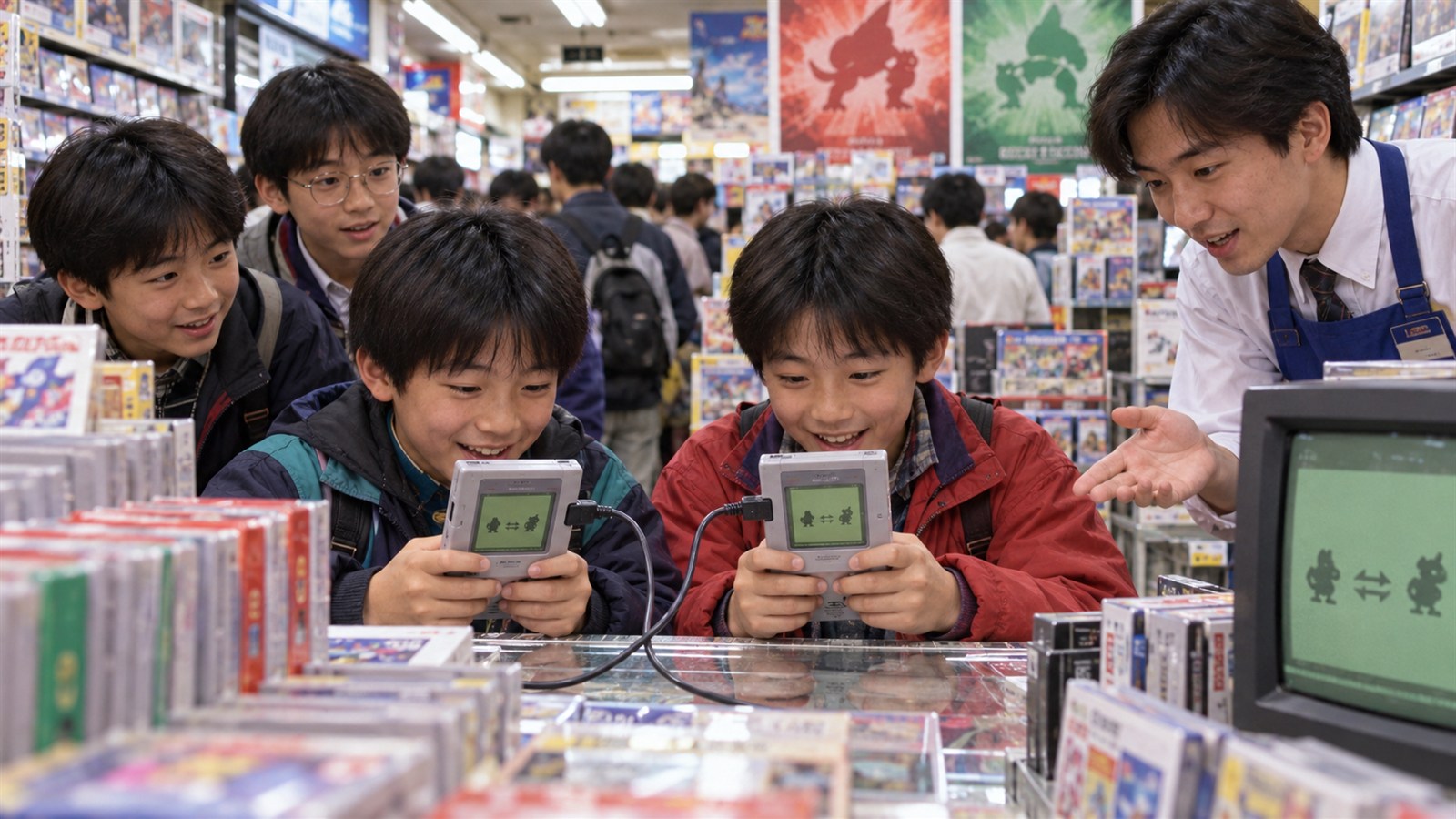
On February 27, 1996, Nintendo released Pocket Monsters Red and Green for the Game Boy in Japan. Developed by Game Freak and published by Nintendo, the role-playing games asked players to explore a world, capture creatures, train a team and complete a collection. Creator Satoshi Tajiri drew on childhood insect collecting and on the Game Boy's link cable, which allowed two handheld systems to exchange data. No single cartridge contained every creature, so trading was not an optional novelty; it was part of the product's design.
The launch was initially modest compared with the frenzy that followed. The Game Boy was already aging, and the software's monochrome graphics looked simple beside newer consoles. Word of mouth grew as children discovered rare creatures and used the link cable to battle or trade. Separate Red and Green editions turned social interaction into a distribution mechanism. A player needed other players to complete the stated goal, making ownership more useful as the local community expanded.
The business soon became a coordinated media system. A collectible card game, manga, animated television series, films, toys and licensed goods gave the characters repeated exposure and several price points. The anime supplied personalities and stories, while games preserved the deeper loop of exploration and collection. When the franchise reached international markets under the shortened Pokémon name, localization and synchronized promotion accelerated demand. The characters could move among products without losing their recognizable identities, creating one of the world's most valuable entertainment franchises.
February 27 matters because the release embedded network effects inside a physical game. The link cable turned another customer's cartridge into part of each player's experience, while edition differences made exchange necessary. Later connected games and mobile products expanded the principle, but the original design achieved it without an online service. Pokémon also demonstrates the power of media orchestration: games, cards and television did different jobs while strengthening the same intellectual property. The launch was not guaranteed to become a global phenomenon, yet its mechanics created reasons for conversation, cooperation, competition and repeated purchase. In business terms, collecting was both play and retention, and connection converted a solitary handheld device into a social platform. Paired editions also changed inventory into conversation. Product differences were deliberately incomplete rather than defects, encouraging owners to seek counterparts. That design turned scarcity into social activity and let the community perform part of the franchise's customer-acquisition work. Every successful trade taught another player why owning a compatible copy mattered.
Satoshi Tajiri combined childhood collecting with the Game Boy link cable, imagining creatures that players could discover and exchange between devices.
Game Freak developed paired editions in which no one cartridge contained every creature, making social trading essential to completing the collection.
Pocket Monsters Red and Green launched in Japan on February 27, 1996, for Nintendo's aging monochrome handheld system.
Word of mouth and playground trading created local network effects, because the experience became richer as more nearby children owned compatible games.
Cards, animation, films, toys and licensed products expanded the characters across media while feeding attention back into the core game business.
The franchise established a durable model in which collectible design, compatible products and shared intellectual property reinforce long-term participation.
Explore more of "On This Day ..."
Discover more events from the same date across news, politics, technology, sports, and other fields. Each link highlights significant moments that shaped history on different fronts.