

On This Day in Business: March 9, 1959
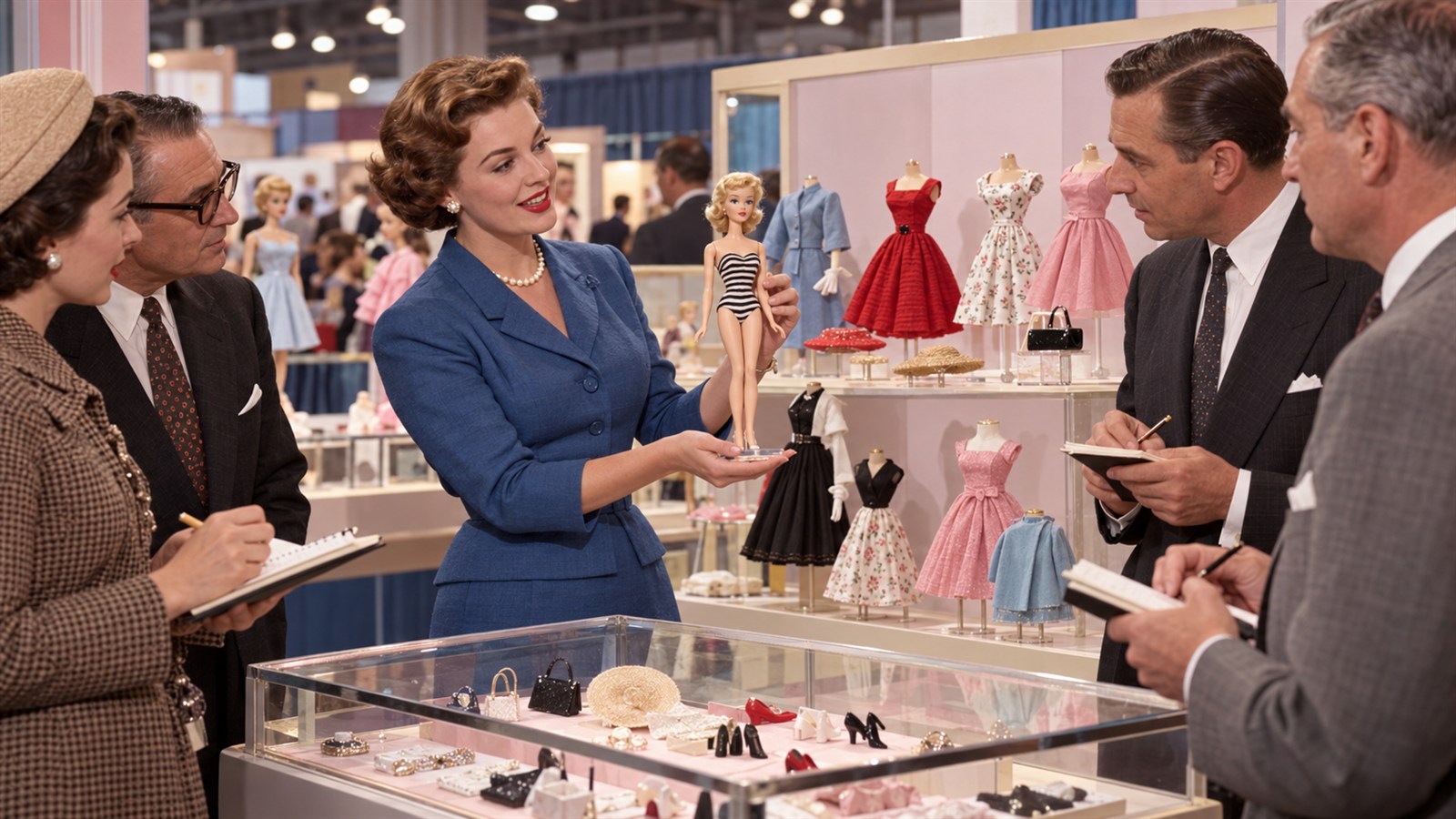
On March 9, 1959, Mattel introduced the Barbie doll to the toy trade in New York. Co-founder Ruth Handler had observed her daughter Barbara giving adult roles to paper dolls and believed children wanted a three-dimensional fashion doll with a grown-up identity. Mattel developed the idea into an eleven-and-a-half-inch figure wearing a striped swimsuit, available as blonde or brunette. The presentation challenged a market dominated by baby dolls, asking buyers to see imaginative role play—and a wardrobe of separately sold clothes—as a new commercial category.
The product depended on a broader business system. Designers created fashions and accessories, manufacturing partners delivered detailed parts at scale, packaging communicated personality, and television advertising reached children directly. Mattel had already used national television to promote toys, and Barbie benefited from that experience. The doll's size made outfits and settings compatible across repeated purchases, so the first sale established a base for an expanding line. Retailers were not simply stocking one item; they were considering an ecosystem with recurring demand and strong display possibilities.
Initial trade reaction was mixed because the figure's adult appearance departed from familiar dolls. Consumer response proved stronger. Mattel sold hundreds of thousands in the first year and continued adding clothing, friends, careers, homes, and vehicles. The brand became a canvas for changing aspirations and fashions, but it also drew criticism over body image, representation, and cultural assumptions. Mattel repeatedly revised the line, widening skin tones, body types, professions, and stories while managing the tension between a recognizable icon and evolving expectations.
Barbie's debut demonstrates how a product can become a platform for narrative and accessory sales. Handler identified an under-served form of play, while Mattel supported it with design, media, distribution, and a stream of complementary goods. The result generated value through collectability and continued reinvention rather than a one-time transaction. It also showed that cultural products face accountability as their reach grows. On March 9, 1959, a disputed trade-show introduction began one of the world's most durable toy businesses and changed how manufacturers thought about characters, licensing, and imaginative identity. Licensing later amplified the model. A strong character could move beyond dolls into books, television, film, games, and collaborations, each reinforcing recognition while adding revenue with different cost structures. That reach demanded careful brand governance because an inconsistent partner or dated message could damage the whole system. Barbie endured by remaining visually identifiable while allowing stories and products to change, a balance between continuity and reinvention that few consumer franchises sustain across generations.
Ruth Handler saw children assigning adult roles to paper dolls and believed a three-dimensional fashion doll could support the same imaginative play.
Mattel combined the figure with clothing, accessories, packaging, and television promotion, creating a system of complementary purchases.
Barbie was presented to buyers at the New York Toy Fair on March 9, 1959, in a striped swimsuit and two hair-color versions.
Some buyers doubted the adult-shaped doll, but consumer demand produced strong first-year sales and encouraged rapid line expansion.
Barbie became a global brand spanning careers, friends, environments, media, and licensing while also attracting sustained cultural criticism.
The launch showed how character, story, standardized scale, and accessories can turn a single toy into a renewable commercial platform.
Explore more of "On This Day ..."
Discover more events from the same date across news, politics, technology, sports, and other fields. Each link highlights significant moments that shaped history on different fronts.