

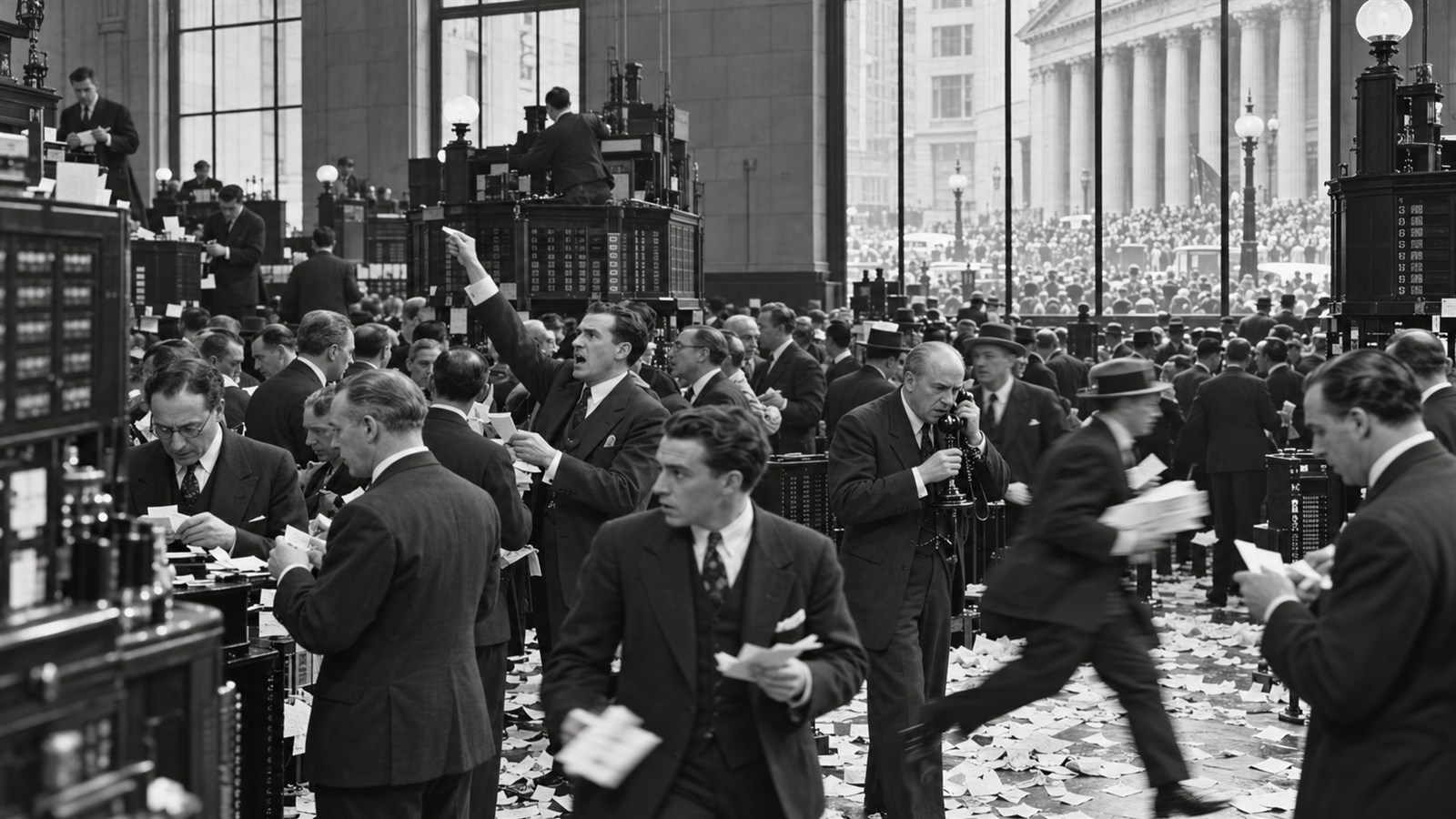
On This Day in Business: October 24, 1929
On October 24, 1929, selling overwhelmed the New York Stock Exchange as confidence in the decade's market boom broke. Nearly thirteen million shares changed hands, a record at the time, and ticker machines ran hours behind. Prices plunged in the morning before a group of leading bankers tried to restore order by buying prominent stocks at prices above the distressed market. The intervention steadied trading temporarily, but the day—remembered as Black Thursday—opened the most famous sequence of the 1929 crash. Far larger declines followed on Black Monday and Black Tuesday.
The 1920s expansion had brought new technology, rising consumer credit, and broad enthusiasm for equities. Investors could buy on margin, putting down a small portion of a stock's price and borrowing the rest. When prices fell, brokers demanded additional cash or sold the collateral, creating forced selling that pushed prices lower. Investment trusts and loans to brokers extended leverage through the system. Optimistic stories and recent gains made risk appear smaller precisely when market prices had moved far above what many companies' earnings could support.
Black Thursday did not by itself cause the Great Depression, and the economy had shown signs of weakening before the crash. Nevertheless, the collapse damaged wealth and confidence, reduced spending, tightened finance, and exposed fragile institutions. The New York Federal Reserve provided liquidity to banks during the immediate market disturbance, but later waves of bank failures and policy mistakes deepened the contraction. Businesses confronted falling demand, unemployment, deflation, and credit scarcity. The difference between a market correction and an economic disaster depended on what happened through banks, households, trade, and public policy afterward.
The crash eventually contributed to major changes in securities disclosure, exchange oversight, deposit insurance, banking structure, and the role of federal institutions. October 24 remains useful because it captures liquidity risk in physical form: sell orders accumulated faster than prices and information could be communicated. Technology has changed, but leverage and crowd behavior still create similar dynamics. The lesson for companies and investors is not simply to avoid markets. It is to distinguish rising prices from durable value, understand how borrowing magnifies losses, and prepare for the possibility that assets assumed to be liquid may find few buyers when confidence disappears. Good governance must also resist the pressure to treat recent calm as proof that leverage is safe. Stress tests, liquidity reserves, transparent exposures, and limits on concentrated borrowing may look inefficient during a boom, but they preserve choices when forced sellers dominate the market.
Heavy selling struck the New York Stock Exchange on October 24, 1929, known as Black Thursday.
Record volume overwhelmed ticker machines and left market information hours behind.
Margin debt converted falling prices into forced sales and reinforced the decline.
A bankers' buying pool calmed the market briefly, but larger losses followed the next week.
The crash did not alone cause the Depression, though it damaged confidence and exposed financial weakness.
The episode remains a warning about leverage, liquidity assumptions, and feedback between finance and the real economy.
Explore more of "On This Day ..."
Discover more events from the same date across news, politics, technology, sports, and other fields. Each link highlights significant moments that shaped history on different fronts.