

On This Day in Business: October 27, 1904
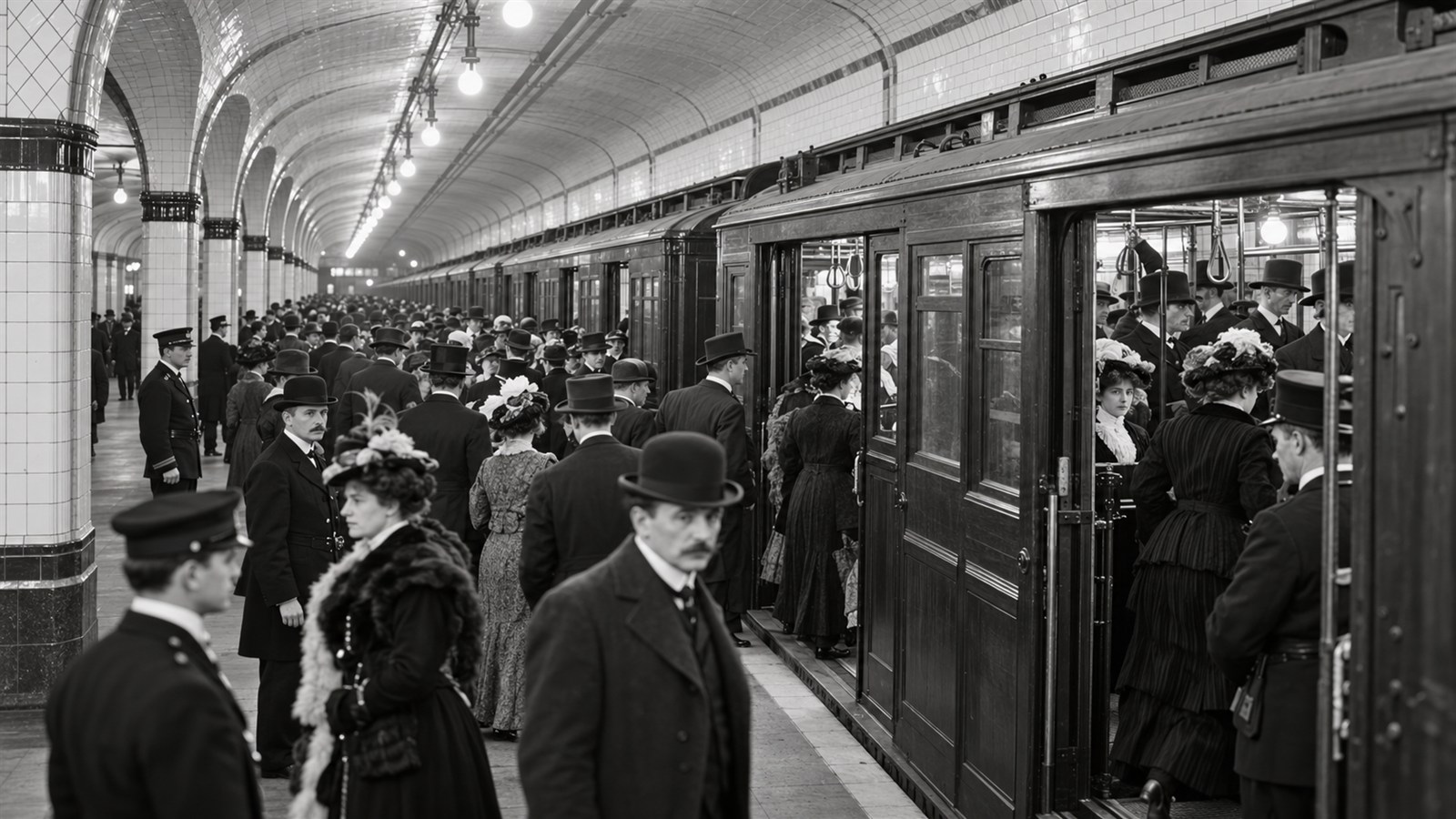
On October 27, 1904, New York City's first subway opened to the public. The initial route ran from City Hall through Manhattan, with branches reaching the Upper West Side and the Bronx. Crowds poured into ornate new stations and rode electric trains beneath streets long burdened by horses, trolleys, elevated lines, pedestrians, and growing traffic. The opening was not simply a transportation novelty. It added high-capacity movement through the center of the nation's largest city and made distant neighborhoods reachable on a predictable daily schedule.
The project used a public-private structure. New York financed and owned the infrastructure, while the Interborough Rapid Transit Company built and operated the line under contract. Most of the route used cut-and-cover construction, which disrupted streets and required utilities, buildings, and businesses to be protected or relocated. Tunnels, bridges, power stations, signaling, rolling stock, ventilation, and stations formed one coordinated system. A five-cent fare made the service broadly accessible, but long-term financial tension grew as costs rose and political leaders resisted changing the fixed price.
Rapid transit changed land economics. Workers could live farther from crowded employment centers, while developers built apartments and shops near new stations. Retail districts gained larger customer areas, employers accessed a wider labor pool, and property values responded to travel time. The network expanded through competition and later unification of private and city systems. Its benefits depended on frequency and connections: each new segment increased the usefulness of routes already operating, a classic network effect grounded in physical infrastructure.
New York's subway became one of the world's largest transit systems, but age, deferred maintenance, unequal access, and difficult funding remain persistent challenges. October 27 demonstrates why urban mobility cannot be evaluated only through fares. Businesses, property owners, workers, visitors, and the tax base all gain from reliable capacity, even when those gains do not appear on the operator's income statement. The opening also shows the value and tension of long-duration contracts. Private operating incentives can help deliver a system, but public control, affordability, maintenance, and changing conditions require governance that can adapt long after construction crews leave. Capacity also created resilience for ordinary commerce. When trains run frequently, employees and customers need less schedule padding, and businesses can draw from more neighborhoods. Small reductions in travel uncertainty compound across millions of trips into a meaningful productivity gain. That shared gain is why transit finance remains a question for the whole metropolitan economy.
New York City's first subway opened to the public on October 27, 1904.
The initial route connected City Hall with upper Manhattan and branches toward the Bronx.
The city financed and owned the infrastructure while a private company operated the trains.
Construction integrated tunnels, electricity, signals, rolling stock, stations, and street reconstruction.
Faster travel changed housing, retail, labor markets, and property development around stations.
The subway's broad economic value extends beyond the fare revenue collected by its operator.
Explore more of "On This Day ..."
Discover more events from the same date across news, politics, technology, sports, and other fields. Each link highlights significant moments that shaped history on different fronts.