

On This Day in Business: November 1, 1982
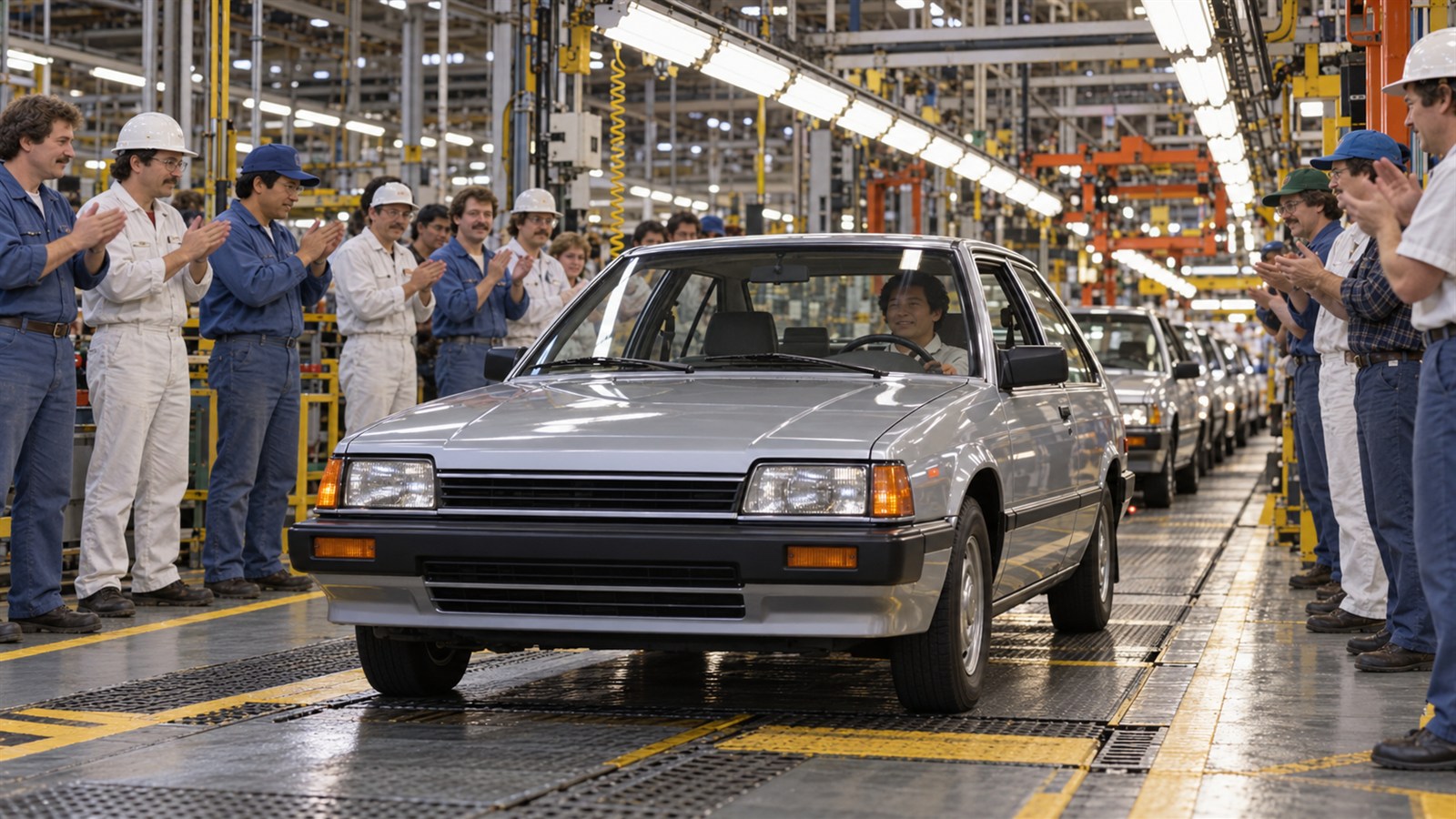
On November 1, 1982, the first Honda Accord built in the United States rolled off the assembly line at Marysville, Ohio. Honda had opened a motorcycle plant nearby in 1979, but the auto plant represented a much larger wager on local production. The silver hatchback became a visible marker that a Japanese automaker could manufacture passenger cars in America with an American workforce. Behind the ceremony sat a harder operating question: whether management could translate a proven product into a new labor market without losing quality, speed, or cost discipline. The answer depended on training, supplier coordination, process control, and patient capital rather than publicity alone.
Honda chose Ohio after studying logistics, labor, and access to the large North American market. The company trained associates in its production methods and began developing a regional supplier base instead of treating the plant as a final assembly outpost for imported components. Marysville also let Honda respond more closely to U.S. demand and reduce exposure to trade tension surrounding imported vehicles. The investment also changed relationships with workers, vendors, governments, and customers. Local production shortened some supply paths and created new dependencies at the same time, making the plant part of a regional system whose performance mattered as much as the design of the product itself.
The decision challenged assumptions held by both Detroit and Japanese industry. Production expanded, suppliers followed, and Honda added other plants and research operations across the country. Local manufacturing gave the company political credibility and operational knowledge while increasing competition for quality, productivity, and fuel-efficient design within the American market. Commercial success therefore came from repetition. Each unit had to meet the same standard while volumes rose, problems surfaced, and competitors reacted. That is the unglamorous core of industrial advantage: learning faster than rivals and turning that learning into routines that can survive growth.
Marysville became the foundation of a broad North American manufacturing network rather than a symbolic one-model experiment. Its importance lies in the way strategy crossed borders: the company brought methods and engineering discipline, then adapted them through local employees and suppliers. The first Accord showed that foreign direct investment could reshape an industry from inside its largest market. For modern companies, the milestone is a reminder that market entry is an operating commitment, not a launch event. Capacity, workforce development, quality assurance, and supplier resilience must reinforce one another. When those pieces align, a factory can become both a production asset and a long-term source of trust. In practical terms, the advantage came from linking a clear customer promise to disciplined execution. Capital had to be allocated before demand was certain, employees and partners had to coordinate, and leaders had to keep learning after the initial milestone passed into history.
Honda began U.S. car production at Marysville on November 1, 1982.
The first vehicle off the line was a Honda Accord hatchback.
The investment followed Honda motorcycle production in Ohio.
Local production brought the company closer to American customers and regulators.
A regional supplier network grew around the expanding operations.
Marysville became the base of Honda's North American manufacturing system.
Explore more of "On This Day ..."
Discover more events from the same date across news, politics, technology, sports, and other fields. Each link highlights significant moments that shaped history on different fronts.