

On This Day in Business: November 2, 1936
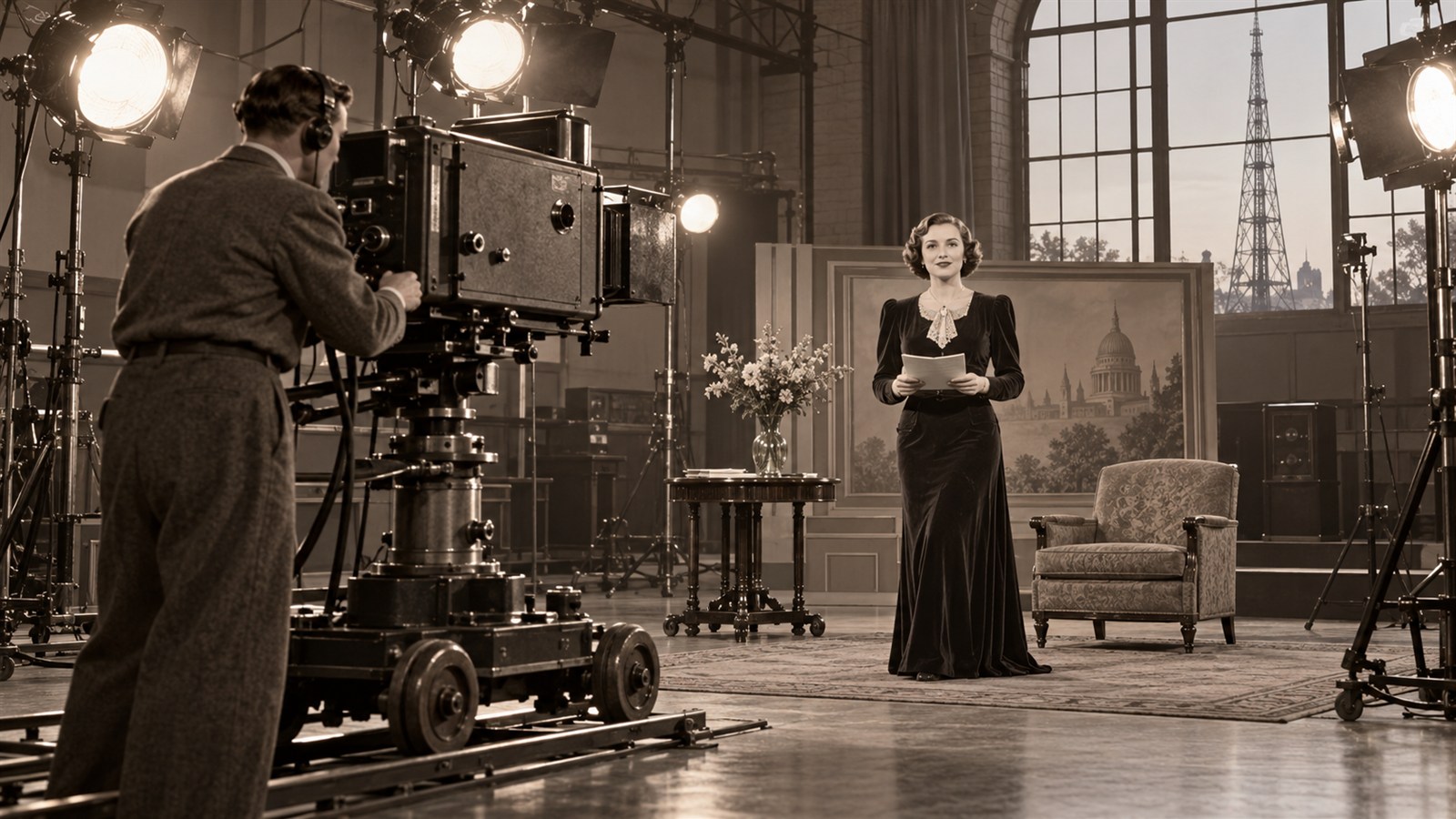
On November 2, 1936, the BBC opened a regular high-definition public television service from Alexandra Palace in north London. Presenter Leslie Mitchell introduced the transmission, and performers, musicians, and technicians filled the schedule. The phrase high definition then referred to systems with far fewer lines than modern television, but the service was a decisive step from laboratory experiment to organized broadcasting. The launch joined creative ambition to a distribution system that could reliably reach an audience. That combination matters because content has little economic value without access, while a network has little reason to exist without programming distinctive enough to make viewers, listeners, or readers return.
The BBC initially alternated between the mechanical Baird system and the all-electronic Marconi-EMI system. Two studios, cameras, lighting, transmitters, and production crews had to operate inside a converted exhibition building. Within months the electronic 405-line approach prevailed, illustrating how commercial media markets often require an early contest among incompatible technologies before one standard can support wider investment. The business model required choices about technology, schedule, rights, talent, and promotion before demand was fully known. Managers were effectively buying an option on future attention, accepting near-term uncertainty in exchange for the chance to establish habits and a recognizable position in a new market.
The potential audience was small because receivers were expensive and the signal reached mainly the London region. Even so, set makers, retailers, performers, and advertisers could now plan around a continuing service rather than sporadic demonstrations. Television began forming a supply chain of equipment, programming, talent, listings, and household attention that would expand dramatically after World War II. Once the audience formed, the enterprise could extend value through advertising, subscriptions, licensing, syndication, merchandise, or repeat exhibition. Yet scale also raised expectations: the brand had to deliver consistently, protect credibility, and keep adapting as competitors copied the format or distribution changed.
Alexandra Palace made television a scheduled business. Viewers were invited to return at known times, producers learned what worked on camera, and manufacturers gained a reason to improve receivers. The outbreak of war interrupted the service in 1939, but the operating knowledge survived. When broadcasting resumed, the medium already had institutional routines and a public identity on which to build. The durable lesson is that media companies are built from both stories and systems. Creative work attracts attention, but operational reliability, rights ownership, audience insight, and distribution determine how long that attention can be converted into revenue. A premiere matters most when it begins a repeatable relationship. In practical terms, the advantage came from linking a clear customer promise to disciplined execution. Capital had to be allocated before demand was certain, employees and partners had to coordinate, and leaders had to keep learning after the initial milestone passed into history.
The BBC service opened from Alexandra Palace on November 2, 1936.
It was promoted as the world's first regular public high-definition television service.
Baird and Marconi-EMI systems initially alternated.
The all-electronic 405-line system became the standard.
Regular scheduling encouraged television-set production and retail sales.
The launch created the operating model for a new mass medium.
Explore more of "On This Day ..."
Discover more events from the same date across news, politics, technology, sports, and other fields. Each link highlights significant moments that shaped history on different fronts.