

On This Day in Business: November 3, 2014
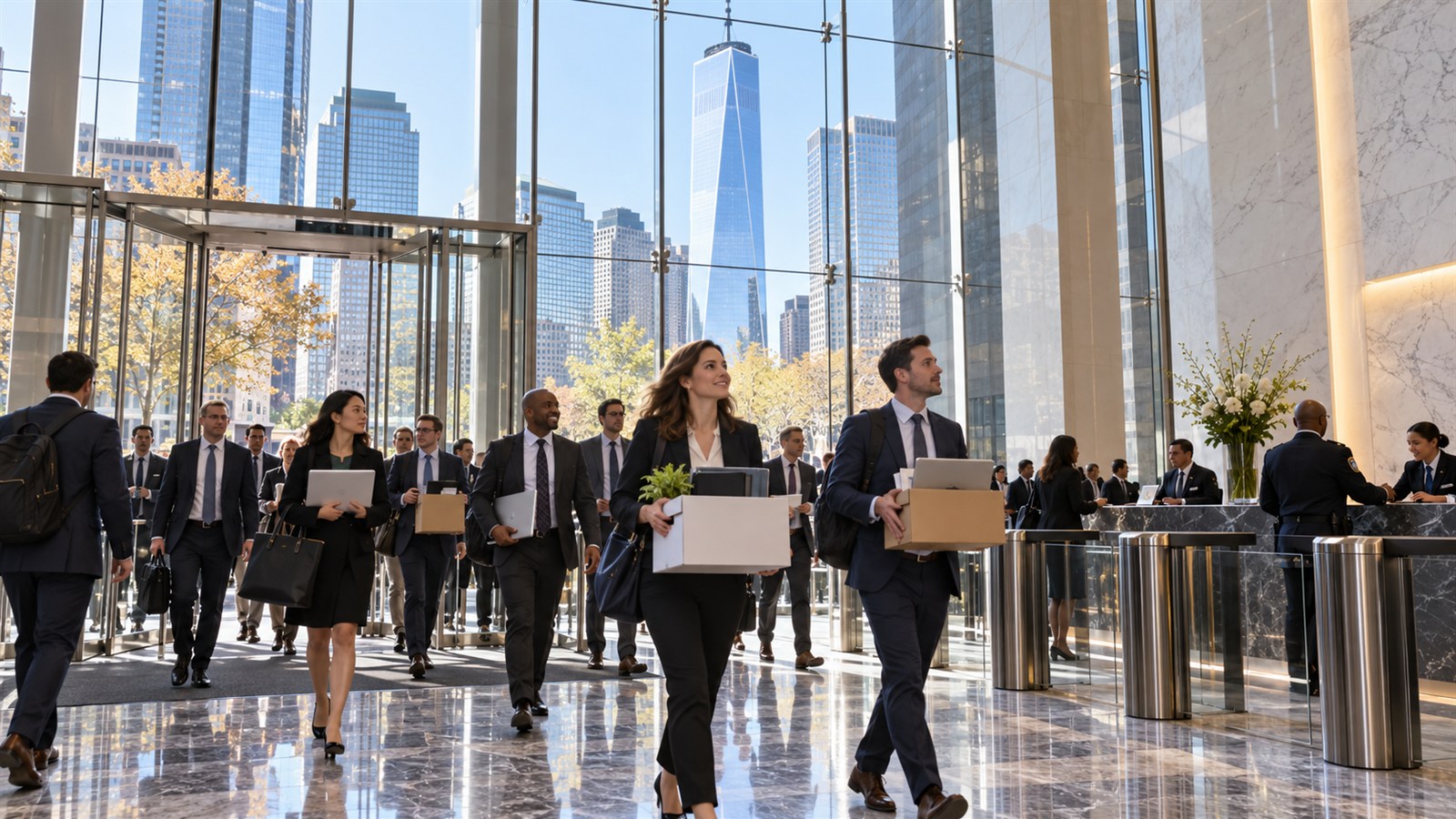
On November 3, 2014, the first group of Condé Nast employees reported for work at One World Trade Center in Lower Manhattan. Their arrival marked the tower's practical opening after years of planning, construction, security design, financing, and debate. The building restored major office capacity to the World Trade Center site and gave downtown New York a new anchor tenant. The event was the visible end of years of surveys, financing, engineering, negotiation, and labor. Infrastructure businesses concentrate risk before they produce benefits, so sponsors must coordinate technical design with rights of way, regulation, capital, and the practical needs of the customers expected to use the system.
The Port Authority developed the 1,776-foot tower as both infrastructure and commercial real estate. Securing a large media tenant helped validate leasing demand, while transportation connections and surrounding public space strengthened the broader district. Opening required coordination among construction teams, owners, tenants, security agencies, and building operators before thousands of workers could use the property safely. Once operating, the asset changed more than travel time. It reorganized where firms could locate, how inventories moved, which markets became reachable, and how reliably people could plan. Those second-order effects often created more economic value than the toll, fare, rent, or fee collected directly by the operator.
The project's economics extended beyond rent. A high-profile headquarters could attract other employers, support shops and restaurants, and reinforce investor confidence in Lower Manhattan. Yet the long development cycle also demonstrated the exposure of megaprojects to changing office markets, design revisions, political scrutiny, and the cost of specialized security. Scale also brought public obligations. Safety, access, maintenance, environmental effects, and monopoly power could not be treated as side issues because a failure in shared infrastructure reached far beyond the owner. Durable performance required governance strong enough to protect both commerce and the communities carrying its costs.
One World Trade Center became a functioning workplace rather than only a skyline symbol when employees entered with laptops, files, and daily routines. That transition matters in real estate: value is created when space supports productive use. The opening showed how an iconic project must still meet ordinary expectations for elevators, access, connectivity, maintenance, and tenant service. The modern lesson is to judge infrastructure across its full life cycle. Construction headlines fade quickly; maintenance, capacity, resilience, and public legitimacy determine whether the asset keeps creating value. The best projects connect engineering discipline with transparent rules and a realistic plan for decades of operation. In practical terms, the advantage came from linking a clear customer promise to disciplined execution. Capital had to be allocated before demand was certain, employees and partners had to coordinate, and leaders had to keep learning after the initial milestone passed into history.
One World Trade Center opened for business on November 3, 2014.
Condé Nast employees formed the first major tenant group to move in.
The tower rises 1,776 feet above Lower Manhattan.
The project combined memorial context, security, transit, and commercial office space.
A major anchor tenant helped validate the rebuilt district.
The milestone turned a symbolic structure into an operating workplace.
Explore more of "On This Day ..."
Discover more events from the same date across news, politics, technology, sports, and other fields. Each link highlights significant moments that shaped history on different fronts.