

On This Day in Business: November 6, 1947
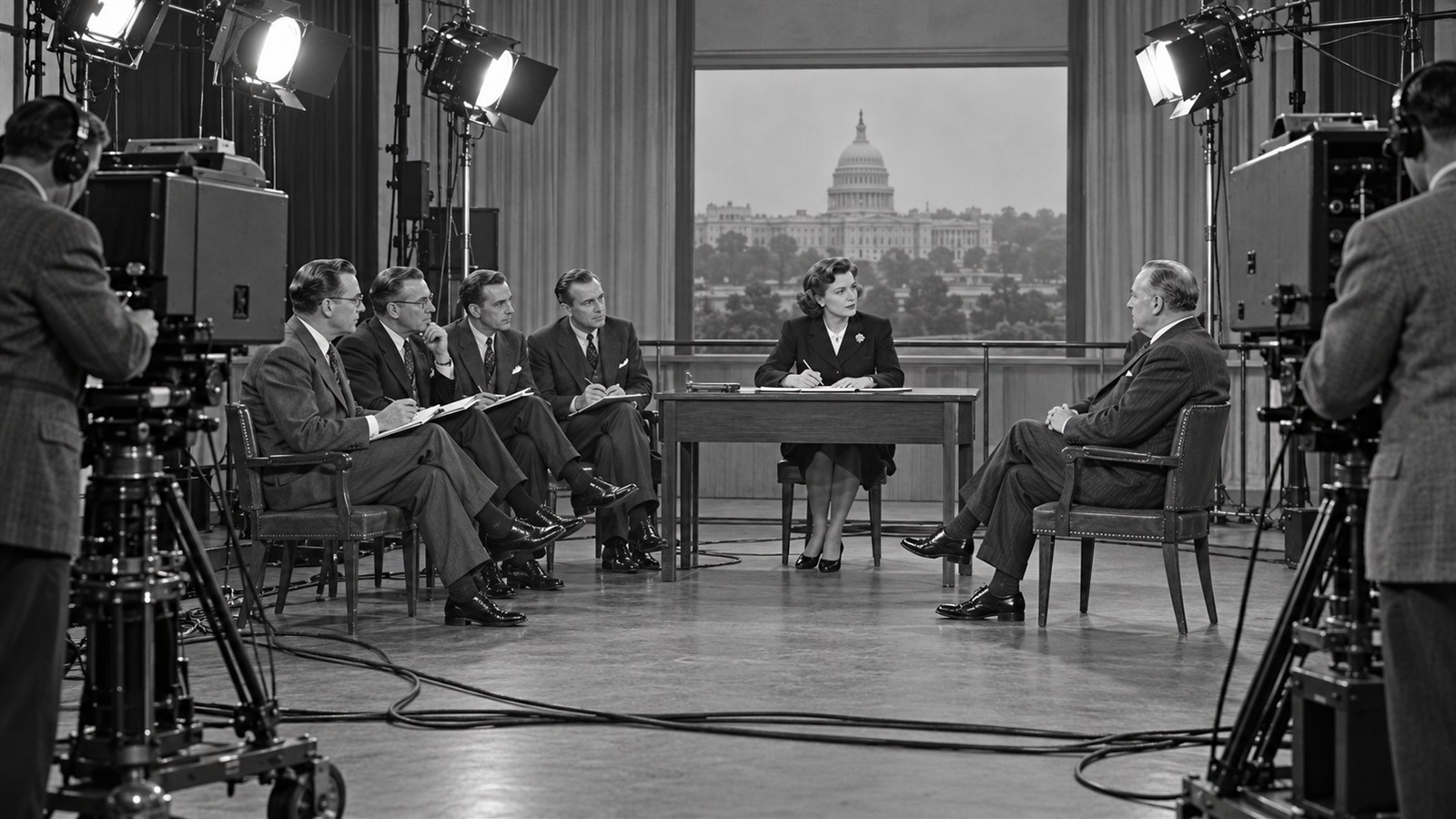
On November 6, 1947, Meet the Press made its television debut on NBC. The program had roots in a radio series created by Martha Rountree and Lawrence Spivak, and its format placed a public figure before a panel of journalists. In television's early commercial era, the show offered a relatively economical studio concept whose value depended on timely guests and disciplined questioning rather than elaborate scenery. The launch joined creative ambition to a distribution system that could reliably reach an audience. That combination matters because content has little economic value without access, while a network has little reason to exist without programming distinctive enough to make viewers, listeners, or readers return.
Rountree moderated the first television broadcast, an important leadership role when women rarely controlled national news programs. The panel structure distributed questioning among experienced reporters and distinguished the show from speeches or scripted commentary. For the network, the format turned access to newsmakers into scheduled appointment viewing and strengthened the credibility of its public-affairs lineup. The business model required choices about technology, schedule, rights, talent, and promotion before demand was fully known. Managers were effectively buying an option on future attention, accepting near-term uncertainty in exchange for the chance to establish habits and a recognizable position in a new market.
The franchise survived changes in sponsors, anchors, technology, audience habits, and political eras. Its longevity demonstrated the economic value of a clear format: viewers understood the promise, producers could refresh the guest and topics each week, and affiliates received a recognizable national program. The brand accumulated authority through continuity while adapting its presentation. Once the audience formed, the enterprise could extend value through advertising, subscriptions, licensing, syndication, merchandise, or repeat exhibition. Yet scale also raised expectations: the brand had to deliver consistently, protect credibility, and keep adapting as competitors copied the format or distribution changed.
Meet the Press also shows that durable media products often have simple cores. A consistent set of rules can focus attention on people and information instead of production spectacle. That simplicity does not remove risk—credibility depends on editorial independence, preparation, fairness, and correction—but it creates a structure that can outlast individual hosts and news cycles. The durable lesson is that media companies are built from both stories and systems. Creative work attracts attention, but operational reliability, rights ownership, audience insight, and distribution determine how long that attention can be converted into revenue. A premiere matters most when it begins a repeatable relationship. In practical terms, the advantage came from linking a clear customer promise to disciplined execution. Capital had to be allocated before demand was certain, employees and partners had to coordinate, and leaders had to keep learning after the initial milestone passed into history.
Meet the Press debuted on television on November 6, 1947.
The program adapted an earlier radio concept.
Martha Rountree moderated the first television broadcast.
A panel of journalists questioned a featured public figure.
The repeatable format became a durable network franchise.
Its value rested on access, preparation, and editorial credibility.
Explore more of "On This Day ..."
Discover more events from the same date across news, politics, technology, sports, and other fields. Each link highlights significant moments that shaped history on different fronts.