

On This Day in Business: November 7, 1929
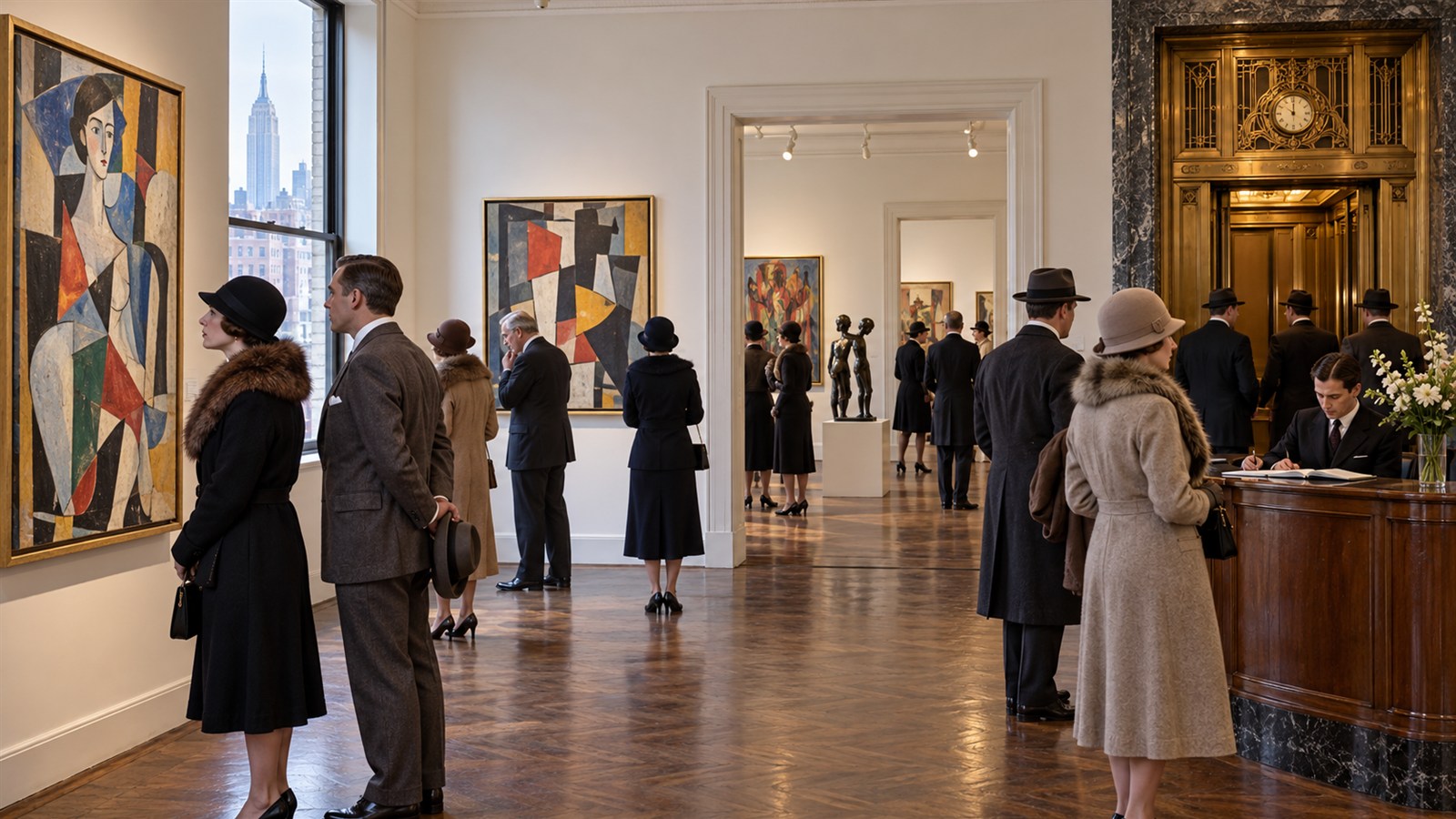
On November 7, 1929, the Museum of Modern Art opened to the public in rented rooms at 730 Fifth Avenue in New York. Founded by Lillie P. Bliss, Mary Quinn Sullivan, Abby Aldrich Rockefeller, and allies, the institution began only days after the stock-market crash. Its first exhibition presented modern European artists to an American audience through a small, ambitious organization without a permanent building. The commercial importance extended beyond the object or performance itself. Cultural enterprises create markets by organizing attention, interpretation, and access. The institution, publisher, producer, or promoter must persuade audiences that a new work deserves time while also building the practical means to encounter it.
The founders treated modern art as a field requiring active collection, interpretation, and promotion rather than occasional display. Director Alfred H. Barr Jr. organized exhibitions and educational material that helped visitors understand unfamiliar work. The museum's program also created validation for artists, collectors, dealers, publishers, and lenders operating in a market where reputation and context strongly influence value. Revenue rarely comes from a single channel. Tickets, editions, memberships, licensing, donations, touring, education, and later reuse can support the same underlying intellectual property or collection. That portfolio makes rights, preservation, and reputation central business assets rather than administrative details.
MoMA expanded into architecture, design, photography, and film, widening the idea of what a museum could collect and explain. Memberships, admissions, donations, publications, and exhibitions supported the institution while its curatorial authority affected taste far beyond its galleries. A cultural nonprofit became an influential participant in both education and the art economy. Success can be difficult to forecast because cultural value often grows through conversation and repetition. Critics, fans, schools, retailers, and other institutions become part of distribution. A work that initially looks risky may gain commercial power as more people use it to define a genre, an era, or a shared identity.
The opening illustrates how institutions can create categories. By selecting, naming, preserving, and exhibiting modern work, MoMA made the field easier for audiences and patrons to navigate. That authority carries responsibility: acquisitions and exhibitions can elevate some stories while omitting others. Long-term trust depends on scholarship, transparency, access, and a willingness to revisit earlier judgments. The lasting lesson is to pair creative risk with stewardship. Managers should preserve source materials, clarify ownership, cultivate audiences, and leave room for reinterpretation. Cultural businesses endure when they treat attention as a relationship to be renewed, not a commodity exhausted in one opening weekend. In practical terms, the advantage came from linking a clear customer promise to disciplined execution. Capital had to be allocated before demand was certain, employees and partners had to coordinate, and leaders had to keep learning after the initial milestone passed into history.
MoMA opened to the public on November 7, 1929.
Its first galleries were rented rooms at 730 Fifth Avenue.
The founders created an institution devoted to modern art.
Early exhibitions helped American audiences interpret unfamiliar work.
The museum expanded into design, photography, architecture, and film.
Its curatorial authority influenced both culture and the art market.
Explore more of "On This Day ..."
Discover more events from the same date across news, politics, technology, sports, and other fields. Each link highlights significant moments that shaped history on different fronts.