

On This Day in Health: November 30, 1840
On November 30, 1840, Wilhelm Heinrich Erb was born in Winnweiler and later became an influential German neurologist focused on peripheral nerves, muscles, spinal cord, and reflexes. This date matters because it fixes a broad medical story to a specific moment, place, and group of people. It also shows how health history is shaped carefully by institutions and practical choices as well as laboratory discoveries.
The background was already developing before that day. Neurology was emerging from internal medicine as clinicians sought to localize weakness and wasting. Electrical stimulation offered a new way to test whether disease arose in muscle, peripheral nerve, spinal pathways, or the brain. Those conditions defined what participants could attempt and what patients or communities could reasonably expect. The available tools, social expectations, and professional structures all shaped the result. Change also depended on cooperation among people whose roles were not always recorded equally. They explain why later accounts sometimes compress years of preparation into a single anniversary. Looking at that preparation keeps credit broad and makes the turning point easier to understand without turning it into a miracle story.
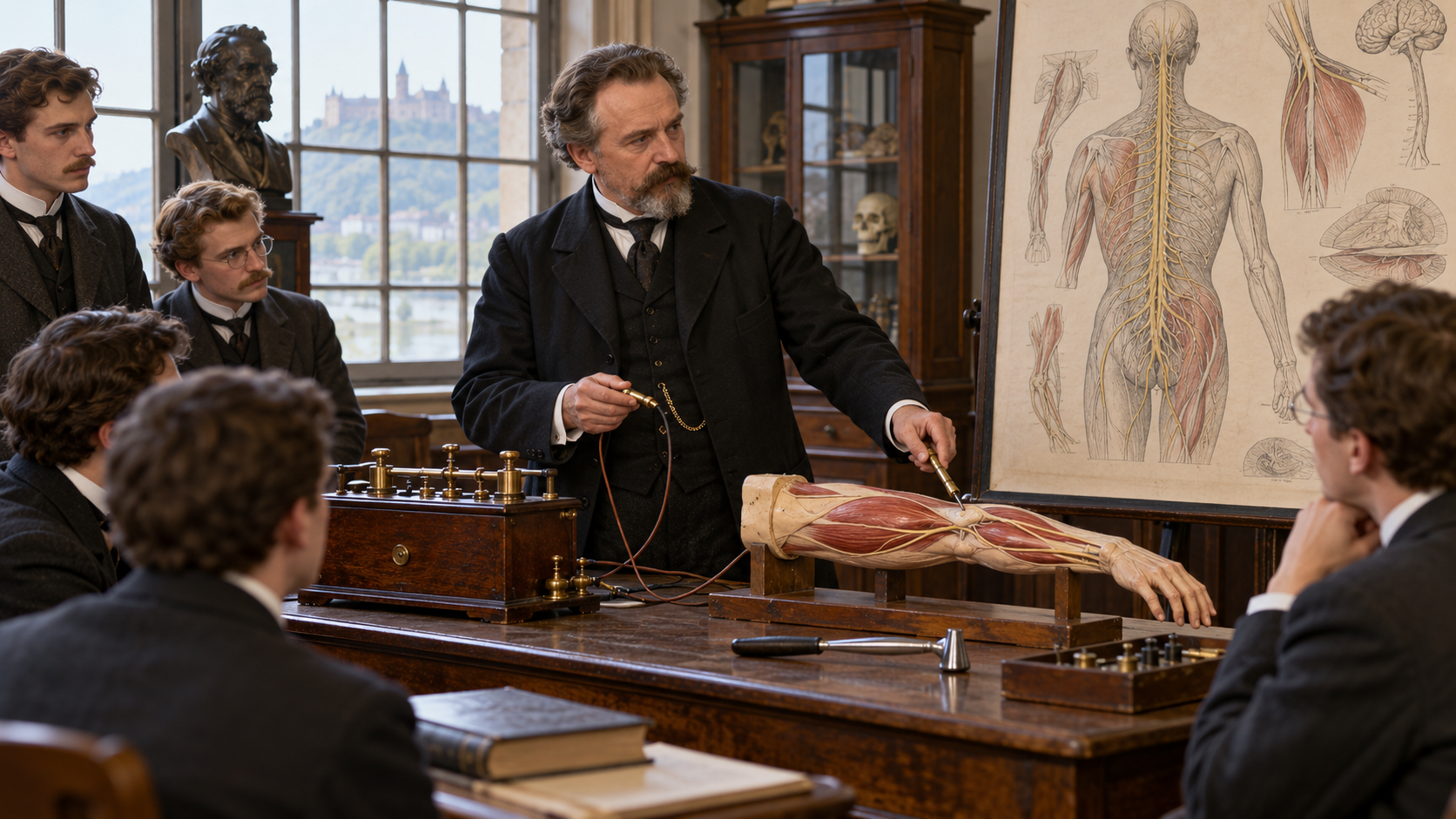
What happened on the date was consequential but limited. Erb systematized electrodiagnosis, described patterns of paralysis involving the upper brachial plexus, studied tendon reflexes and muscular dystrophy, and helped establish dedicated neurological teaching and clinics. Several conditions attached to his name were described with limited tools and later divided by pathology and genetics. Eponyms can be ambiguous and can obscure patients and other investigators who contributed observations. The distinction is important: the event did not instantly solve the underlying health problem, and later progress depended on follow-up research, training, policy, funding, and public trust. Contemporary evidence also helps separate what participants knew then from interpretations added after the result became famous.
Its longer legacy reaches beyond the original setting. His work helped make neuromuscular examination reproducible and connected anatomy with electrical function, influencing clinical neurology, rehabilitation, and physical medicine around the modern world. Electromyography, nerve-conduction studies, imaging, genetics, antibody testing, and biopsy now refine diagnosis, while bedside strength, reflex, sensory, and functional assessment remain the starting point. Seen in context, the anniversary is useful because it connects a concrete historical episode with continuing questions about evidence, access, safety, and responsibility in health care. That connection is stronger when the people affected, the limits of the achievement, and the work still unfinished remain part of the account.
Erb systematized electrodiagnosis, described patterns of paralysis involving the upper brachial plexus, studied tendon reflexes and muscular dystrophy, and helped establish dedicated neurological teaching and clinics.
Several conditions attached to his name were described with limited tools and later divided by pathology and genetics. Eponyms can be ambiguous and can obscure patients and other investigators who contributed observations.
His work helped make neuromuscular examination reproducible and connected anatomy with electrical function, influencing clinical neurology, rehabilitation, and physical medicine around the modern world.
Neurology was emerging from internal medicine as clinicians sought to localize weakness and wasting. Electrical stimulation offered a new way to test whether disease arose in muscle, peripheral nerve, spinal pathways, or the brain.
Wilhelm Heinrich Erb was born in Winnweiler and later became an influential German neurologist focused on peripheral nerves, muscles, spinal cord, and reflexes.
Electromyography, nerve-conduction studies, imaging, genetics, antibody testing, and biopsy now refine diagnosis, while bedside strength, reflex, sensory, and functional assessment remain the starting point.
Explore more of "On This Day ..."
Discover more events from the same date across news, politics, technology, sports, and other fields. Each link highlights significant moments that shaped history on different fronts.