

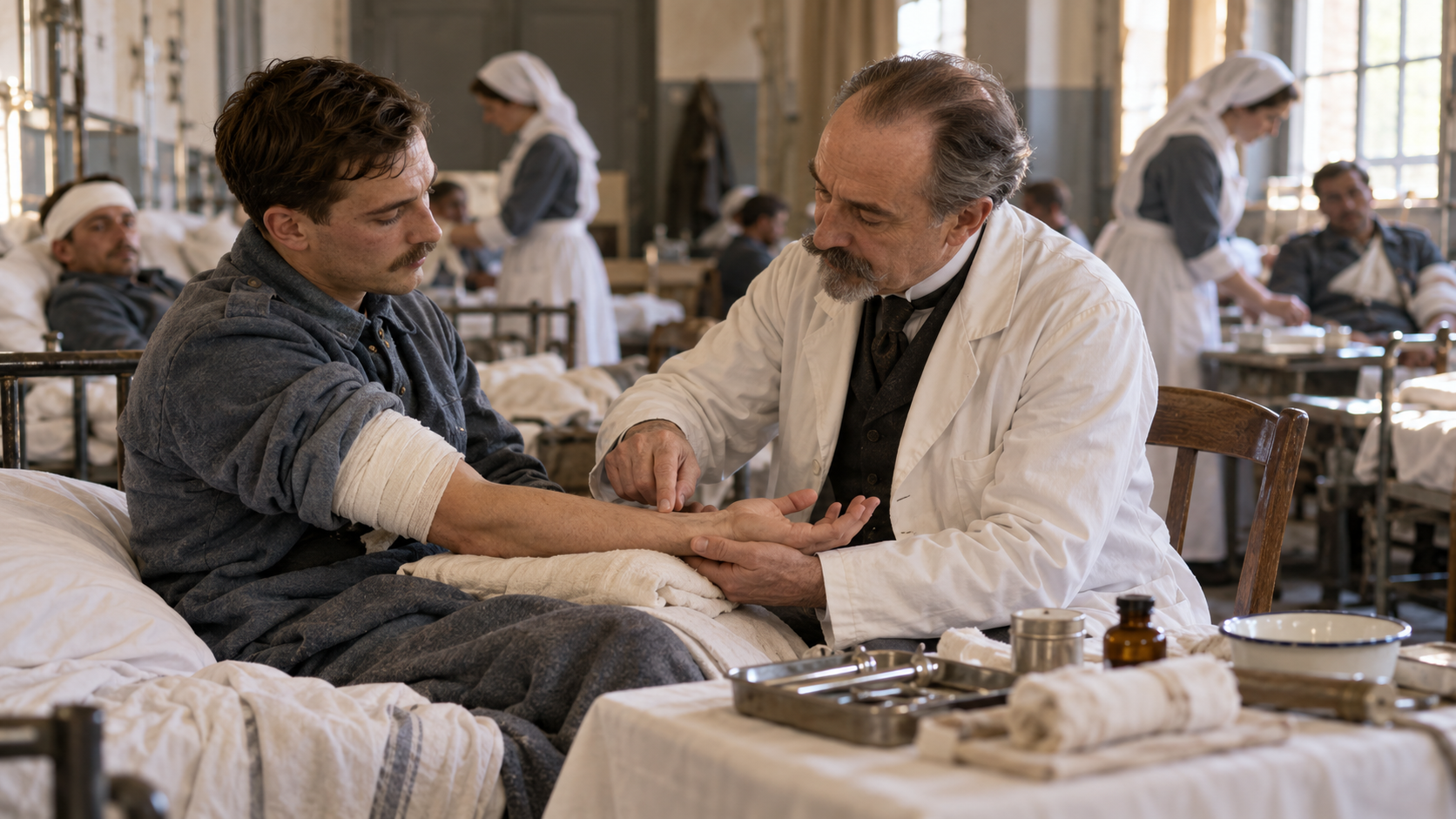
On This Day in Health: October 7, 1915
On October 7, 1915, French neurologist Jules Tinel published his account of the tingling sensation produced by tapping over an injured peripheral nerve. The finding became known as the Hoffmann-Tinel sign. This date matters because it fixes a broad medical story to a specific moment, place, and group of people. It also shows how health history is shaped by institutions and practical choices as well as laboratory discoveries.
The background was already developing before that day. The First World War created large numbers of nerve injuries from bullets and shrapnel. Clinicians needed practical ways to map damage, follow regeneration, and decide whether surgery or continued observation was appropriate. Those conditions defined what participants could attempt and what patients or communities could reasonably expect. The available tools, social expectations, and professional structures all shaped the result. Change also depended on cooperation among people whose roles were not always recorded equally. They also explain why later accounts sometimes compress years of preparation into a single anniversary. Looking at that preparation keeps credit broad and makes the turning point easier to understand without turning it into a miracle story.
What happened on the date was consequential but limited. Tinel described how gentle pressure or percussion over a regenerating nerve could produce tingling projected into its sensory territory. The moving point of response could help clinicians track recovery over time. The sign is subjective and neither perfectly sensitive nor specific. It cannot by itself locate every lesion, measure severity, or replace a complete history, neurological examination, electrodiagnostic testing, and imaging when those are needed. The distinction is important: the event did not instantly solve the underlying health problem, and later progress depended on follow-up research, training, policy, funding, and public trust. Contemporary evidence also helps separate what participants knew then from interpretations added after the result became famous.
Its longer legacy reaches beyond the original setting. The maneuver moved from wartime nerve repair into routine assessment of entrapment neuropathies such as carpal tunnel syndrome and became part of bedside neurological language. Its continued use illustrates the value and the limits of simple physical signs: they can guide attention quickly, but reliable diagnosis comes from combining observations rather than treating one response as decisive. Seen in context, the anniversary is useful because it connects a concrete historical episode with continuing questions about evidence, access, safety, and responsibility in health care. That connection is stronger when the people affected, the limits of the achievement, and the work still unfinished remain part of the account.
Tinel described how gentle pressure or percussion over a regenerating nerve could produce tingling projected into its sensory territory. The moving point of response could help clinicians track recovery over time.
The sign is subjective and neither perfectly sensitive nor specific. It cannot by itself locate every lesion, measure severity, or replace a complete history, neurological examination, electrodiagnostic testing, and imaging when those are needed.
The maneuver moved from wartime nerve repair into routine assessment of entrapment neuropathies such as carpal tunnel syndrome and became part of bedside neurological language.
The First World War created large numbers of nerve injuries from bullets and shrapnel. Clinicians needed practical ways to map damage, follow regeneration, and decide whether surgery or continued observation was appropriate.
French neurologist Jules Tinel published his account of the tingling sensation produced by tapping over an injured peripheral nerve. The finding became known as the Hoffmann-Tinel sign.
Its continued use illustrates the value and the limits of simple physical signs: they can guide attention quickly, but reliable diagnosis comes from combining observations rather than treating one response as decisive.
Explore more of "On This Day ..."
Discover more events from the same date across news, politics, technology, sports, and other fields. Each link highlights significant moments that shaped history on different fronts.