

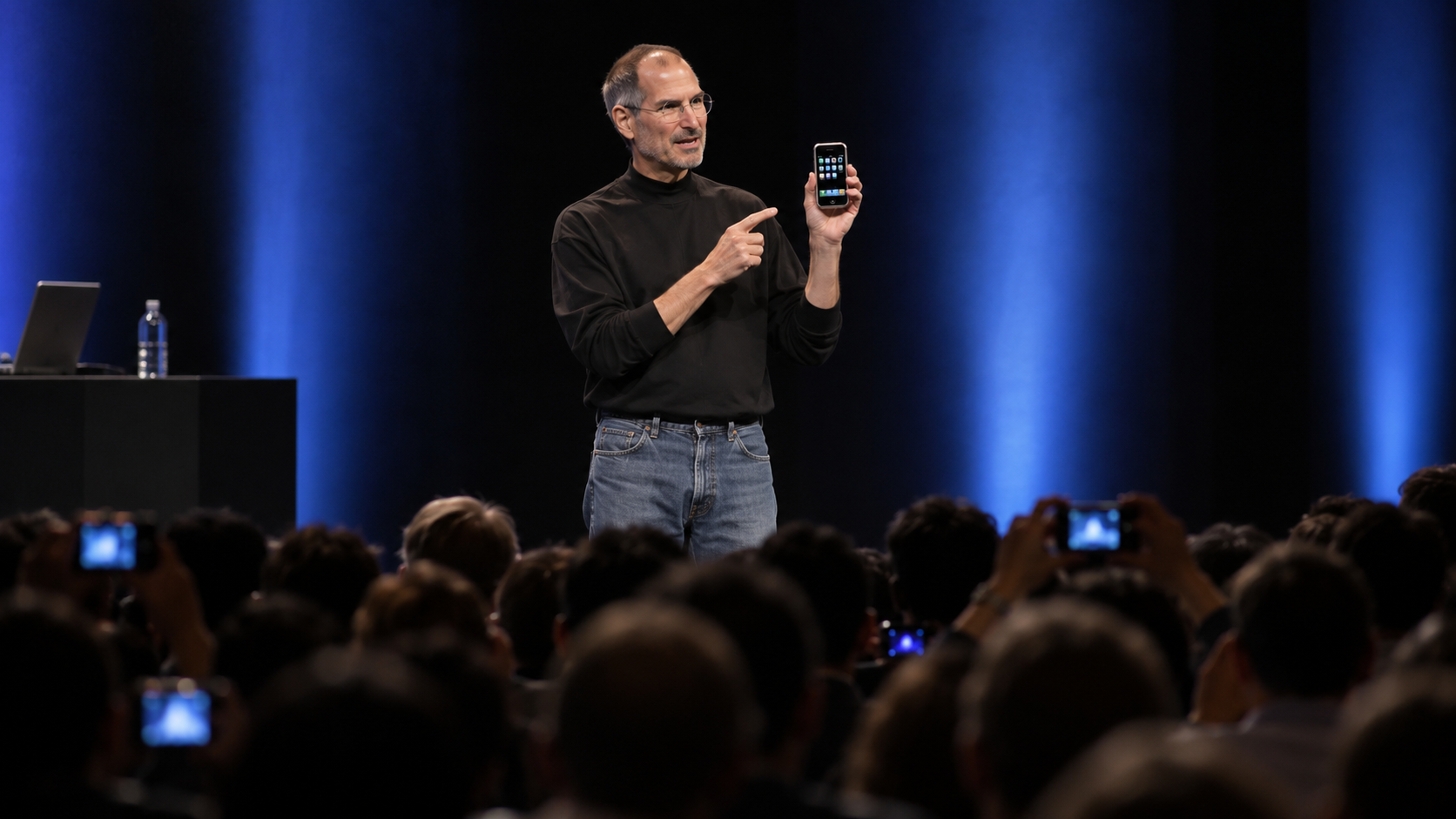
On This Day in Lifestyles: January 9, 2007
On January 9, 2007, Steve Jobs introduced the iPhone at the Macworld conference in San Francisco. He described it as three products in one: a mobile phone, a widescreen music player, and an Internet communications device. The dramatic reveal mattered because those functions were not presented as separate modes controlled by a keypad or stylus. Instead, a large capacitive touchscreen let users tap, swipe, scroll, and pinch with their fingers. The device would not reach stores until June, but the demonstration immediately offered a new picture of how a phone could fit into work, entertainment, navigation, and social life.
Smartphones existed before the iPhone. Business users carried BlackBerry devices, personal digital assistants synchronized calendars and contacts, and several phones could browse simplified websites or run small applications. Most, however, depended on hardware keyboards, nested menus, carrier portals, or a stylus. Apple paired multitouch software with a desktop-style browser, visual voicemail, photo browsing, maps, and an interface that changed according to the task. Its first model used a slower cellular network and lacked features later taken for granted, including an app store, copy and paste, and video recording. Its appeal came from making complex functions feel direct.
The introduction also changed the business around phones. Apple negotiated unusual control over the handset’s software and customer experience, weakening the traditional authority of wireless carriers over menus and services. A year later, the App Store gave outside developers a standardized way to distribute software, turning the phone into a platform for banking, transportation, games, photography, news, shopping, dating, and countless specialized tasks. Competitors adopted similar touch interfaces, and mobile websites became essential. Cameras improved, location services spread, and constant Internet access moved from a feature for professionals toward an expectation for ordinary consumers.
The lifestyle effects have been both liberating and disruptive. One pocket device can replace a map, camera, music player, boarding pass, address book, alarm clock, newspaper, and wallet. It helps families share moments instantly and gives small businesses tools once available only at a desk. At the same time, notifications, tracking, social comparison, and the pressure to remain reachable have blurred boundaries between public and private time. The January presentation did not create every element of modern mobile life, but it assembled them into a persuasive whole. It marked the moment the phone began to look less like an appliance for calls and more like the remote control for daily life.
The original iPhone combined a phone, iPod-style media player, and full web browser behind a multitouch screen. Apple announced 4 GB and 8 GB versions months before retail availability.
Earlier smartphones already offered email, calendars, and web access, but most relied on physical keys, styluses, or carrier-designed software. The iPhone made direct finger control central.
The first model had no App Store. Apple opened its software marketplace in 2008, creating a large new economy for mobile services, games, and subscriptions.
Competing platforms soon adopted large touchscreens, gesture interfaces, and downloadable apps, accelerating the shift from desktop-first to mobile-first design.
Phones now handle photography, navigation, payments, entertainment, work, and social connection. Many once-separate household objects have become software icons.
The same convenience brought new concerns about attention, privacy, screen time, location tracking, and the expectation of being constantly available.
Explore more of “This Day in Lifestyles”
Discover more moments in everyday life, design, education, travel, food, fashion, and culture. Each story connects a calendar date with an event that changed how people lived.