

On This Day in Lifestyles: January 10, 1863
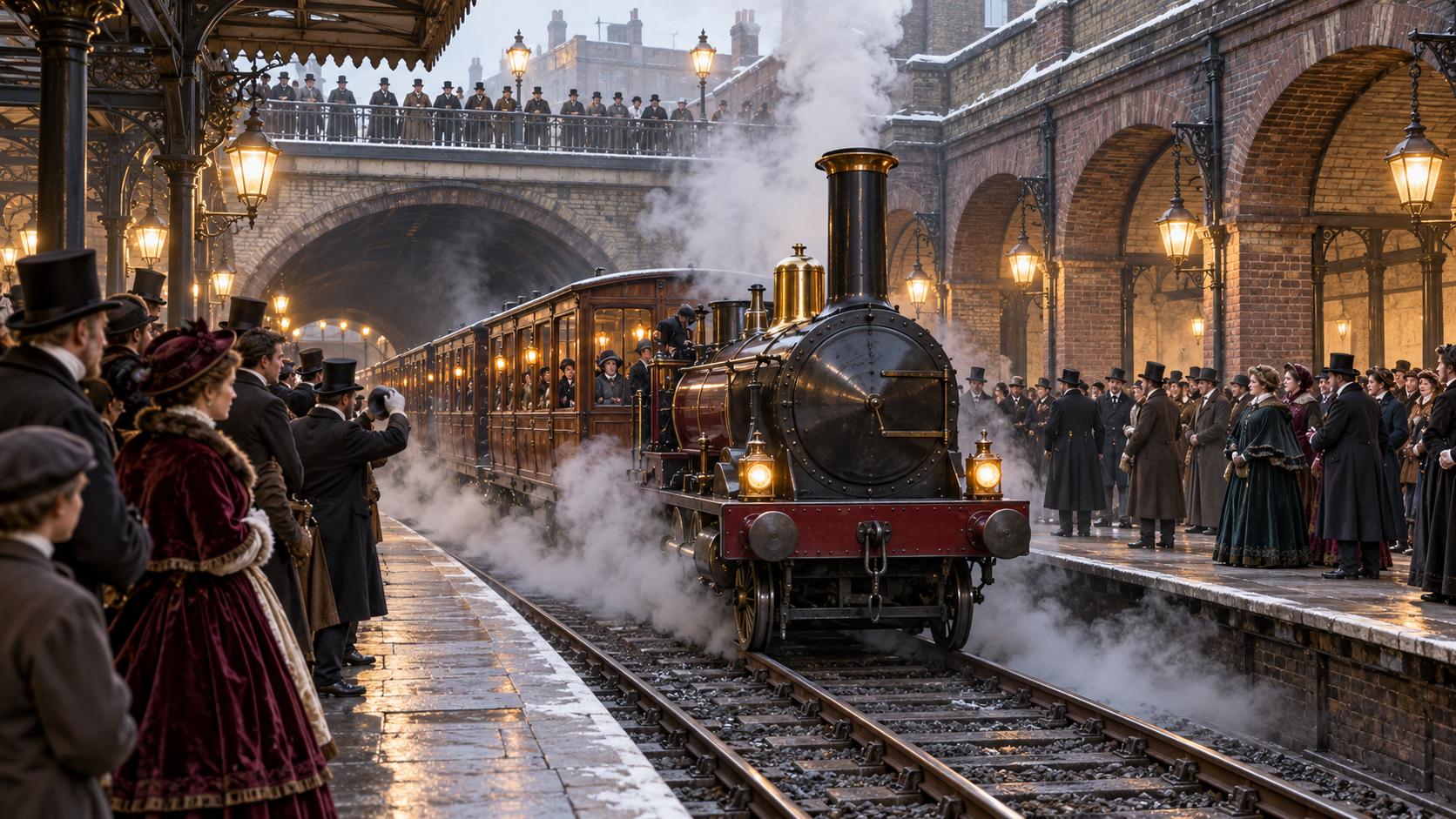
On January 10, 1863, London’s Metropolitan Railway opened to the public between Paddington and Farringdon Street, creating the world’s first underground passenger railway. Steam locomotives hauled gas-lit wooden carriages through a route about four miles long, stopping at stations beneath some of the capital’s busiest streets. The opening followed a ceremonial journey for officials the previous day, but the public response made the achievement real: tens of thousands rode during the first day. For Londoners accustomed to crowded roads, horse-drawn omnibuses, and long walks, the railway introduced a new way to move quickly across the expanding city.
The line answered a problem created by industrial urban growth. Railway terminals had brought increasing numbers of workers and visitors to the edges of central London, while narrow streets struggled with carts, cabs, animals, and pedestrians. Promoters proposed joining major stations through a railway below ground. Engineers used the cut-and-cover method, digging trenches along existing roads, constructing brick tunnels, and restoring the surface above them. Building disrupted neighborhoods and displaced residents, especially poorer households. The finished railway was ingenious but uncomfortable: locomotives produced smoke and steam, ventilation was imperfect, and early carriages offered little of the bright, clean environment associated with modern transit.
Despite those conditions, demand proved that urban rail could organize daily life at metropolitan scale. The system expanded through partnerships and rival companies, gradually reaching new districts and encouraging housing farther from workplaces. Later tunneling methods allowed deeper lines, while electric traction reduced smoke and made enclosed routes practical. Standardized signs, schematic maps, escalators, and frequent services eventually shaped the Underground’s recognizable identity. The idea spread internationally as growing cities sought their own rapid-transit systems. Underground railways became not merely engineering projects but public spaces where people of different classes shared platforms, routines, delays, and the daily rhythm of commuting.
The opening’s long legacy can be seen in the shape of London itself. Reliable rail made it possible for millions to separate home, work, shopping, and leisure across greater distances, while stations became centers for neighborhoods and commerce. The benefits were never distributed evenly: construction choices, fares, accessibility, and service levels continued to determine who could use the network comfortably. Yet the central proposition of 1863 endured—that dense cities could reclaim surface space and connect ordinary journeys through a hidden layer of infrastructure. Every modern subway ride, from a hurried commute to a family day out, carries forward the experiment launched by smoky trains under Victorian streets.
The Metropolitan Railway ran between Paddington and Farringdon Street, linking central London with mainline rail terminals and crowded commercial districts.
Its tunnels were built mainly by cut-and-cover construction: streets were opened, brick structures were installed, and the road surface was restored above.
Steam locomotives pulled wooden carriages lit by gas. Smoke and heat made the early underground journey less comfortable than today’s electric service.
Strong first-day ridership demonstrated that Londoners would embrace rail travel below street level when it saved time in a congested city.
Expansion helped create commuter suburbs and turned stations into anchors for housing, shops, work, and entertainment throughout the metropolis.
Later electric trains and deep-level tunnels made the concept cleaner and more flexible, inspiring subway systems in cities around the world.
Explore more of “This Day in Lifestyles”
Discover more moments in everyday life, design, education, travel, food, fashion, and culture. Each story connects a calendar date with an event that changed how people lived.