

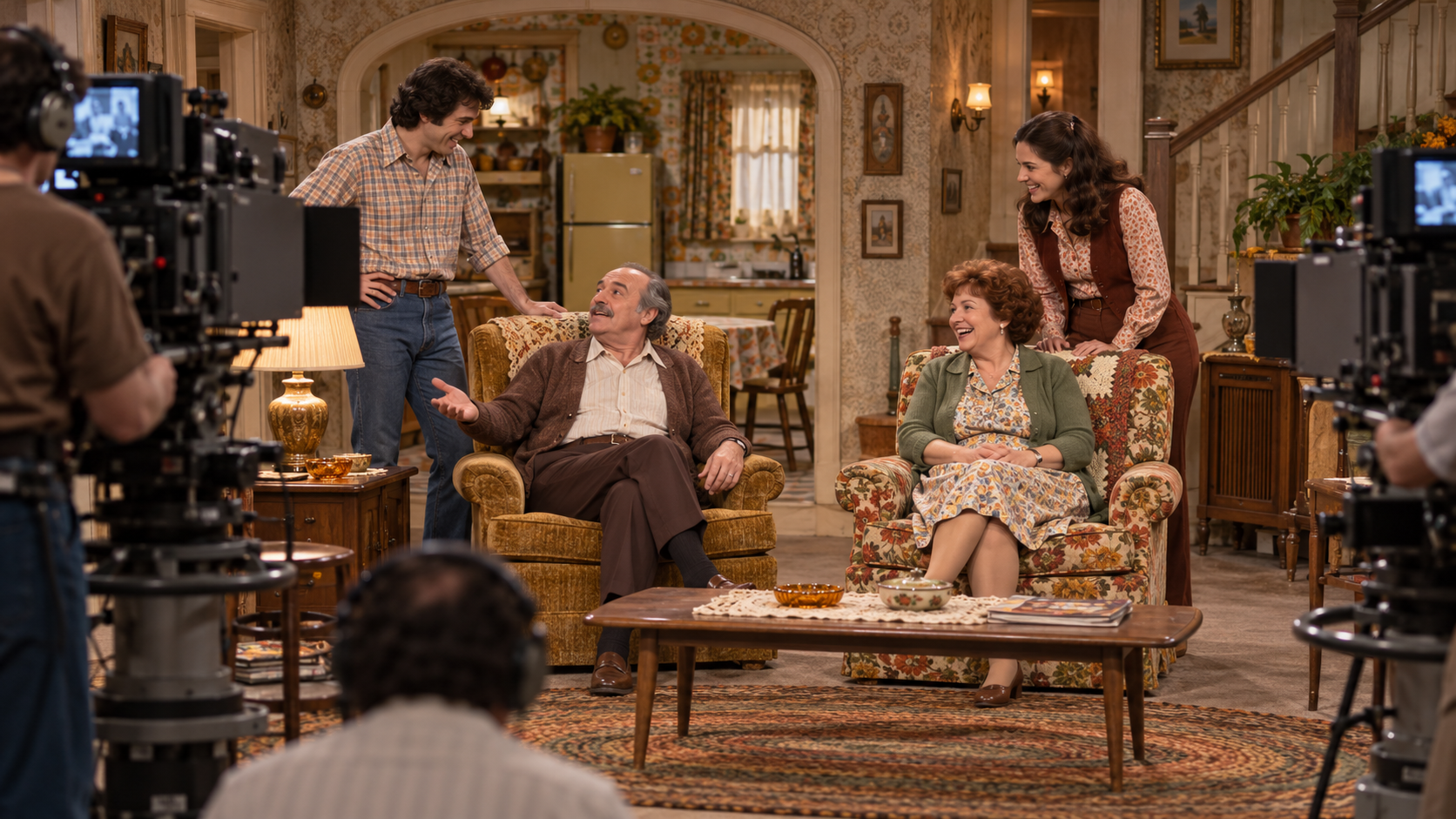
On This Day in Lifestyles: January 12, 1971
On January 12, 1971, CBS broadcast the first episode of All in the Family, a sitcom built around arguments that many American comedies had avoided. The program placed Archie and Edith Bunker in a modest Queens living room with their daughter Gloria and son-in-law Michael. Their household became a weekly arena for disputes over race, religion, class, gender roles, politics, and the generation gap. CBS opened the premiere with a viewer advisory because executives expected controversy. The audience was initially modest, but the series grew into a major hit and became one of the defining television programs of the 1970s.
Producer Norman Lear adapted the concept from the British series Till Death Us Do Part. Rather than presenting domestic life as smoothly resolved, the American version let prejudice, affection, resentment, and economic anxiety collide in ordinary conversation. Archie’s bigotry was central, but the show did not simply hand every argument to his younger, more liberal relatives. Characters could be hypocritical, uninformed, tender, or wounded from one scene to the next. Filmed before a studio audience, the comedy used laughter as both release and pressure, allowing viewers to recognize painful attitudes while deciding whether a joke exposed them or softened them.
The series widened the subjects that network television would address. Episodes dealt with women’s independence, menopause, unemployment, religion, war, disability, sexual violence, and changing family expectations. Its success produced related shows and encouraged broadcasters to try socially engaged comedies with distinct working-class and Black perspectives. It also became a shared cultural ritual in an era when a handful of networks could gather huge audiences at the same time. Families who disagreed politically watched the same scenes, then carried those arguments to workplaces, schools, and dinner tables. Television entertainment became a forum for national debate without ceasing to be popular comedy.
The legacy remains complicated. Satire does not guarantee that every viewer understands the target, and some people embraced Archie as a truth-teller rather than a cautionary figure. Critics have long debated whether the program challenged prejudice or occasionally made it too comfortable. That tension is part of why the debut matters for lifestyle history. The show recognized that public conflict enters private rooms through language, money, marriage, and memory. It made the upholstered chairs and crowded dining table of one fictional household symbols of a changing country. Later sitcoms inherited its willingness to use family entertainment as a place where difficult ideas could be spoken, contested, and sometimes laughed at together.
CBS premiered the series with a warning that it intended to examine prejudices and anxieties through humor. The network prepared for complaints that were less severe than expected.
The show was adapted from a British sitcom and relocated to a working-class household in Queens, where political disagreement became family conversation.
Instead of avoiding controversy, episodes addressed race, gender, religion, money, war, work, aging, and sexuality in a familiar domestic setting.
The live studio audience made laughter part of the argument, sometimes easing discomfort and sometimes forcing viewers to confront what they found funny.
The program’s ratings success helped open network schedules to socially engaged sitcoms and characters from communities television had often simplified or ignored.
Its satire remains debated because audiences could reject Archie’s views, identify with his frustrations, or do both—showing that interpretation cannot be controlled.
Explore more of “This Day in Lifestyles”
Discover more moments in everyday life, design, education, travel, food, fashion, and culture. Each story connects a calendar date with an event that changed how people lived.