

On This Day in Lifestyles: January 29, 1886
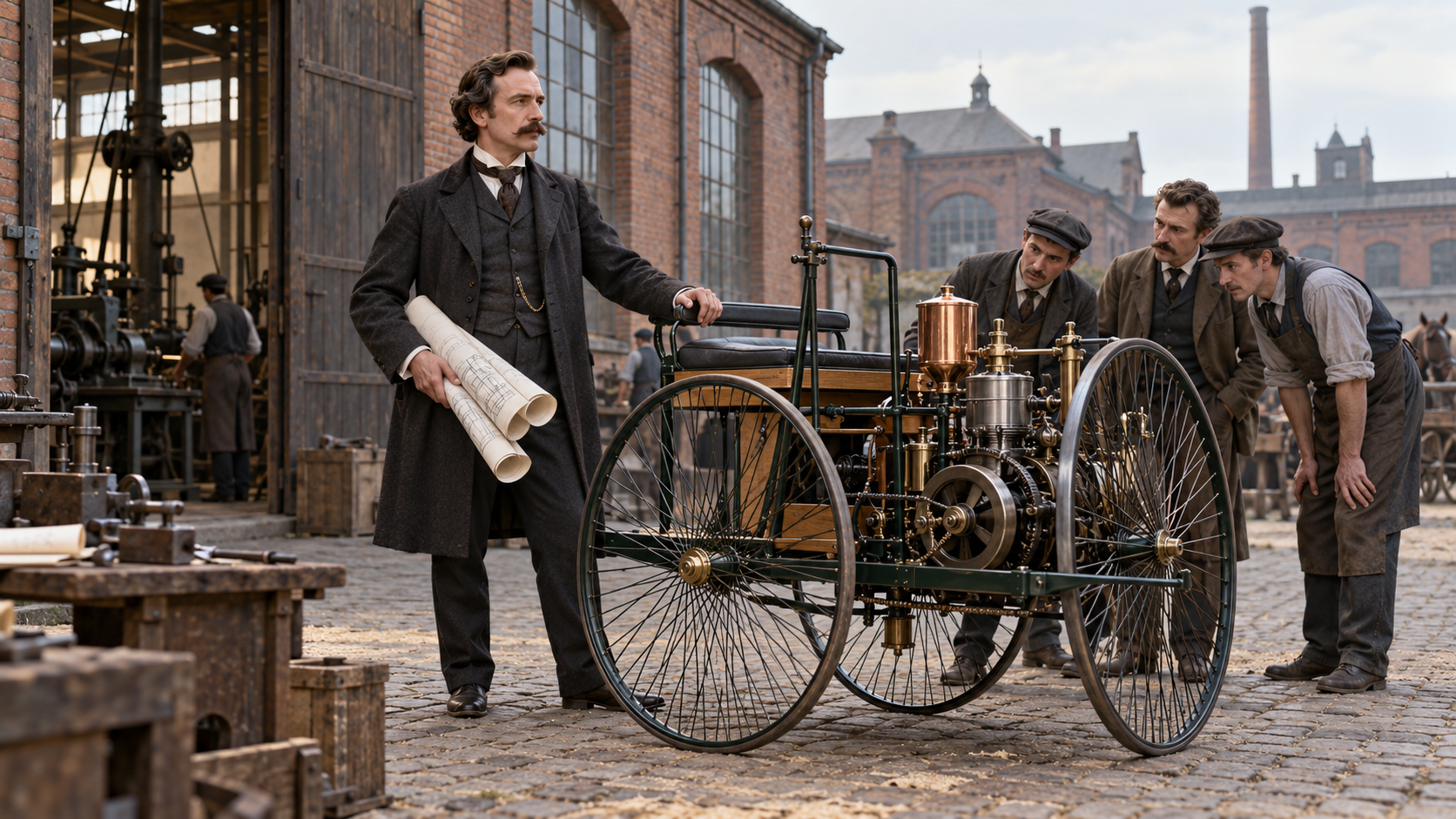
On January 29, 1886, German engineer Carl Benz applied for a patent for a “vehicle powered by a gas engine.” The machine described in German Patent No. 37435 was designed as a motor vehicle from the beginning rather than as a horse carriage with an engine attached. Its three wheels, tubular steel frame, single-cylinder four-stroke engine, and belt-and-chain drive formed an integrated system. The patent is widely regarded as a birth certificate of the practical automobile, even though years of refinement and public acceptance still lay ahead.
Benz had to solve several problems at once. The engine needed to be light enough for a moving vehicle, fuel had to reach it reliably, power had to transfer to the wheels, and steering and braking had to work together. His first Motorwagen looked fragile beside a carriage, and its top speed was modest, but it could move under its own power. In 1886 he demonstrated it publicly in Mannheim, where the unfamiliar noise and motion attracted curiosity as well as skepticism.
A decisive moment came in 1888, when Benz’s wife and business partner, Bertha Benz, drove a later model from Mannheim to Pforzheim with their sons. The journey, made without her husband’s prior knowledge, proved that the vehicle could travel beyond a short demonstration route. She solved mechanical difficulties along the way, bought fuel from a pharmacy, and suggested improvements such as an additional gear and better brake linings. Her trip turned an invention into a practical story people could understand: the motor car could connect towns and serve family travel.
Automobiles eventually transformed where people lived, worked, shopped, and vacationed. They encouraged road building, suburbs, roadside businesses, and new ideas about personal freedom, while also creating traffic deaths, pollution, congestion, and dependence on fuel. Electric vehicles and public transit debates now revisit many consequences of the car-centered world. On this day, Benz’s patent protected a compact piece of engineering whose influence would extend far beyond transportation, reshaping landscapes, schedules, architecture, and the experience of distance itself. The Motorwagen also changed the meaning of mechanical independence. A traveler no longer needed an animal, a rail timetable, or a fixed track, but that freedom required new skills and systems. Drivers had to learn controls, towns needed fuel and repair services, and governments eventually created licenses, traffic rules, road signs, and standards for safety. In this way, personal mobility created a new public infrastructure around it.
Benz designed the engine, frame, steering, and drive system as parts of one vehicle.
That integrated approach distinguished the Motorwagen from experiments that added engines to existing horse carriages.
Bertha Benz's 1888 long-distance journey demonstrated that the machine could perform practical travel between towns.
Her roadside repairs and observations also helped identify improvements needed for everyday use.
Cars changed commuting, shopping, vacations, housing patterns, road design, and personal ideas about mobility.
Their benefits arrived with lasting challenges involving safety, congestion, pollution, land use, and energy.
Explore more of “This Day in Lifestyles”
Discover more moments in everyday life, design, education, travel, food, fashion, and culture. Each story connects a calendar date with an event that changed how people lived.