

On This Day in Lifestyles: March 22, 1895
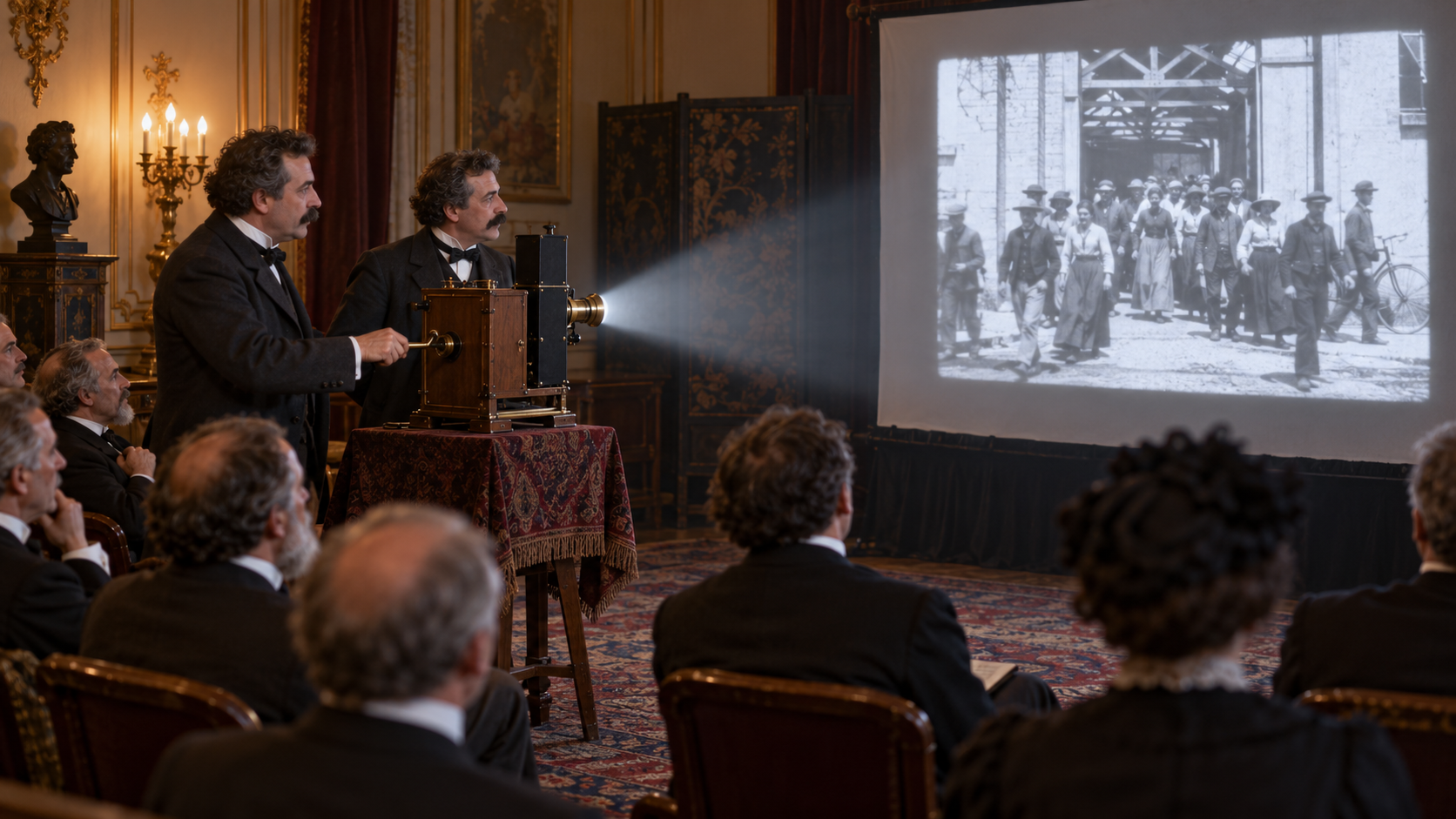
On March 22, 1895, Auguste and Louis Lumière presented their Cinématographe to a restricted audience at the Société d’Encouragement pour l’Industrie Nationale in Paris. The compact machine could record, print, and project moving images, offering a practical system for showing scenes to a group. The date matters in lifestyle history because moving photographs became a repeatable public experience for a gathered audience. Rather than remaining an isolated announcement or demonstration, the moment gave people a new way to think about watching together, filming ordinary scenes, discussing images, and organizing leisure around screenings. Its importance became visible through familiar places, objects, and routines, where a broad historical change could be felt at human scale.
Inventors in several countries were experimenting with motion pictures, and no single demonstration tells the whole origin story. The Lumières combined engineering, photographic manufacturing, portable equipment, and carefully staged presentations, including a short view of workers leaving their factory. The setting shaped how contemporaries understood the event. inventors, photographers, factory workers, scientific audiences, exhibitors, performers, and curious spectators encountered it through portable cameras, projection screens, lecture societies, traveling shows, cafés, theaters, news accounts, and film distribution. Those details show that social change usually travels through ordinary systems such as workplaces, schools, shops, homes, streets, or public institutions. What seems inevitable in hindsight depended on people testing, organizing, purchasing, teaching, maintaining, or protecting the idea in real time.
Projected film changed spectatorship because many people could watch the same moving scene together. Within months, public paid screenings helped establish cinema as a social outing, a traveling attraction, a business, and eventually a purpose-built cultural institution. In daily life, audiences learned to read movement on a screen and to make cinema-going a planned social activity. The episode also exposed questions about competing invention claims, staged reality, privacy, commercial ownership, representation, and the power of edited images. Access and influence were never perfectly even, and later generations adapted the original development to different communities, values, and technologies. Still, the event changed expectations by making a new shared medium for observing, storytelling, education, and entertainment easier to imagine, recognize, or demand.
Film language, venues, and technologies would change profoundly, but the shared darkened-room experience remains recognizable. The March demonstration is distinct from the Lumières’ famous December 1895 commercial program and helps keep the chronology precise. Today, echoes remain in movie theaters, documentaries, home video, online clips, museums, and a global culture of moving images. Looking back helps separate the documented milestone from the myths that often accumulate around famous anniversaries. It also reminds us that lifestyle history is built from choices about design, health, work, leisure, communication, memory, and public space. On this day, the Paris demonstration helped shift film from mechanical experiment toward collective experience.
Auguste and Louis Lumière presented their Cinématographe to a restricted audience at the Société d’Encouragement pour l’Industrie Nationale in Paris. The compact machine could record, print, and project moving images, offering a practical system for showing scenes to a group.
Inventors in several countries were experimenting with motion pictures, and no single demonstration tells the whole origin story. The Lumières combined engineering, photographic manufacturing, portable equipment, and carefully staged presentations, including a short view of workers leaving their factory.
Projected film changed spectatorship because many people could watch the same moving scene together. Within months, public paid screenings helped establish cinema as a social outing, a traveling attraction, a business, and eventually a purpose-built cultural institution.
The larger theme was that moving photographs became a repeatable public experience for a gathered audience.
Film language, venues, and technologies would change profoundly, but the shared darkened-room experience remains recognizable. The March demonstration is distinct from the Lumières’ famous December 1895 commercial program and helps keep the chronology precise.
Today the story remains visible in movie theaters, documentaries, home video, online clips, museums, and a global culture of moving images.
Explore more of “This Day in Lifestyles”
Discover more moments in everyday life, design, education, travel, food, fashion, and culture. Each story connects a calendar date with an event that changed how people lived.