

On This Day in Lifestyles: August 6, 1926
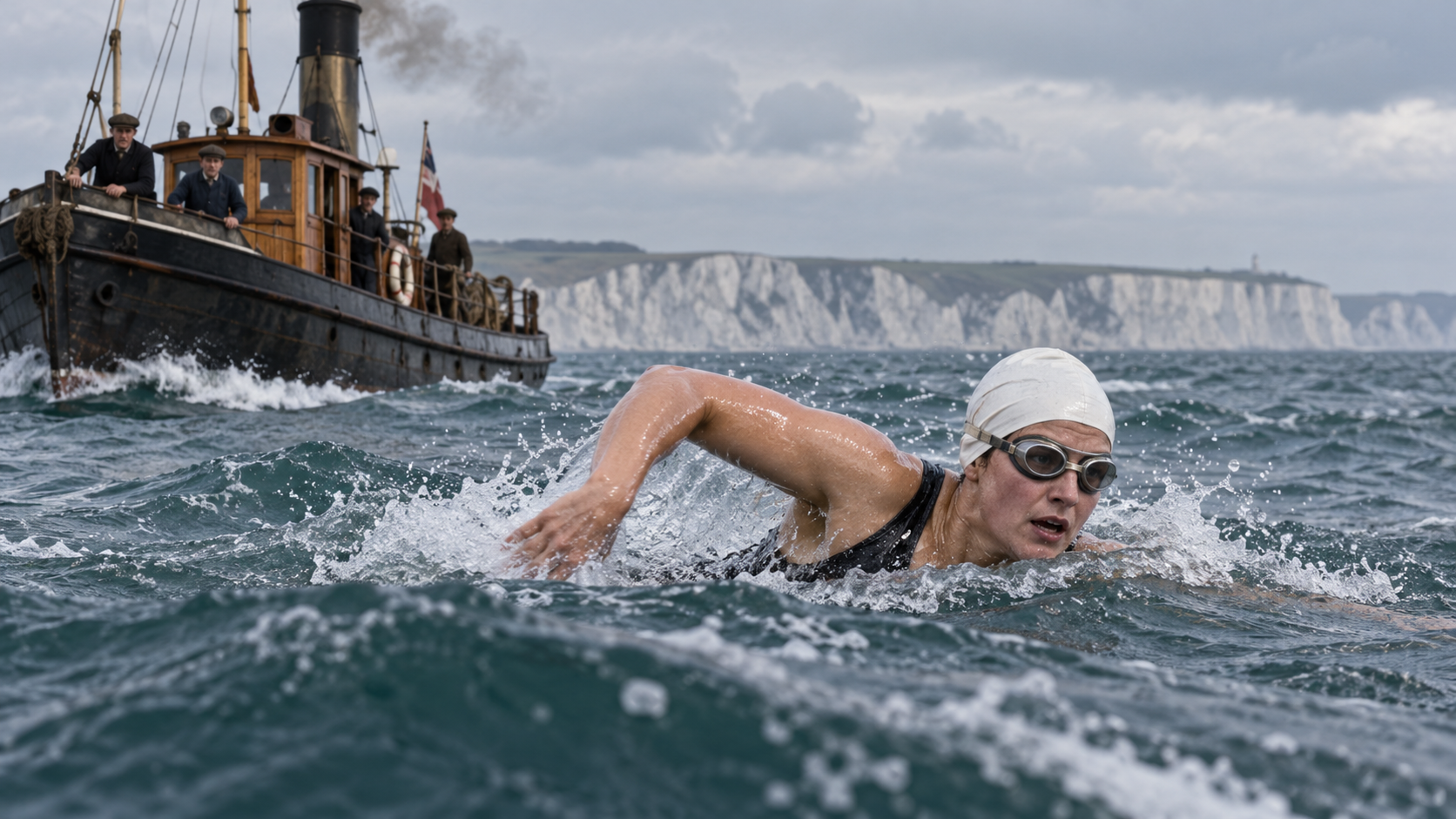
On August 6, 1926, American swimmer Gertrude Ederle completed the English Channel crossing from Cap Gris-Nez, France, to Kingsdown, England, becoming the first woman to do so and beating the existing men’s record. The date matters in lifestyle history because a demanding feat of strength changed how millions imagined women, sport, and possibility. It was not merely a headline for institutions or specialists; it touched the settings, objects, expectations, and shared rituals through which people organized ordinary days. In choppy gray water near the English coast, Ederle stroked beside a small support tug, wearing a practical dark swimsuit, cap, and handmade goggles while bundled crew members watched from the rail. Seen at human scale, the episode shows how a public milestone becomes meaningful through repeated personal choices, conversations, and memories.
Ederle was already an Olympic gold medalist when she returned after an unsuccessful 1925 attempt. Coached by Bill Burgess, she wore a two-piece suit she had adapted for freer movement, sealed custom goggles with paraffin, and followed a support tug while rough water repeatedly pushed her off the shortest route. She reached the English coast after 14 hours and 31 minutes in the water. The setting is essential to understanding why the event attracted attention. New ideas rarely arrive in isolation: they meet existing technology, commerce, custom, law, and desire. Contemporary newspapers, public spaces, shops, schools, workplaces, or homes carried the story outward, giving people practical ways to interpret it. Some welcomed the change, others doubted it, and many first encountered it indirectly. That mixture of novelty and familiarity helped the moment travel from a single date into a broader change in behavior.
Her swim challenged assumptions about women’s endurance and athletic capability at a moment when competitive opportunities and acceptable sportswear for women were still tightly constrained. Newspapers turned her arrival into international news, and New York welcomed her with a ticker-tape parade. In daily life, the consequences appeared through altered routines, new expectations, and different ways of spending time or money. Ederle’s performance remained a landmark in open-water swimming and in the public history of women in sport. Her later hearing loss and work teaching deaf children also complicate a life too often reduced to one triumphant day. The benefits were never the whole story; major changes also exposed questions about access, responsibility, fairness, cost, and who had power to define progress. Those tensions deserve a place beside the celebration because they show how culture actually develops. The event mattered not because everyone experienced it in the same way, but because it opened a durable argument about how people wanted to live.
Today, the legacy remains visible: women compete at every level of endurance sport, while Channel swimmers still confront cold, tides, shipping lanes, and a strict culture of independently verified crossings. Familiarity can make that inheritance easy to overlook, yet the practices surrounding it were built through years of experimentation, adaptation, criticism, and use. Looking back does more than celebrate an anniversary. It reveals the chain between public decisions and private habits, between ambitious ideas and the small acts that make them ordinary. On this day, one historical moment became part of the texture of modern life. Remembering the full setting lets the milestone feel less like a frozen fact and more like a living part of experience.
On August 6, 1926, American swimmer Gertrude Ederle completed the English Channel crossing from Cap Gris-Nez, France, to Kingsdown, England, becoming the first woman to do so and beating the existing men's record.
Ederle was already an Olympic gold medalist when she returned after an unsuccessful 1925 attempt. Coached by Bill Burgess, she wore a two-piece suit she had adapted for freer movement, sealed custom goggles with paraffin, and followed a support tug while rough water repeatedly pushed her off the shortest route. She reached the English coast after 14 hours and 31 minutes in the water.
Her swim challenged assumptions about women's endurance and athletic capability at a moment when competitive opportunities and acceptable sportswear for women were still tightly constrained. Newspapers turned her arrival into international news, and New York welcomed her with a ticker-tape parade.
The event matters in lifestyle history because a demanding feat of strength changed how millions imagined women, sport, and possibility.
Ederle's performance remained a landmark in open-water swimming and in the public history of women in sport. Her later hearing loss and work teaching deaf children also complicate a life too often reduced to one triumphant day.
The legacy remains visible today: women compete at every level of endurance sport, while Channel swimmers still confront cold, tides, shipping lanes, and a strict culture of independently verified crossings.
Explore more of “This Day in Lifestyles”
Discover more moments in everyday life, design, education, travel, food, fashion, and culture. Each story connects a calendar date with an event that changed how people lived.