

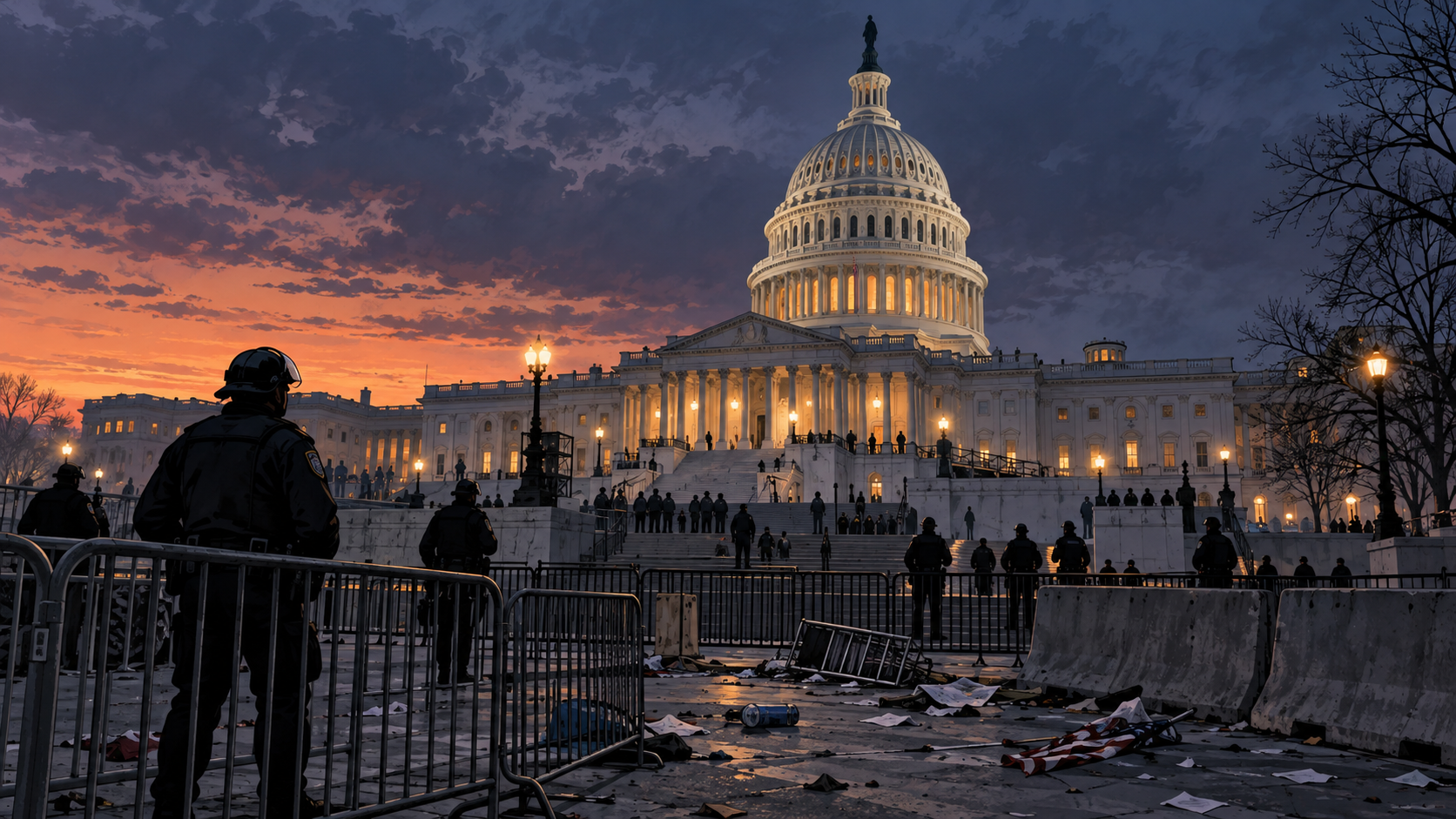
On This Day in News: January 6, 2021
On January 6, 2021, a joint session of the United States Congress met at the Capitol in Washington, D.C., to certify the results of the 2020 presidential election. Outside, thousands of supporters of President Donald Trump gathered after a rally near the White House, where he repeated false claims that the election had been stolen and urged the crowd to “fight like hell.” As lawmakers began formally counting Electoral College votes that would confirm Joe Biden’s victory, groups within the crowd moved toward the Capitol, overwhelming security barriers and clashing with police.
By early afternoon, the situation had turned into the most serious breach of the Capitol in more than two centuries. Rioters smashed windows, forced open doors, and pushed into the building, sending members of Congress and staff into hiding as the complex went into lockdown. Some in the crowd roamed the Senate and House chambers, rifled through offices, and displayed symbols linked to extremist and white nationalist movements. The chaotic scenes were broadcast live around the world, with images of makeshift gallows outside and armed officers defending barricaded doors coming to define the day.
The violence resulted in multiple deaths and injuries. One rioter, Ashli Babbitt, was fatally shot by a Capitol Police officer as she tried to climb through a broken window leading to the Speaker’s Lobby. In the hours and days that followed, others died of medical emergencies, and dozens of officers were hurt in hand-to-hand confrontations, chemical spray attacks, and crushes in the crowd. A Capitol Police officer, Brian Sicknick, died the next day after suffering strokes; several officers who responded to the attack died by suicide in the months that followed. The assault caused millions of dollars in damage to the historic building and raised urgent questions about security failures.
In the aftermath, federal authorities launched one of the largest criminal investigations in American history. By the following years, well over a thousand people had been charged in connection with the attack, ranging from unlawful entry to assault and seditious conspiracy. Congress created a bipartisan House select committee to investigate the events leading up to January 6, examining the role of extremist groups, law enforcement lapses, and Trump’s efforts to overturn the election. The House of Representatives impeached Trump for “incitement of insurrection,” though he was acquitted in the Senate. The date has since become a touchstone in debates about democratic resilience, political extremism, and how a deeply divided nation remembers a day when the peaceful transfer of power was violently disrupted.
By January 6, 2021, the United States was emerging from a bitterly contested presidential election held in November 2020. Multiple audits, recounts, and court rulings had upheld Joe Biden’s victory, but President Donald Trump continued to falsely claim the election was “rigged” or “stolen,” influencing many of his supporters to doubt the legitimacy of the result.
That day, a joint session of Congress convened at the U.S. Capitol in Washington, D.C., to formally count Electoral College votes and certify the election. Earlier, Trump had addressed a large rally near the White House, repeating false claims of widespread fraud and urging the crowd to “fight like hell.” As Congress met, parts of that crowd moved toward the Capitol, setting the stage for a historic breach of the building.
The demonstration quickly escalated into violent confrontation. Rioters overwhelmed outer security perimeters, clashed with Capitol Police, and broke windows and doors to force their way inside. Lawmakers and staff were evacuated or sheltered in secure locations as the certification process was abruptly halted and the complex went into lockdown.
The assault resulted in multiple deaths and hundreds of injuries among rioters and law enforcement officers. The building suffered extensive damage, and disturbing images of rioters roaming the Senate and House chambers, vandalizing offices, and displaying extremist symbols circulated worldwide. In the immediate aftermath, questions mounted over intelligence failures, preparedness, and the adequacy of the security response at a key moment in the democratic process.
In the months and years that followed, January 6 became the focus of one of the largest criminal investigations in U.S. history. Federal prosecutors brought charges against hundreds of participants, ranging from unlawful entry and property damage to assault on law enforcement and seditious conspiracy. The event also triggered widespread reviews of security procedures and coordination among agencies responsible for protecting the Capitol.
Politically, the attack reshaped debates about democratic norms, misinformation, and the peaceful transfer of power. The House of Representatives impeached Trump for “incitement of insurrection,” and a select committee later investigated the events and decisions leading up to the assault. January 6 is now a reference point in discussions about extremism, the boundaries of political speech, and the resilience of constitutional processes under intense partisan pressure.
Explore more of "On This Day ..."
Discover more events from the same date across news, politics, technology, sports, and other fields. Each link highlights significant moments that shaped history on different fronts.