

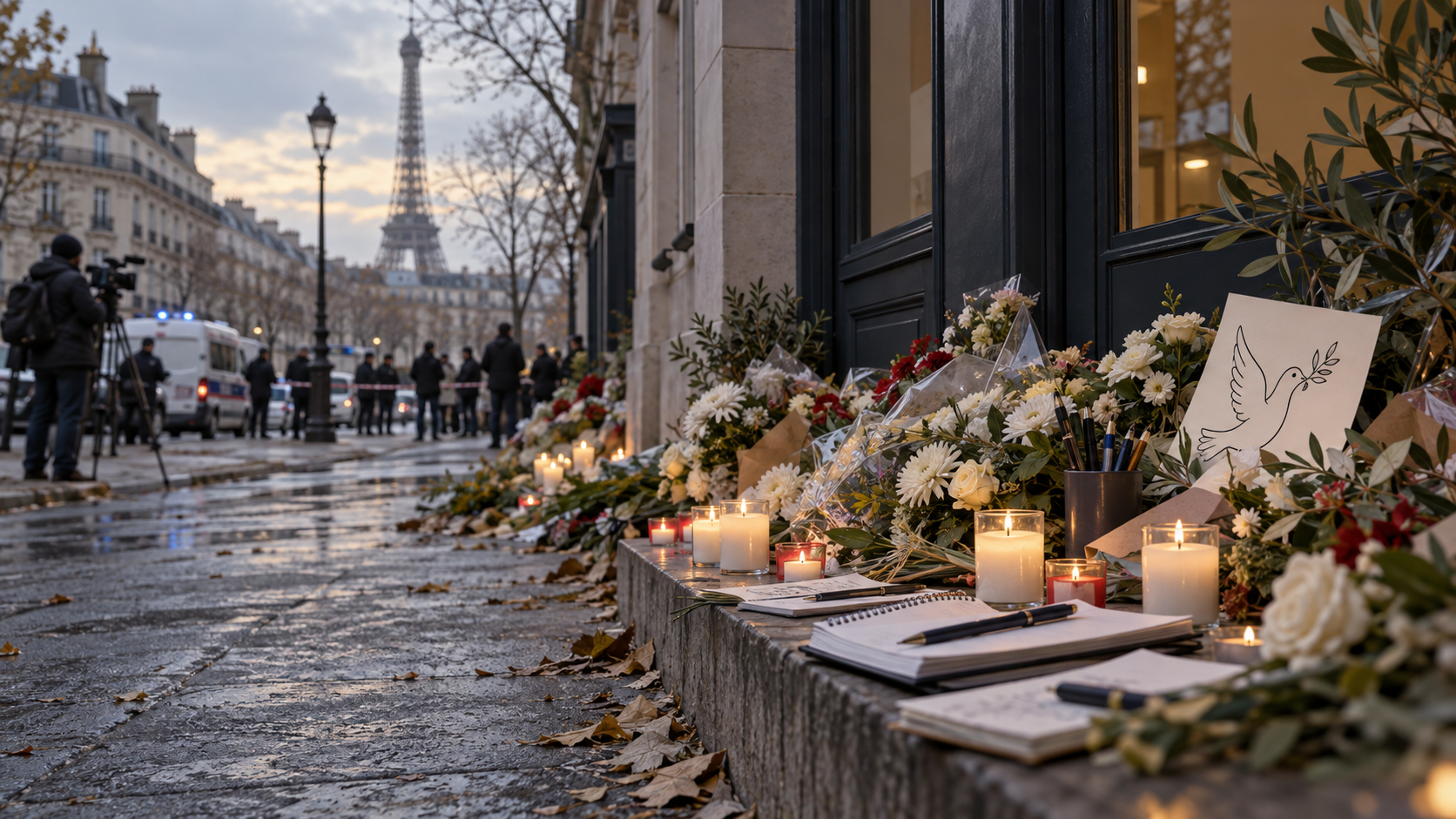
On This Day in News: January 7, 2015
On January 7, 2015, two heavily armed attackers forced their way into the Paris offices of the French satirical weekly Charlie Hebdo during an editorial meeting. Within minutes they had killed 12 people, including the magazine’s editor Stéphane “Charb” Charbonnier, several of France’s best-known cartoonists, a caretaker, and a police officer stationed outside the building. Eleven others were wounded. The assailants, later identified as brothers Chérif and Saïd Kouachi, fled the scene after exchanging fire with police, triggering an intense nationwide manhunt and plunging France into shock.
Charlie Hebdo was no stranger to controversy. The magazine had long used sharp, often provocative cartoons to lampoon politicians, religious leaders, and social taboos across the spectrum. Its depictions of the Prophet Muhammad had previously drawn lawsuits, protests, and threats. The Kouachi brothers claimed to be acting on behalf of al-Qaeda in Yemen, framing the assault as revenge for what they considered blasphemy. The attack unfolded against a backdrop of rising concerns in Europe over homegrown extremism, as both brothers had been on security services’ radar for earlier indications of radicalization.
In the days that followed, France experienced a wave of related violence. An associate of the Kouachis, Amedy Coulibaly, killed a policewoman and later took hostages at a kosher supermarket in Paris, where four Jewish men were murdered before police stormed the building. By January 9, security forces had killed all three attackers in coordinated operations. In response, millions of people marched in cities across France and around the world, many carrying signs with the slogan “Je Suis Charlie” (“I Am Charlie”) as a declaration of solidarity with the victims and a defense of press freedom.
The Charlie Hebdo attack left a deep imprint on French society and global debates about free expression, religion, and security. In France, it accelerated counterterrorism reforms, expanded surveillance powers, and intensified scrutiny of radical networks, even as critics warned about threats to civil liberties. Internationally, the attack prompted newsrooms and artists to reexamine the risks of publishing controversial material, with some choosing to republish Charlie Hebdo’s cartoons as an act of defiance and others opting for caution. A decade on, commemorations continue to honor the 17 victims of the January 2015 attacks and to grapple with the same questions that emerged in their aftermath: how to protect both public safety and the freedom to offend in open, democratic societies
By January 7, 2015, France had experienced years of tension over terrorism, secularism, and freedom of expression. The satirical magazine Charlie Hebdo was known for publishing provocative cartoons and commentary about politics and religion, including Islam, which had made it a target of criticism, lawsuits, and prior threats.
In 2011, the magazine’s offices were firebombed after it published a special issue satirizing the Prophet Muhammad, underscoring the risks faced by its staff. French authorities were increasingly focused on homegrown extremism, as citizens radicalized or returned from conflict zones abroad, raising concerns about potential attacks on domestic targets.
On the morning of January 7, 2015, two gunmen entered Charlie Hebdo’s Paris newsroom during an editorial meeting, killing 12 people and wounding others before fleeing. A massive manhunt followed, supported by thousands of police and security forces, and the country was placed on high alert as authorities searched for the attackers and possible accomplices.
The shooting prompted immediate vigils and demonstrations across France and around the world. The phrase “Je Suis Charlie” (“I Am Charlie”) became a slogan of solidarity with the victims and a statement in support of press freedom. At the same time, security forces confronted related attacks, including a hostage-taking at a kosher supermarket in Paris, deepening the sense of national crisis.
In the longer term, the Charlie Hebdo attack reshaped debates in France and beyond about how to balance security and civil liberties. The government expanded surveillance and counterterrorism powers, while critics raised concerns about privacy, discrimination, and the treatment of Muslim communities. Courts later tried suspects connected to the attacks, adding a legal reckoning to the public discussion.
The events also forced newsrooms, artists, and publishers to reconsider how they handle controversial material, especially depictions of religious figures. Some outlets chose to republish Charlie Hebdo’s cartoons in defense of free expression; others declined, citing safety or respect for religious sensitivities. Each commemoration of January 7 revisits these questions, keeping the conversation alive about the role of satire, the boundaries of expression, and the challenges of confronting violent extremism.
Explore more of "On This Day ..."
Discover more events from the same date across news, politics, technology, sports, and other fields. Each link highlights significant moments that shaped history on different fronts.