

On This Day in News: January 17, 1991
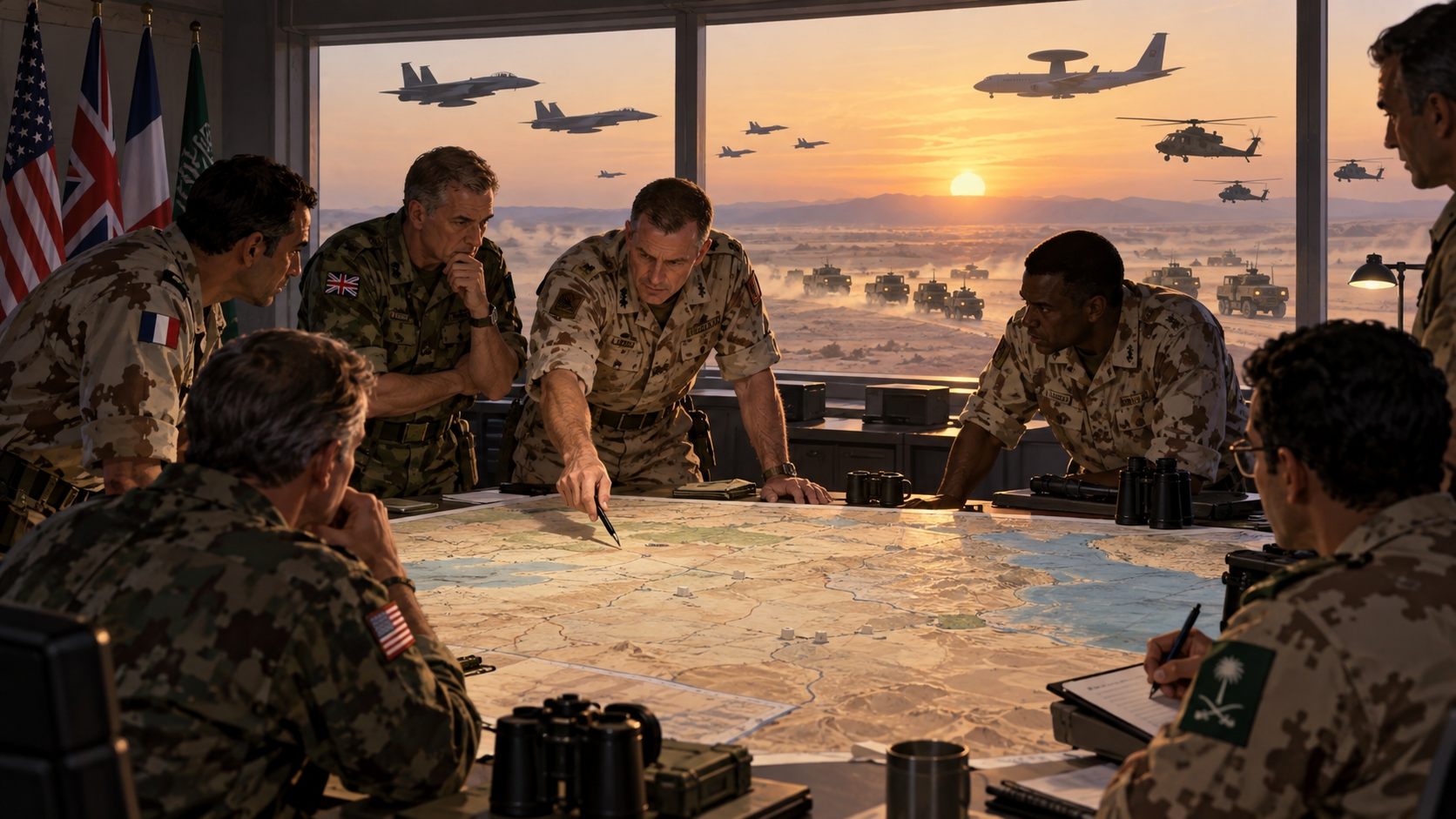
In the early hours of January 17, 1991, the Persian Gulf sky lit up as Operation Desert Shield shifted into Operation Desert Storm, the combat phase of the Gulf War. After months of diplomatic pressure and a United Nations deadline for Iraq to withdraw from occupied Kuwait, a U.S.-led coalition launched one of the largest air campaigns since World War II. More than 1,000 sorties were flown in the first day alone, targeting Iraqi command-and-control centers, air defenses, airfields, and key infrastructure in Iraq and Kuwait. The operation’s opening move, led by U.S. Army Apache helicopters and Air Force Pave Low helicopters, was designed to knock out Iraqi radar sites and carve a corridor through dense air defenses for the first wave of coalition aircraft. Within hours, Baghdad and other strategic locations came under sustained bombardment as televised images of anti-aircraft fire and explosions reached audiences around the world.
The coalition that took part in Desert Storm was unusually broad, reflecting concern over Iraq’s August 1990 invasion of Kuwait and the threat it posed to regional stability and global oil supplies. Forces from the United States, United Kingdom, France, Saudi Arabia, and other Arab and NATO countries contributed aircraft, ships, and troops to the campaign. The air offensive was planned to gradually erode Iraq’s capacity to fight by degrading its military communications, logistics, and Republican Guard units before any ground invasion. Precision-guided munitions, still relatively new at the time, were used alongside conventional bombs to strike hardened or high-value targets. The campaign also highlighted the growing role of stealth technology, with F-117A Nighthawk aircraft striking heavily defended targets in and around Baghdad in the opening nights of the war.
As the days of bombing wore on, the coalition quickly gained air superiority, and Iraq’s ability to coordinate its forces and defend its airspace steadily diminished. Many Iraqi aircraft were destroyed on the ground or in the air; others were flown to neighboring Iran to avoid destruction. The intensity and speed of the air campaign surprised many observers, as did the extensive use of live television coverage that brought images of the conflict into homes in real time. At the same time, the war raised difficult questions about civilian casualties and damage to infrastructure, especially as strikes hit targets near populated areas. Iraqi missile attacks on Israel and Saudi Arabia, intended to fracture the coalition, underscored the vulnerability of cities even as the coalition’s air power dominated the battlefield.
By the time the ground campaign began in late February 1991, Iraq’s military infrastructure had been severely weakened, paving the way for a short, decisive land offensive that liberated Kuwait in a matter of days. Operation Desert Storm marked a turning point in how modern, high-technology warfare was conducted and perceived. It showcased the effectiveness of joint and coalition operations, precision weapons, and real-time media coverage, while also leaving debates about the humanitarian and environmental costs of the conflict. The events set in motion on January 17, 1991, would shape regional politics, U.S. military doctrine, and international views on intervention for decades to come.
.
By January 17, 1991, tensions in the Persian Gulf had been building for months. Iraq had invaded and occupied Kuwait in August 1990, prompting international condemnation and a series of United Nations resolutions demanding withdrawal. A broad U.S.-led coalition assembled under UN authority, deploying hundreds of thousands of troops to Saudi Arabia in a defensive posture known as Operation Desert Shield.
As diplomatic efforts and economic sanctions failed to persuade Iraq to leave Kuwait, the UN set a deadline of January 15, 1991, for Iraqi forces to withdraw. When that deadline passed without compliance, coalition leaders moved to the offensive phase, Operation Desert Storm. In the early hours of January 17, coalition aircraft and missiles launched a massive air campaign aimed at degrading Iraq’s military capabilities and command structure.
The opening strikes of Desert Storm targeted radar sites, air defenses, airfields, and key command-and-control centers in Iraq and occupied Kuwait. Stealth aircraft, cruise missiles, and precision-guided munitions played a prominent role, enabling coalition forces to penetrate heavily defended airspace and rapidly gain air superiority. Within days, Iraq’s ability to coordinate large-scale operations and effectively contest the skies was significantly reduced.
Despite the speed and apparent precision of the campaign, the operation presented serious challenges. Iraqi forces launched ballistic missiles against Saudi Arabia and Israel in an attempt to disrupt the coalition, and concerns about civilian casualties persisted as strikes hit targets near urban areas. The conflict was among the first to be broadcast globally in near real time, with televised images of anti-aircraft fire over Baghdad shaping public perception of both the power and the human cost of modern warfare.
In the long term, the events of January 17, 1991, helped redefine expectations about coalition warfare and high-technology conflict in the post–Cold War era. The success of the air campaign, followed by a brief ground offensive that liberated Kuwait, reinforced confidence in rapid, coordinated military operations supported by precision weapons and advanced surveillance. It also deepened debates about the responsibilities and limits of international intervention.
The war’s outcome left Saddam Hussein in power, and Iraq remained subject to sanctions, weapons inspections, and no-fly zones for years afterward. These unresolved tensions contributed to regional instability and formed part of the backdrop for the 2003 U.S.-led invasion of Iraq. The precedent set by Operation Desert Storm continues to influence military planning, alliance politics, and discussions about how force is used to enforce international norms.
Explore more of "On This Day ..."
Discover more events from the same date across news, politics, technology, sports, and other fields. Each link highlights significant moments that shaped history on different fronts.