

On This Day in News: February 7, 1992
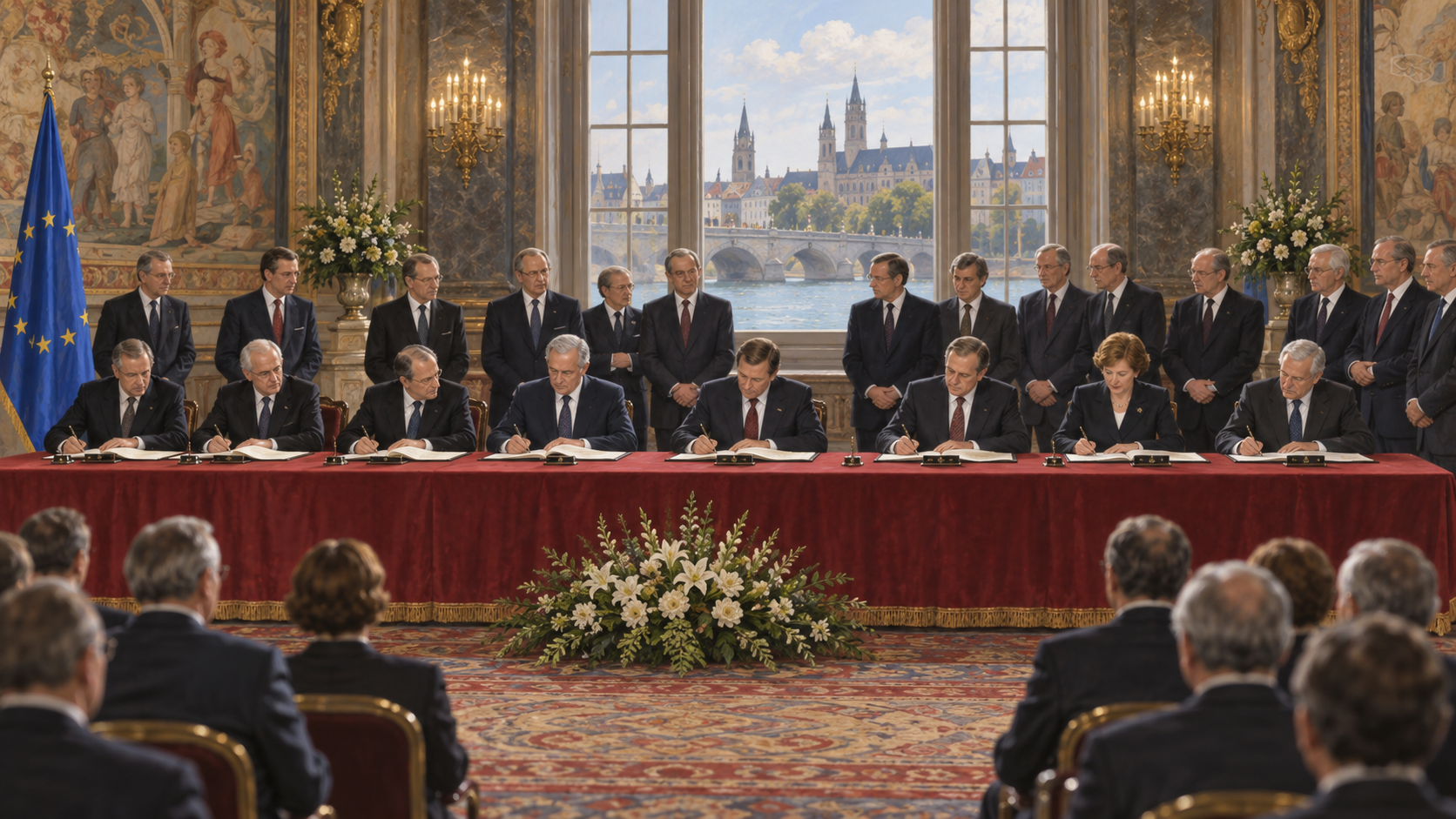
On February 7, 1992, representatives of 12 European Community nations signed the Treaty on European Union in Maastricht, Netherlands. The agreement created the legal framework for the European Union, expanded cooperation beyond economics, and set a path toward monetary union and a common currency. It followed negotiations shaped by the end of the Cold War, German reunification, and a desire to deepen European integration while giving member governments a larger collective role in foreign policy and internal affairs.
The European project had developed through postwar agreements designed to bind former rivals together through shared institutions and markets. The Maastricht Treaty built on that foundation by establishing three broad areas of cooperation: the existing European Communities, a common foreign and security policy, and coordination in justice and home affairs. It also introduced European citizenship, giving nationals of member states additional rights to move, reside, vote, and stand in certain elections across the union.
Monetary union became the treaty's most visible and controversial commitment. Participating countries were expected to meet standards on inflation, public debt, deficits, interest rates, and exchange-rate stability before adopting a shared currency. Ratification proved difficult. Danish voters initially rejected the treaty, and debate in Britain and elsewhere exposed disagreements about sovereignty and democratic accountability. The agreement entered into force on November 1, 1993, after political accommodations and national approval processes.
Maastricht reshaped European politics for decades. The euro later became everyday currency in much of the bloc, while the union expanded to include countries formerly divided by the Iron Curtain. Financial crises, migration, Brexit, and security disputes revealed both the reach and the limits of the system the treaty helped create. February 7 marks a moment when national governments deliberately pooled authority on an unprecedented scale, creating institutions that remain central to Europe's economy, laws, and international identity.
The treaty emerged as European leaders reconsidered the continent's political order after German reunification and the collapse of Soviet influence.
It transformed the European Community into a wider union with economic, political, justice, and security ambitions.
European citizenship supplemented rather than replaced national citizenship, adding cross-border rights within the union.
Ratification debates showed that integration carried real constitutional and democratic tensions, not merely technical economic changes.
The convergence rules prepared the way for the euro, which entered financial markets in 1999 and circulated as cash in 2002.
Maastricht's legacy is visible whenever Europeans debate shared authority, national sovereignty, enlargement, or the future of the common currency.
Explore more of "On This Day ..."
Discover more events from the same date across news, politics, technology, sports, and other fields. Each link highlights significant moments that shaped history on different fronts.