

On This Day in News: February 13, 1945
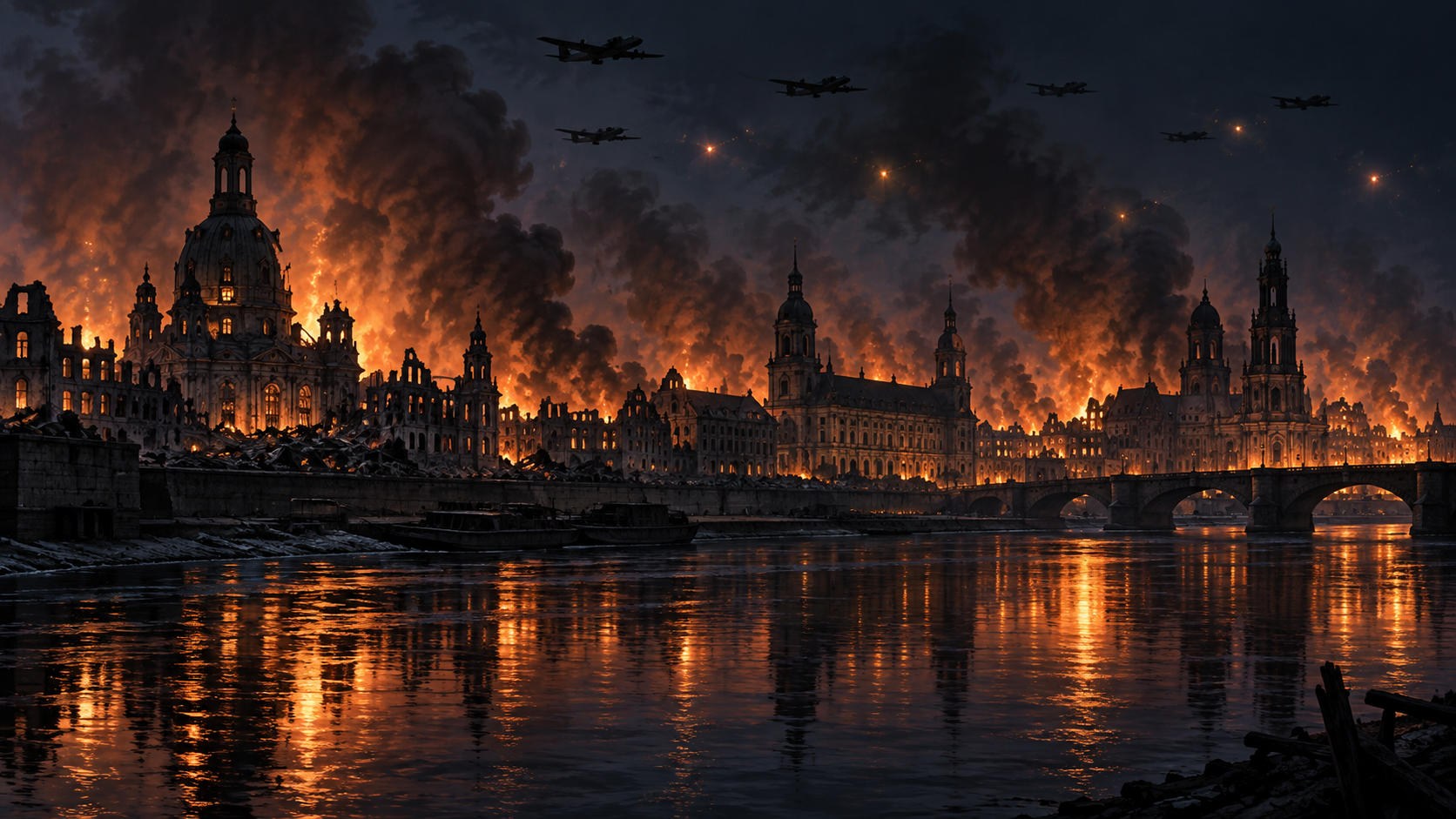
On the night of February 13, 1945, British bombers began a major attack on Dresden, Germany, followed by additional British and American raids over the next days. High-explosive and incendiary bombs struck the city, and fires merged into a firestorm across densely built districts. Approximately 25,000 people were killed, according to modern historical commissions, while homes, cultural landmarks, rail facilities, and essential services suffered enormous destruction.
Dresden had escaped the worst earlier bombing and contained large numbers of refugees fleeing the Soviet advance. Allied planners described the city as a transportation and communications center supporting Germany's war effort. The attack also formed part of a broader campaign intended to disrupt movement behind the Eastern Front and weaken remaining German capacity. Yet the war in Europe was nearing its end, and Dresden's cultural importance and civilian population soon made the raids uniquely controversial.
The first waves arrived at night, when navigation and marking systems directed bombers toward the urban area. Incendiaries ignited widespread fires after explosives opened roofs and broke water lines. Rescue efforts faced heat, smoke, collapsed streets, and further attacks. American daylight raids followed. Nazi propaganda exaggerated the death toll for political purposes, and inflated figures continued circulating long after the war, complicating remembrance and historical debate.
Dresden became a central case in arguments about strategic bombing, military necessity, proportionality, and the protection of civilians. Historians place it within the wider context of Nazi aggression, the Holocaust, and devastating attacks on cities across Europe, while still examining the choices that exposed civilians to mass death. Rebuilt landmarks now stand beside memorials that encourage mourning without erasing responsibility for the war that produced the destruction.
Dresden was both a major city of cultural importance and a functioning wartime transport center during the final months of the European war.
Its population had grown with refugees, increasing the number of civilians exposed when the raids struck crowded districts.
Multiple waves of bombing and widespread incendiaries created conditions in which local firefighting and rescue systems could not cope.
Death estimates became politically manipulated, making careful archival work essential to separating evidence from propaganda.
The raids remain part of broader debate over whether area bombing could be justified by expected military effects.
Responsible remembrance holds civilian suffering and the context of Nazi Germany's war of conquest in view at the same time.
Explore more of "On This Day ..."
Discover more events from the same date across news, politics, technology, sports, and other fields. Each link highlights significant moments that shaped history on different fronts.