

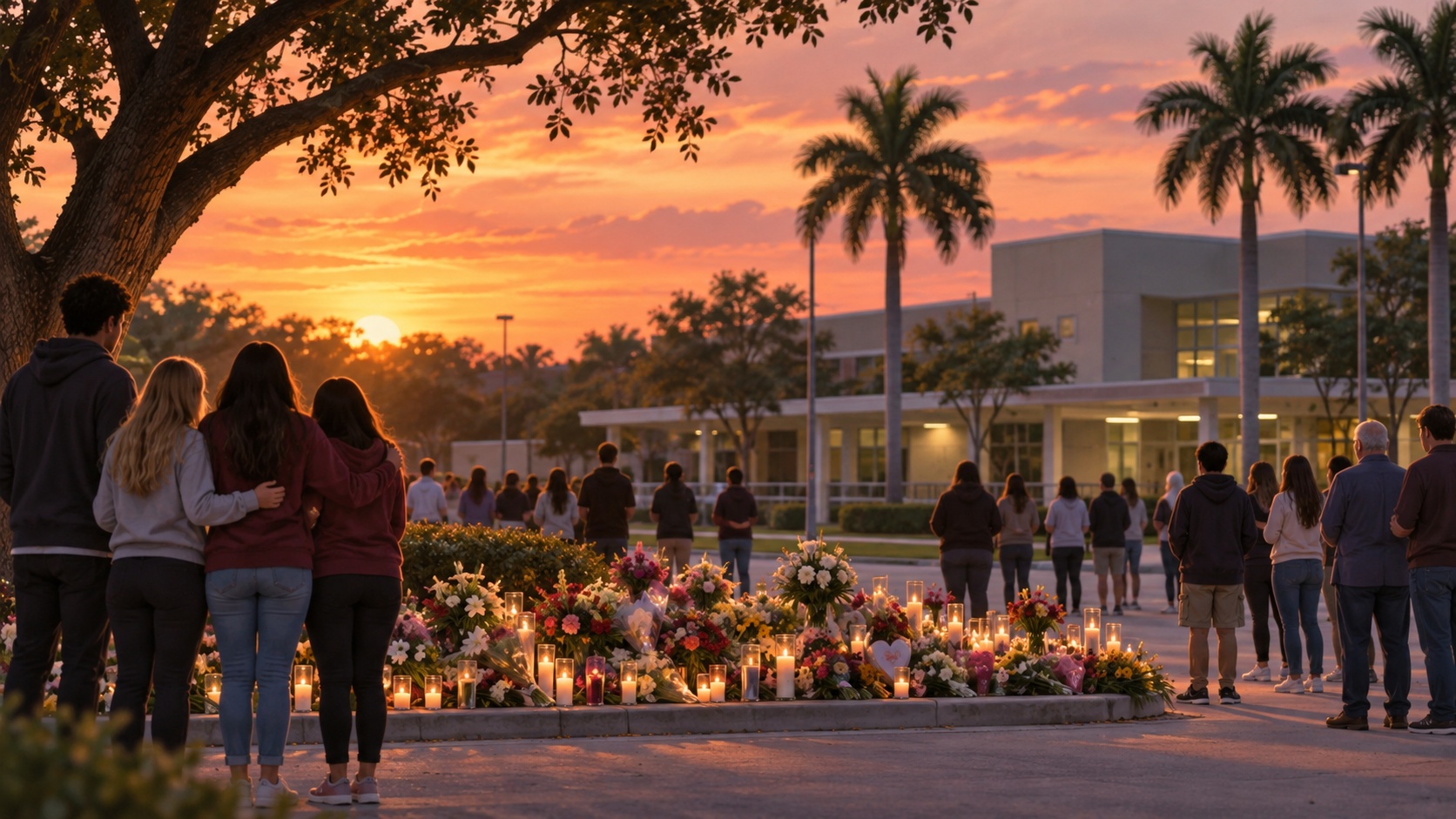
On This Day in News: February 14, 2018
On February 14, 2018, a former student opened fire at Marjory Stoneman Douglas High School in Parkland, Florida, killing 14 students and three staff members and injuring others. The attack unfolded near the end of the school day and triggered a large emergency response as students and teachers sheltered or fled. The gunman was arrested nearby. The community's loss became one of the deadliest school shootings in United States history.
Investigations examined the attacker's prior behavior, reports made to law enforcement and social services, school security, emergency communications, and the response inside the building. Families and survivors confronted both grief and difficult questions about warnings that had not prevented violence. Criminal proceedings continued for years; the attacker pleaded guilty and later received life imprisonment without parole after a jury did not unanimously recommend death.
Parkland also produced a highly visible youth-led political movement. Survivors organized March for Our Lives, spoke at public meetings, questioned lawmakers, and advocated gun restrictions and stronger safety measures. Florida enacted legislation that raised the minimum age for purchasing rifles, created a waiting period, expanded certain risk-protection procedures, and funded school security and mental-health programs. Other proposals remained contested.
The anniversary is centered on the 17 people who died and the continuing effects on survivors, families, educators, first responders, and the wider community. Policy debates can obscure that human focus, yet they are part of the event's legacy because students converted trauma into sustained civic action. Parkland remains a reference point in arguments over firearms, school design, emergency readiness, mental-health systems, and how public institutions respond to credible warnings.
The attack occurred in a school community considered relatively secure, challenging assumptions that geography or resources alone could prevent mass violence.
Prior warnings and contacts with institutions became a major subject of official review after the killings.
Students rapidly organized national demonstrations and used direct testimony to keep policy attention focused on school shootings.
No single reform can eliminate risk, and families have differed over which legal, security, or prevention measures deserve priority.
Florida's response combined firearm restrictions, protective-order tools, mental-health funding, and increased school-security requirements.
The continuing legacy includes remembrance, survivor support, political participation, and unresolved national disagreement over gun policy.
Explore more of "On This Day ..."
Discover more events from the same date across news, politics, technology, sports, and other fields. Each link highlights significant moments that shaped history on different fronts.