

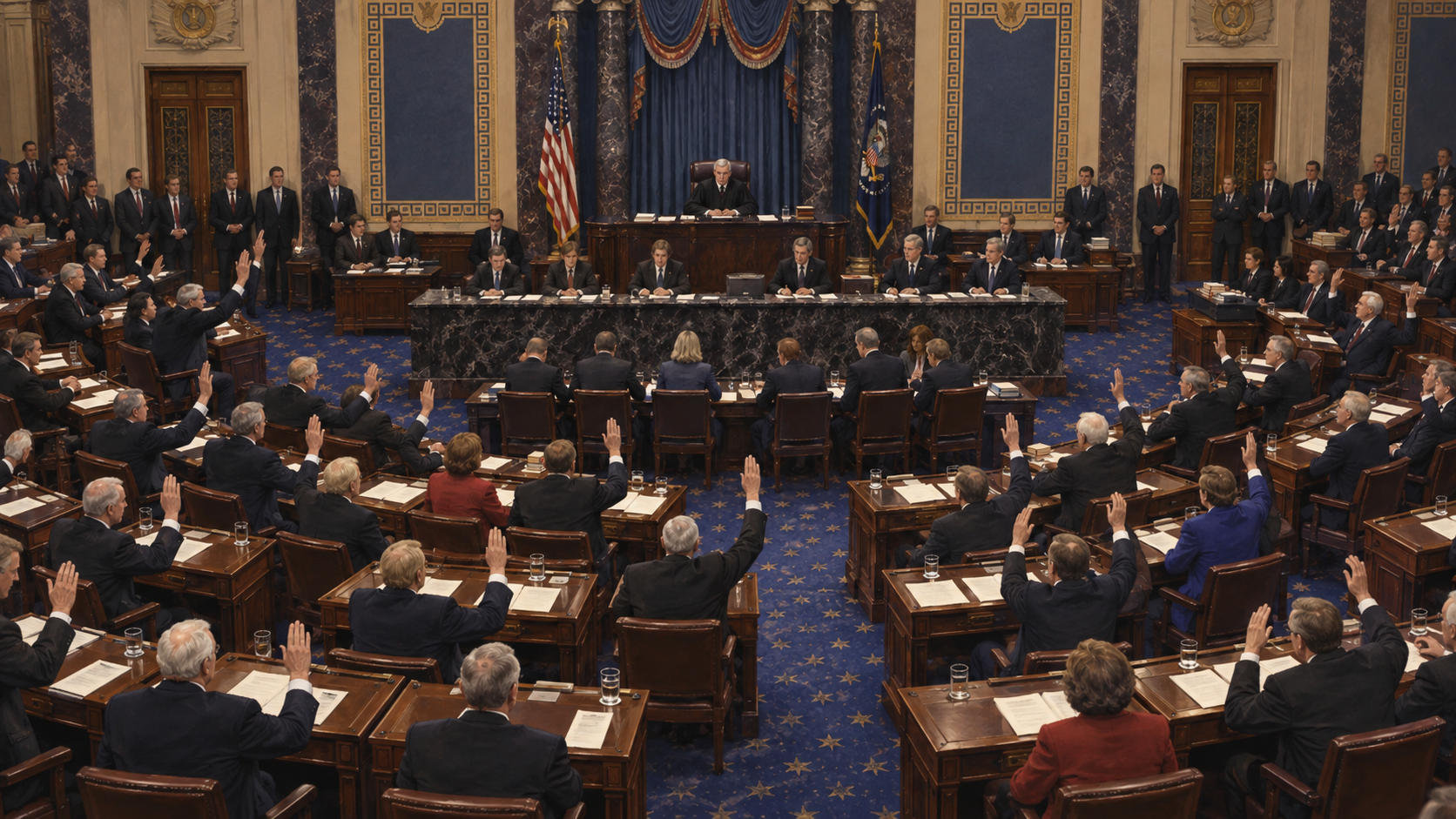
On This Day in News: February 12, 1999
On February 12, 1999, the United States Senate acquitted President Bill Clinton on charges of perjury and obstruction of justice, ending only the second presidential impeachment trial in American history. The perjury article received 45 guilty votes and 55 not-guilty votes. The obstruction article split 50 to 50. Because conviction required a two-thirds majority, neither charge came close to removing Clinton from office, and he completed the remaining two years of his second term.
The case grew from independent counsel Kenneth Starr's investigation and Clinton's testimony about his relationship with White House intern Monica Lewinsky. In December 1998, the House of Representatives approved two articles of impeachment. The Senate trial began in January under Chief Justice William Rehnquist, with House managers presenting the case and the president's lawyers arguing that his conduct, though wrong, did not justify removal. Senators also viewed videotaped depositions from witnesses.
The vote reflected both legal judgment and partisan politics. No Democratic senator supported conviction, while several Republicans voted not guilty on at least one charge. Lawmakers disagreed about whether Clinton's statements met the criminal and constitutional standards asserted by the House, and whether the misconduct constituted the high crimes and misdemeanors required for removal. Public approval of Clinton's job performance remained comparatively strong throughout the process.
The acquittal left enduring arguments about impeachment's proper scope, the relationship between private conduct and public responsibility, and the role of prosecutors and Congress in resolving political crises. Clinton later reached an agreement involving suspension of his Arkansas law license and acknowledged giving misleading testimony. The February 12 verdict did not declare every action acceptable; it answered the narrower constitutional question of whether the Senate would remove a president.
The House impeached Clinton in December 1998 after months of investigation, televised testimony, and intense disputes over evidence and motive.
Impeachment transferred the case to the Senate, where conviction required 67 votes rather than a simple majority.
The final tallies kept Clinton in office and showed that neither article commanded the bipartisan supermajority needed for removal.
Acquittal was not the same as approval; senators could condemn conduct while concluding it did not meet the constitutional threshold.
The trial became a precedent cited during later impeachments when lawmakers debated witnesses, evidence, partisanship, and institutional duty.
Its legacy lies in the continuing tension between legal allegations, political accountability, and the extraordinary remedy of removing an elected president.
Explore more of "On This Day ..."
Discover more events from the same date across news, politics, technology, sports, and other fields. Each link highlights significant moments that shaped history on different fronts.