

On This Day in News: February 19, 1942
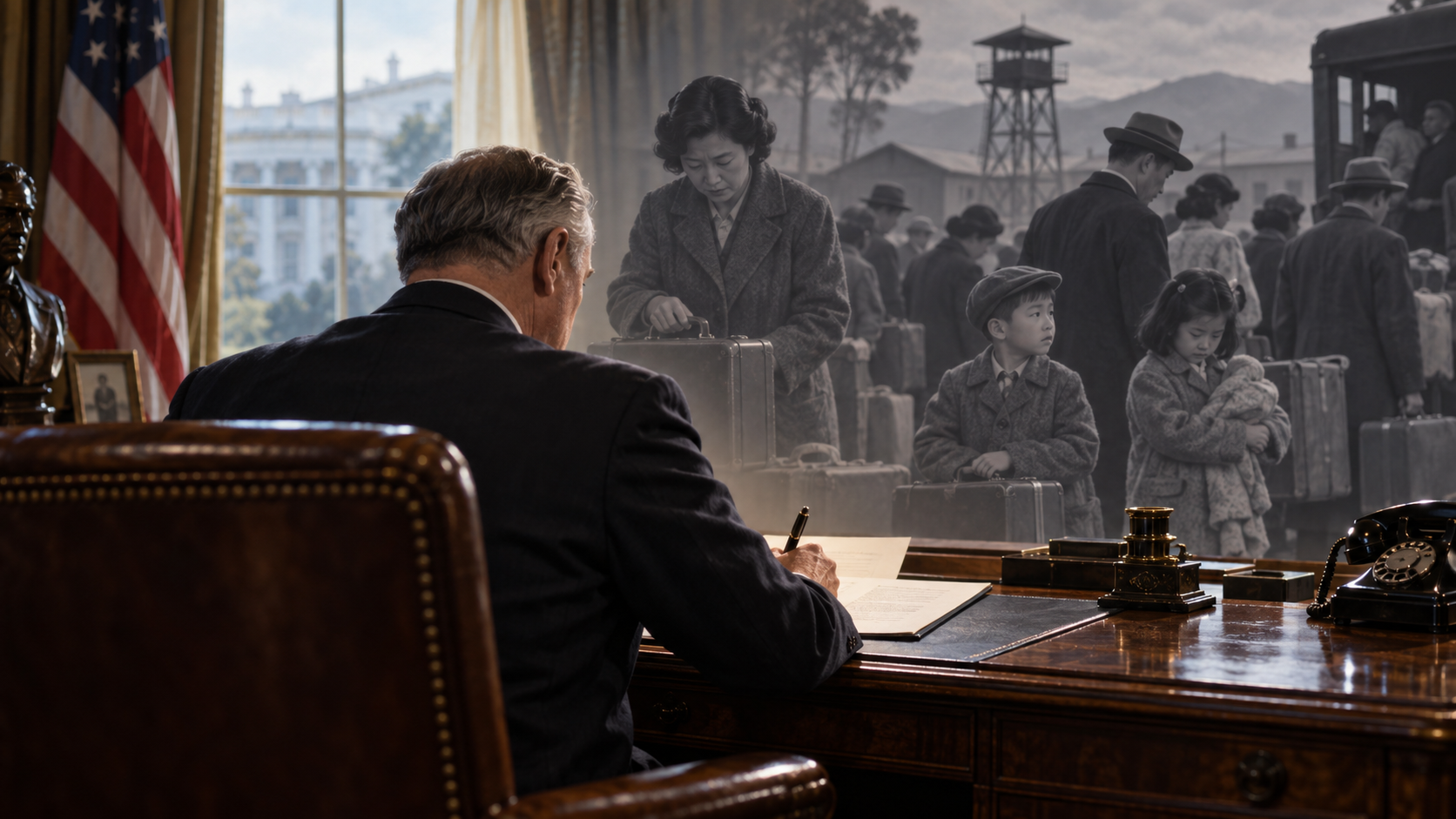
On February 19, 1942, President Franklin D. Roosevelt signed Executive Order 9066, authorizing military commanders to designate areas from which any person could be excluded. Issued after Japan's attack on Pearl Harbor, the order did not name a specific ethnic group. In practice, it became the foundation for removing people of Japanese ancestry from the West Coast, including American citizens, and confining them in camps under armed guard.
Military officials and political advocates claimed mass exclusion was necessary to prevent espionage or sabotage. Those claims relied on racial prejudice and wartime fear rather than evidence that Japanese Americans as a group posed a threat. Families received short notice, sold or stored homes and businesses under severe pressure, and reported to temporary assembly centers before transfer to remote War Relocation Authority camps. Approximately 120,000 people were incarcerated, most of them U.S. citizens.
The policy fractured communities and produced major losses of property, income, education, and freedom. Japanese Americans challenged the government in court, but the Supreme Court initially upheld key wartime restrictions. At the same time, thousands served in the U.S. military, including soldiers of the 442nd Regimental Combat Team. In late 1944, the government moved toward ending exclusion as the war's course and legal challenges undermined its rationale.
Decades of activism produced a federal commission that concluded the incarceration resulted from race prejudice, war hysteria, and a failure of political leadership. The Civil Liberties Act of 1988 offered a formal apology and payments to surviving detainees. Executive Order 9066 remains a central warning about how emergency powers can combine with racism to strip constitutional rights from a targeted population without individualized evidence.
Longstanding anti-Asian discrimination on the West Coast shaped the demands for exclusion that intensified after Pearl Harbor.
The order delegated broad authority, allowing the military to create exclusion zones and impose restrictions through later directives.
Removal uprooted entire households and forced families to decide quickly what to do with farms, shops, homes, pets, and possessions.
No mass program of comparable removal targeted Americans of German or Italian ancestry, revealing the policy's racialized application.
Court rulings, military service, community organizing, and later historical investigation gradually dismantled official justifications.
The redress law recognized government wrongdoing, but compensation could not restore years of liberty, lost property, or interrupted lives.
Explore more of "On This Day ..."
Discover more events from the same date across news, politics, technology, sports, and other fields. Each link highlights significant moments that shaped history on different fronts.