

On This Day in News: February 3, 1959
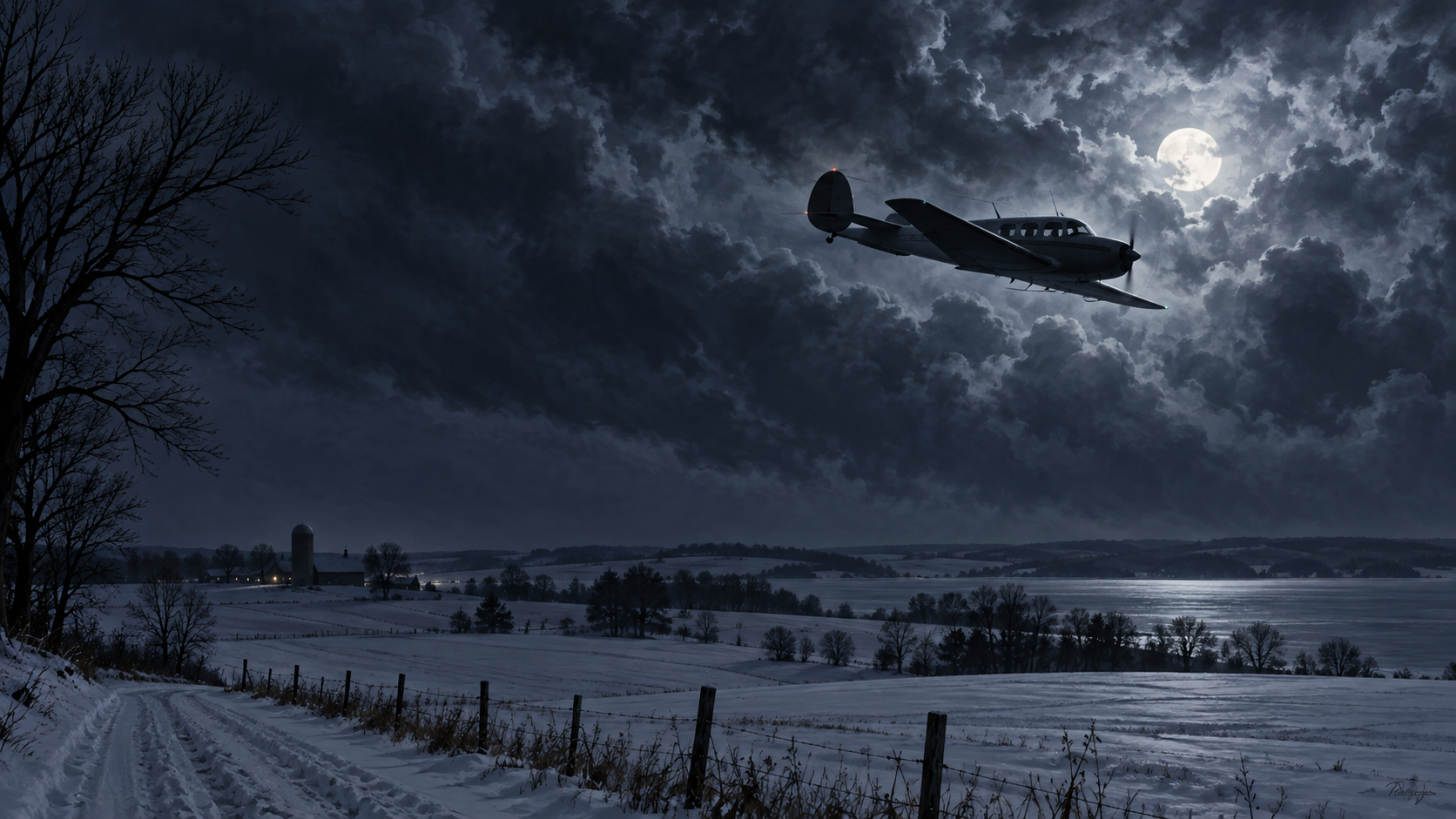
On February 3, 1959, a chartered Beechcraft Bonanza crashed shortly after takeoff from Mason City, Iowa, killing musicians Buddy Holly, Ritchie Valens, J. P. Richardson, known as the Big Bopper, and pilot Roger Peterson. The musicians had just performed at the Surf Ballroom in nearby Clear Lake as part of the Winter Dance Party tour. Frustrated by unreliable buses, freezing travel conditions, and an exhausting schedule, Holly arranged the flight to Fargo, North Dakota, intending to reach the next tour stop more comfortably.
Seats on the small aircraft changed hands before departure. Richardson, suffering from illness, took a seat originally assigned to Holly's bandmate Waylon Jennings. Valens won another seat in a coin toss with guitarist Tommy Allsup. The plane departed shortly before 1 a.m. in poor winter weather. It remained airborne only a few minutes before descending into a cornfield. Investigators concluded that spatial disorientation, weather conditions, and the pilot's limited experience with the aircraft's instruments contributed to the crash.
The deaths shocked a generation of young listeners. Holly was only 22 but had already helped shape rock recording through his songwriting, band arrangements, and studio experimentation. Valens, 17, had emerged as one of rock's first prominent Mexican American stars. Richardson, 28, combined rhythm and blues, country, and theatrical performance. Their careers were brief, yet recordings such as Holly's guitar-driven songs and Valens's adaptation of La Bamba continued to influence performers worldwide.
The tragedy later became widely known as the Day the Music Died, a phrase popularized by Don McLean's 1971 song American Pie. That label can obscure the individual lives involved, including Peterson, the 21-year-old pilot, but it captures the event's place in popular memory. Memorials near the crash site and at the Surf Ballroom continue to draw visitors. The accident also illustrates the demanding travel conditions faced by touring musicians before modern concert logistics and aviation safeguards became more standardized.
The Winter Dance Party crossed the Upper Midwest during an exceptionally cold season, using buses that repeatedly broke down and offered little rest.
Holly chartered the aircraft to avoid another overnight bus ride and to gain time for laundry and sleep before the next performance.
The tour continued after the crash, reflecting contractual pressures and the limited protections available to young performers at the time.
Early reports often centered on celebrity, but four people died, including pilot Roger Peterson, whose decisions were examined by federal investigators.
Holly's independent approach to songwriting and recording influenced later rock bands, while Valens opened doors for Latino performers in American popular music.
Annual commemorations in Clear Lake connect the event to a broader discussion of touring conditions, aviation judgment, and the preservation of music history.
Explore more of "On This Day ..."
Discover more events from the same date across news, politics, technology, sports, and other fields. Each link highlights significant moments that shaped history on different fronts.