

On This Day in News: February 20, 1962
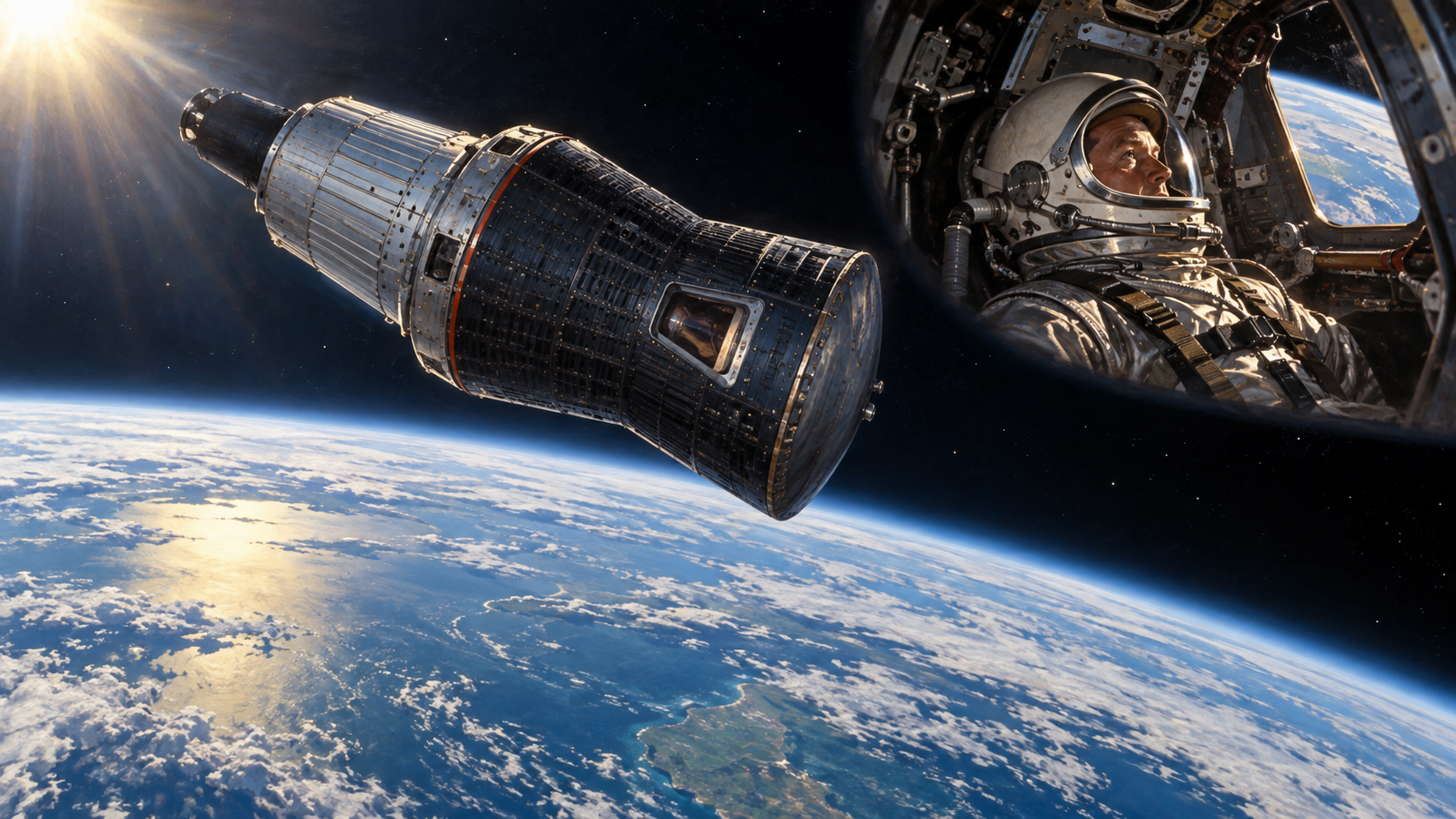
On February 20, 1962, astronaut John Glenn became the first American to orbit Earth, flying the Mercury capsule Friendship 7 around the planet three times. An Atlas rocket lifted off from Cape Canaveral, Florida, after repeated delays that had heightened public attention. Glenn reached orbit within minutes and traveled nearly five hours before splashing down in the Atlantic Ocean, where the destroyer USS Noa recovered him and the spacecraft.
The United States entered the mission under intense Cold War pressure. Soviet cosmonaut Yuri Gagarin had completed the first human orbital flight in April 1961, and Gherman Titov later spent more than a day in orbit. NASA's earlier Mercury flights with Alan Shepard and Gus Grissom were suborbital. Glenn's mission needed to demonstrate that the Atlas launch vehicle, capsule systems, tracking network, and recovery forces could safely support orbital flight.
The flight included technical concerns. An automatic control problem required Glenn to fly manually for portions of the mission. A telemetry signal also suggested that the heat shield might be loose, leading controllers to leave the retrorocket package attached during reentry as a precaution. The warning proved to be caused by a faulty switch. Friendship 7 endured the fiery descent and landed safely about 800 miles southeast of Bermuda.
Glenn returned to a national celebration and became a symbol of American space ambitions. More importantly, the mission supplied operational experience that helped NASA progress toward longer Mercury flights, Project Gemini, and the Apollo Moon landings. Glenn later served in the U.S. Senate and returned to space in 1998 at age 77. His 1962 flight remains a milestone because it combined individual skill with a vast technical network and restored confidence in the American crewed space program.
Mercury was designed to answer basic questions about whether humans could function and spacecraft could be controlled in orbit.
Glenn's mission relied on tracking stations, ships, computers, engineers, and recovery crews distributed around the world.
Manual control problems and the heat-shield warning forced the astronaut and flight controllers to adapt under pressure.
The suspected shield failure did not occur, but the response demonstrated how uncertain telemetry could shape life-or-death decisions.
Friendship 7 helped validate systems and procedures later expanded through Gemini rendezvous missions and Apollo lunar flights.
The achievement belonged to Glenn and to thousands of workers whose coordinated effort made a three-orbit mission possible.
Explore more of "On This Day ..."
Discover more events from the same date across news, politics, technology, sports, and other fields. Each link highlights significant moments that shaped history on different fronts.