

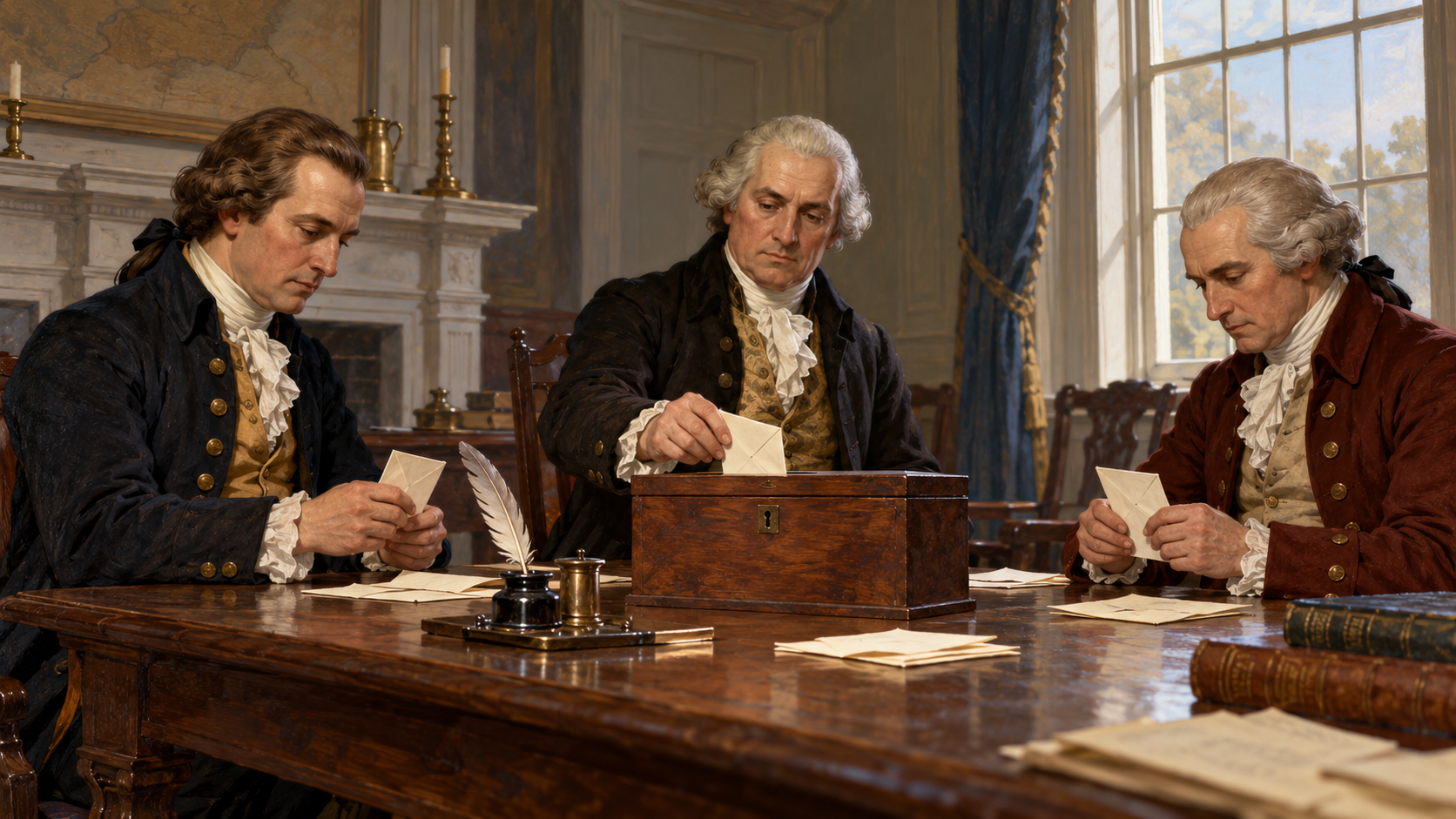
On This Day in Politics: January 7, 1789
On January 7, 1789, the United States held the first presidential election in its history, marking the beginning of a new political era under the recently ratified Constitution. The young nation had spent years grappling with the weaknesses of the Articles of Confederation, and the new constitutional framework required a strong but balanced executive branch. This first election was a test not just of political leadership but of whether the new federal system could function cohesively across the states. While the popular vote did not exist in the way Americans recognize today—many states used legislatures, not voters, to choose electors—the process nonetheless represented an extraordinary step toward a functioning democratic republic.
George Washington, who had presided over the Constitutional Convention, was the overwhelming favorite to lead the new government. His reputation for integrity and his refusal to seek power made him a unifying figure at a time when political factions were only beginning to form. Although the Electoral College would not officially cast its votes until February, the selection of electors beginning on January 7 set in motion a series of events that would make Washington the first President of the United States. The moment symbolized a crucial transfer from revolutionary governance to a stable national structure rooted in constitutional principles rather than wartime necessity or improvisation.
The election also highlighted early tensions and complexities within the new political system. States differed widely in how they selected electors, reflecting local attitudes about voter participation, political power, and the role of state governments in federal affairs. Only six states allowed some form of popular involvement; others relied entirely on legislative appointment. These variations underscored the fragile balance between state and federal authority that would define American politics for decades. Yet the process remained peaceful and orderly, demonstrating a collective willingness to invest in the new political framework despite lingering uncertainties.
The significance of January 7, 1789 extends far beyond the immediate outcome. It marked the beginning of a tradition of peaceful, organized presidential selection that continues to shape American political identity. The first election created precedents for leadership, civic participation, and constitutional continuity that would become central to the nation’s democratic character. Washington’s eventual inauguration in April confirmed that the constitutional experiment was not just theoretical but operational—a functioning system capable of guiding the young republic. For “This Day in Politics,” the date stands as a foundational moment when the principles of representative government began to take institutional form, establishing patterns of governance that endure to this day.
By January 7, 1789, the United States was transitioning from the loose framework of the Articles of Confederation to the stronger federal structure created by the new Constitution. The document had been ratified by the required number of states in 1788, and the country now needed to put its new institutions into practice, including the presidency and Congress.
On this day, the first presidential election under the Constitution officially began as states started selecting electors for the Electoral College. Although the exact methods varied by state—some used popular votes while others relied on their legislatures—the process marked the first attempt to choose a national executive through the constitutional system rather than through revolutionary or ad hoc arrangements.
The immediate effect of the election process that began on January 7 was to set in motion the selection of George Washington as the first President of the United States. Washington’s broad support across regions helped ease anxieties about how the new executive office would function, offering a unifying figure at a moment when political factions were only just emerging.
At the same time, the system revealed early limitations in representation and participation. Voting rules were left largely to the states, which often restricted suffrage based on property, race, and gender, and many states did not hold a popular vote at all. These constraints meant that the first presidential election was more limited in scope than modern Americans might assume, even as it established a durable framework for future contests.
In the long term, the events beginning on January 7, 1789 helped solidify the practice of regular, organized presidential elections as a central feature of American political life. The successful transition from constitutional theory to functioning institutions gave credibility to the new federal system and set a pattern for peaceful transfers of power that would become a hallmark of the republic.
The first election also laid the groundwork for later constitutional amendments and political debates over voting rights, party competition, and the Electoral College itself. As participation gradually expanded over the 19th and 20th centuries, the procedures first used in 1789 evolved into a broader democratic process, making this date a key milestone in the development of American electoral politics.
Explore more of "On This Day ..."
Discover more events from the same date across news, politics, technology, sports, and other fields. Each link highlights significant moments that shaped history on different fronts.