

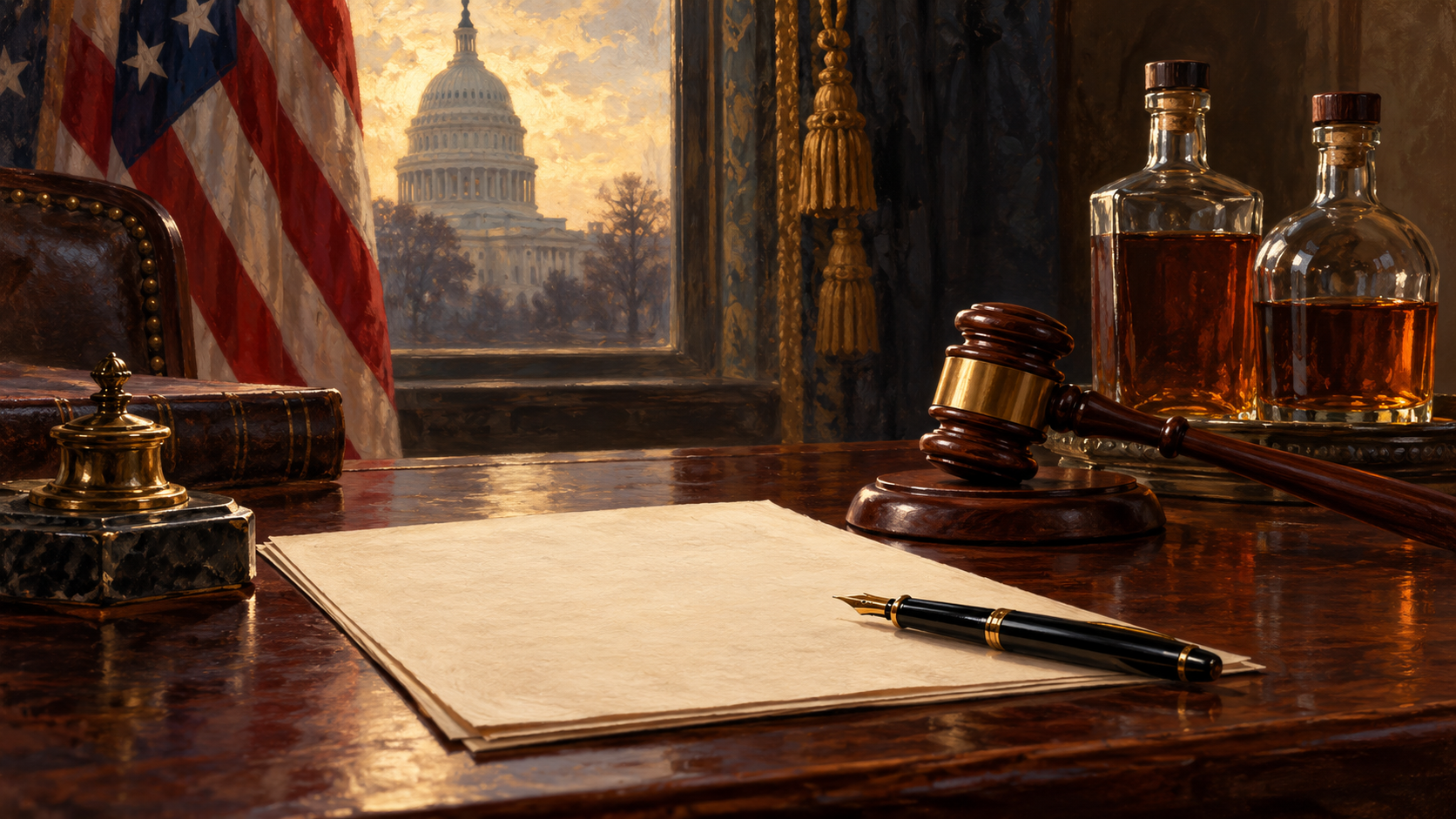
On This Day in Politics: January 16, 1919
On January 16, 1919, the United States formally ratified the 18th Amendment to the Constitution, prohibiting the manufacture, sale, and transportation of alcoholic beverages nationwide. The amendment marked the culmination of decades of activism by temperance organizations, religious groups, and political reformers who believed alcohol was a root cause of poverty, crime, and social instability. Their campaigns had gained momentum during World War I, when grain conservation, nationalist sentiment, and anti-German rhetoric—often aimed at breweries—strengthened calls for a nationwide ban. With the approval of Nebraska as the decisive 36th state, the amendment cleared the constitutional threshold and ushered in one of the most consequential policy experiments in American history.
The ratification of Prohibition immediately reshaped federal and state responsibilities. The Volstead Act, passed later in 1919, defined intoxicating liquors and established enforcement mechanisms, placing significant new demands on law enforcement agencies. While supporters anticipated a more orderly and moral society, early signs suggested that the amendment would be difficult to administer. Illegal production and smuggling increased almost immediately, as Americans sought ways around the restrictions. Cities in particular saw a rapid proliferation of speakeasies and underground networks. Although overall alcohol consumption initially declined, the shift from regulated markets to illicit operations introduced new criminal dynamics and created opportunities for organized crime to flourish.
Beyond its social effects, Prohibition had profound political implications. Debates over enforcement, personal liberty, federal authority, and states’ rights intensified throughout the 1920s, dividing lawmakers and the public along cultural, religious, and regional lines. Urban–rural tensions deepened as heavily immigrant cities resisted the moral agenda of rural Protestant reformers who had championed the ban. The federal government also struggled financially, as lost alcohol tax revenue created strains in an era before income taxes became a dominant source of federal funding. By the early 1930s, economic pressures from the Great Depression further eroded political support for the amendment, as many argued that legalized alcohol could create jobs and generate much-needed revenue.
For “This Day in Politics,” January 16 stands as a reminder of how constitutional amendments can reshape national identity and political debate. The ratification of the 18th Amendment reflected profound anxieties about social change and strong faith in the power of law to engineer moral improvement. Yet the amendment’s ultimate repeal in 1933 demonstrated the limits of sweeping national prohibitions when public sentiment shifts and enforcement proves unsustainable. The legacy of Prohibition continues to influence modern discussions about regulation, personal freedom, and federal policymaking. What began on January 16, 1919 remains a defining chapter in the history of American reform movements and constitutional experimentation.
By January 16, 1919, the United States had emerged from World War I and was grappling with rapid social change, urbanization, and anxieties about crime and morality. For decades, temperance advocates, religious reformers, and anti-saloon activists had argued that alcohol was a root cause of poverty, violence, and family breakdown.
On this day, the 18th Amendment to the U.S. Constitution was formally ratified after Nebraska became the crucial 36th state to approve it. The amendment prohibited the manufacture, sale, and transportation of intoxicating liquors, setting the stage for the nationwide Prohibition era that would begin the following year and fundamentally reshape American law and society.
Ratification of the 18th Amendment quickly shifted responsibilities to Congress, which soon passed the Volstead Act to define “intoxicating liquors” and outline enforcement rules. Breweries, distilleries, and many saloons faced closure or rapid transformation, and some communities initially reported declines in visible drinking and certain alcohol-related offenses.
Yet from the outset, enforcement proved uneven and incomplete. Illegal production and smuggling expanded, while speakeasies and underground bars appeared in cities and towns across the country. Local authorities varied widely in their commitment to enforcing the new law, and widespread evasion revealed a significant gap between the amendment’s goals and public behavior.
Over the longer term, the events of January 16, 1919 helped launch one of the most far-reaching social policy experiments in U.S. history. Prohibition contributed to the rise of organized crime, fueled debates over civil liberties and federal power, and sharpened cultural divides between rural and urban America, as well as between different religious and ethnic communities.
mounting enforcement problems, shifting public opinion, and the economic strains of the Great Depression ultimately undermined support for the 18th Amendment. Its repeal in 1933 with the 21st Amendment remains the only instance in which a constitutional amendment has been overturned by another. The moment of ratification on this day continues to shape discussions about moral reform movements, constitutional change, and the limits of nationwide bans in a diverse democracy.
Explore more of "On This Day ..."
Discover more events from the same date across news, politics, technology, sports, and other fields. Each link highlights significant moments that shaped history on different fronts.