

On This Day in Politics: May 19, 1919
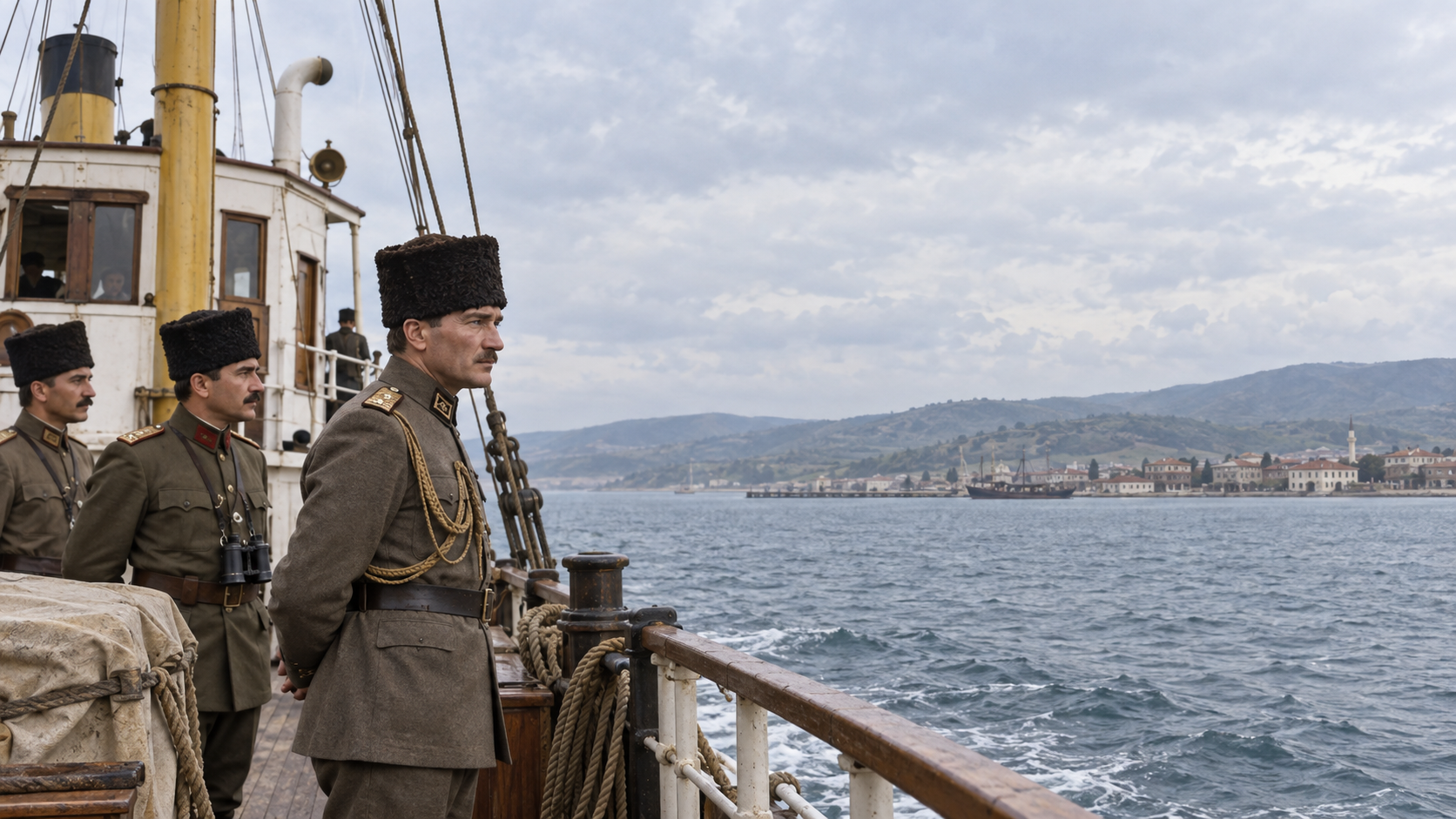
On May 19, 1919, Mustafa Kemal, later known as Atatürk, arrived at Samsun on the Black Sea coast. Traveling from Istanbul aboard the steamer Bandırma, he came with an official appointment as an Ottoman army inspector. The arrival became a defining starting point in the history of the Turkish nationalist movement. Its significance developed through the organizing and military struggle that followed, rather than through a declaration of a republic that day. The Ottoman state still existed, and the future political order remained uncertain. Samsun marked the beginning of a new phase in Mustafa Kemal’s effort to shape the response to defeat and foreign occupation.
The Ottoman Empire had emerged from the First World War defeated and weakened. The armistice imposed major restrictions, while Allied forces occupied strategic locations and the army faced demobilization. Different political groups proposed different ways to preserve territory and authority. In his later account, Mustafa Kemal described an exhausted population, diminished armed forces, and a government in Istanbul unable to defend national independence. That account was also his explanation of why a new political course was necessary. Read as a participant’s retrospective statement, it shows how he framed the crisis that greeted him in 1919, without making the eventual outcome seem inevitable at the moment of arrival.
His inspector’s position gave him a basis for contacting military commanders and local officials. After reaching Samsun, he moved into the interior and worked to connect resistance efforts that would develop into a wider nationalist organization. Congresses at Erzurum and Sivas later in 1919 helped give that movement a political program and representative structure. The process involved negotiation and coordination as well as armed force. Local supporters, military officers, and regional organizations were essential to building authority beyond Istanbul. The importance of May 19 therefore lies partly in the work it enabled: turning a journey made under an Ottoman appointment into a platform for an increasingly independent national movement.
The developments that followed took several years. A Grand National Assembly opened in Ankara in April 1920, and the nationalist movement fought the war that established its control. The Republic of Turkey was proclaimed in October 1923, with Mustafa Kemal as its first president. Those later milestones explain why his arrival at Samsun became central to national commemoration. He began his major 1927 speech, Nutuk, with the date of the landing, placing it at the opening of his narrative of the struggle. May 19 is remembered as a point of departure: an officer’s arrival at a provincial port became linked to the creation of new political institutions and the end of the Ottoman imperial order.
Mustafa Kemal arrived at Samsun on May 19, 1919.
He traveled aboard Bandırma with an official Ottoman army inspector’s appointment.
The Ottoman Empire faced defeat, occupation, and military demobilization after the First World War.
Organizing in Anatolia developed into a wider nationalist movement.
The Ankara assembly opened in 1920; the republic was proclaimed in 1923.
Mustafa Kemal began his 1927 Nutuk with his arrival at Samsun.
Explore more of "On This Day ..."
Discover more events from the same date across news, politics, technology, sports, and other fields. Each link highlights significant moments that shaped history on different fronts.