

On This Day in Politics: May 20, 1902
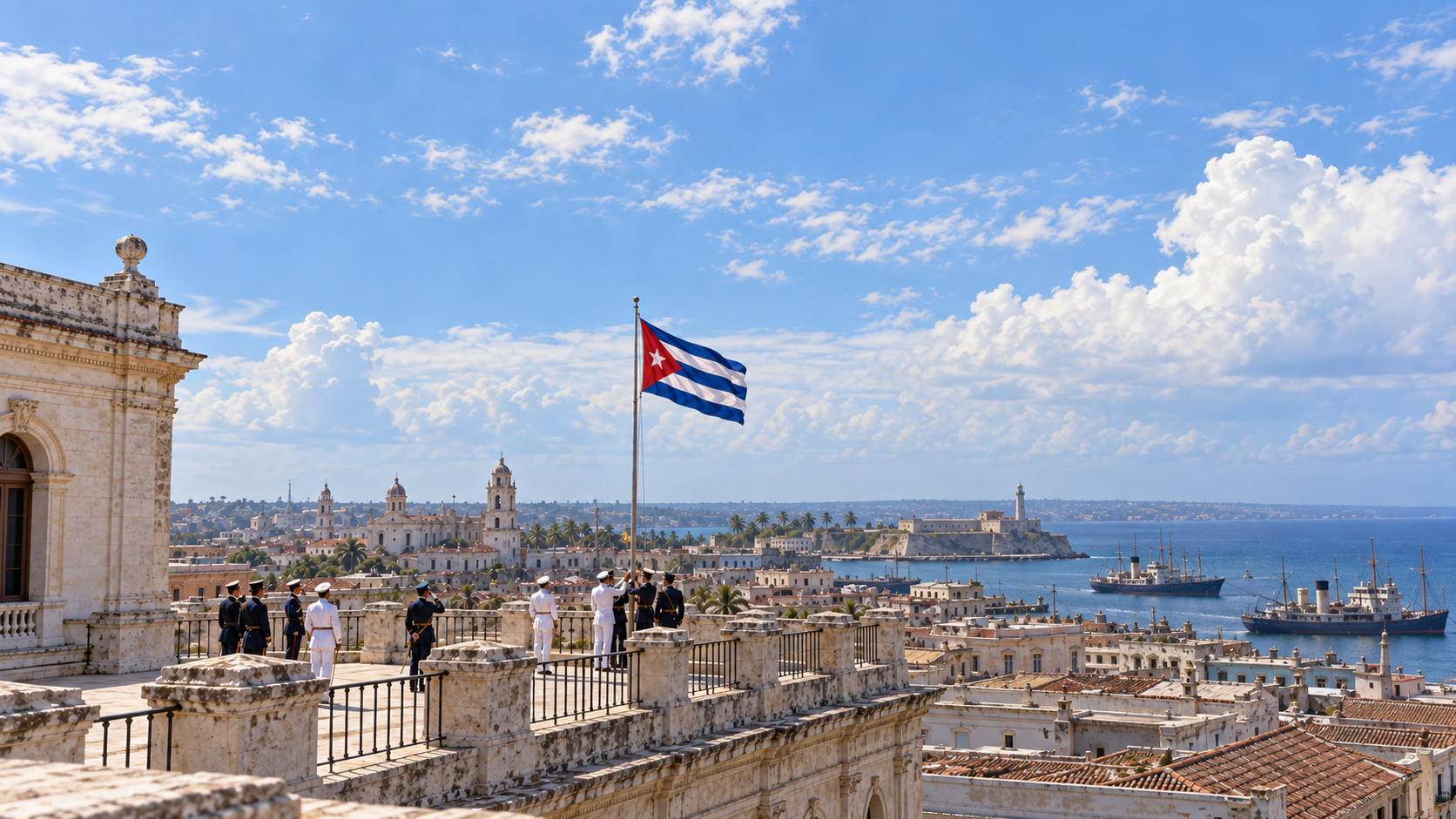
On May 20, 1902, the United States transferred the government of Cuba to the island’s new republic, with Tomás Estrada Palma as president. The ceremony in Havana ended the American military occupation that had followed Spain’s defeat in 1898. General Leonard Wood reported that he handed control to Cuba’s president and Congress at noon, under the provisions of the Cuban constitution. The change established a Cuban republican government after years of war and occupation. Yet independence came with important restrictions: Washington retained a claimed right to intervene in Cuban affairs. The day therefore combined a major achievement of national statehood with an unequal relationship between the two countries.
The transition followed Spain’s loss of sovereignty over Cuba after the war of 1898. Cuban independence fighters had fought Spanish rule, and American intervention helped bring the conflict to its final stage. Instead of an immediate transfer to a Cuban government, the island came under United States military administration. The occupation lasted until 1902, when the new constitutional institutions assumed authority. In his telegram describing the handover, Wood emphasized the formal reading of documents and Estrada Palma’s acceptance of responsibility on behalf of the island. Such records capture the official ceremony, but the change also represented the beginning of the republic’s practical task of governing after prolonged upheaval.
The central limitation was the Platt Amendment, adopted by the United States Congress in 1901 and imposed as a condition of ending occupation. Its provisions required Cuban acceptance of American intervention under specified circumstances and restricted certain foreign agreements and public borrowing. They also provided for land to be sold or leased for naval and coaling stations. Cuba incorporated the conditions into its constitutional arrangements, and a bilateral treaty embodied them in 1903. These measures meant that the withdrawal of the military government did not end American influence over Cuba’s choices. The new republic could govern internally, but its freedom of action operated within rules backed by a much more powerful neighbor.
The handover changed the form of relations without resolving the tensions within them. Diplomatic relations were established shortly afterward, when the American representative presented his credentials on May 27. The intervention provisions later supplied a basis for renewed United States involvement, including the occupation that began in 1906. The framework was eventually replaced in 1934, although the naval base arrangements remained a separate issue. May 20 is significant because it marks the republic’s assumption of government, while also revealing why formal independence and unrestricted sovereignty are not always identical. Understanding the date requires recognizing both the creation of Cuban institutions and the constraints under which they began their work.
Cuba’s republican government assumed authority on May 20, 1902.
Tomás Estrada Palma became the new republic’s first president.
The transfer ended the United States military occupation that followed the 1898 war.
The Platt Amendment preserved a claimed American right of intervention.
Its conditions were embodied in a United States–Cuba treaty in 1903.
The date combines the achievement of statehood with continuing limits on sovereignty.
Explore more of "On This Day ..."
Discover more events from the same date across news, politics, technology, sports, and other fields. Each link highlights significant moments that shaped history on different fronts.