

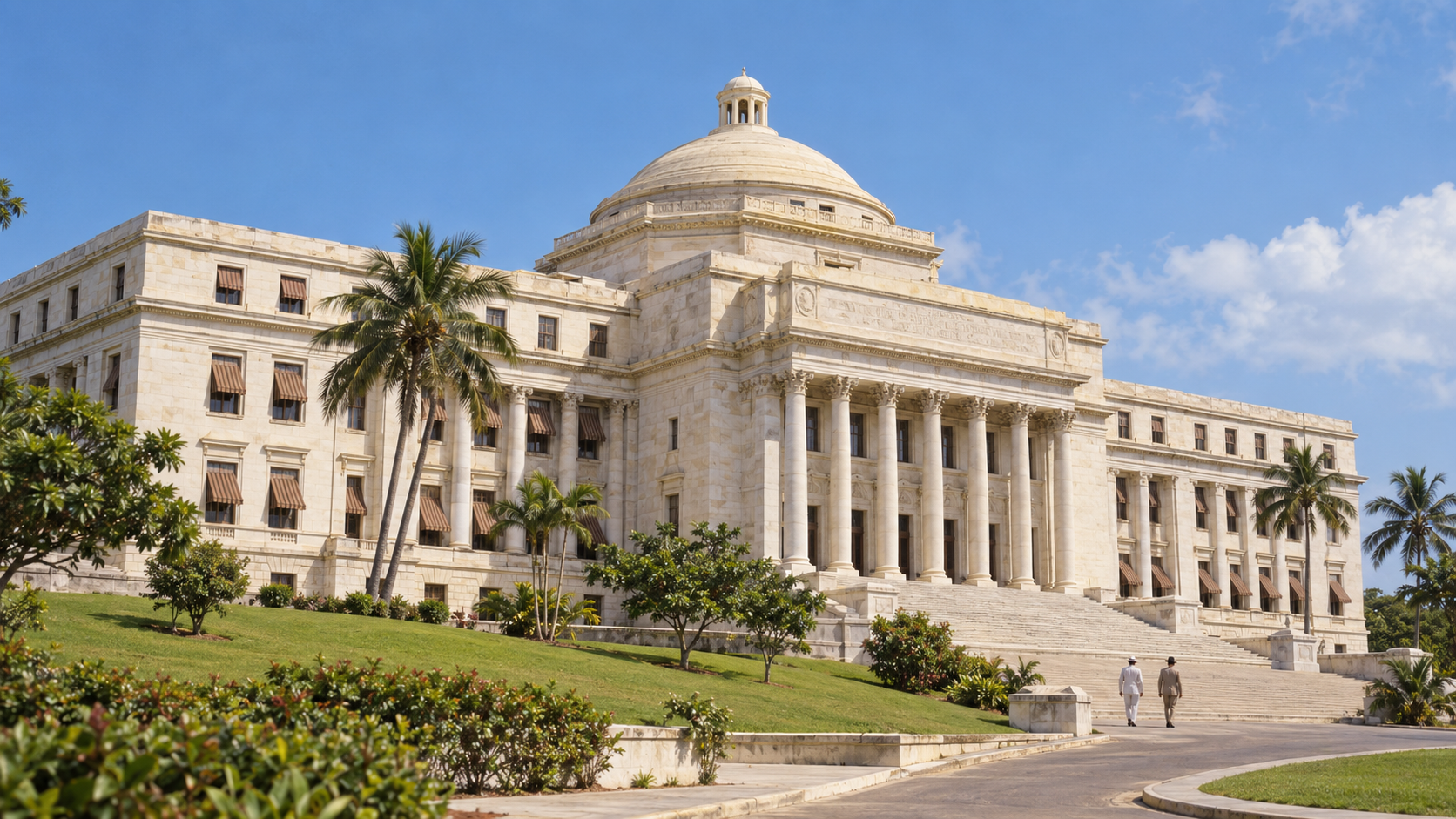
On This Day in Politics: July 25, 1952
On July 25, 1952, Governor Luis Muñoz Marín proclaimed Puerto Rico’s constitution in force, beginning the Commonwealth government known in Spanish as the Estado Libre Asociado. The charter organized local public authority through a constitution developed in Puerto Rico and approved through both island and federal processes. The day marked a significant change in internal governance, but it did not make Puerto Rico an independent country or a U.S. state. Understanding that distinction is essential to the anniversary. The constitution established a governmental framework within the island’s relationship with the United States, rather than resolving that relationship through independence or admission to the Union.
The process began with federal legislation in 1950 authorizing Puerto Rico to draft a constitution. A constitutional convention met during 1951 and 1952, and voters approved the proposed document in a referendum on March 3, 1952. Congress then approved it, with changes, through a joint resolution on July 3. The governor’s July 25 proclamation was the concluding step that put the charter into operation. These separate dates identify different kinds of decisions: authorization to draft, preparation of the text, popular ratification, federal approval and commencement. Treating them as one event would obscure the combination of local participation and congressional action behind the new arrangement.
The constitution supplied a republican structure with legislative, executive and judicial branches. Its bill of rights began with human dignity and equality, prohibited specified forms of discrimination and protected speech, religious exercise and peaceful assembly. It also addressed voting, education and safeguards in criminal proceedings. These provisions gave the charter a purpose beyond the allocation of offices: they stated principles intended to govern how public power treated individuals. The legislative branch included a Senate and House of Representatives, while executive authority belonged to an elected governor. The institutional chapters and the rights provisions together described a local system of government operating under its own foundational document.
The anniversary is therefore best understood as the inauguration of a constitutional government for internal affairs. Puerto Rico had previously acquired U.S. citizenship under the 1917 Jones-Shafroth Act, so citizenship was not newly created by the 1952 proclamation. Nor did the name Commonwealth convert the island into a state. The broader relationship remained distinct from the new charter’s organization of local institutions. Looking back at July 25 helps separate changes in governing arrangements from changes in sovereignty or federal membership. Its significance lies in the political and legal work that produced the constitution, the public authorization behind it and the framework of rights and responsibilities brought into operation that day.
The constitution took effect through the governor’s July 25 proclamation. Popular ratification had already occurred on March 3.
Federal authorization in 1950 and congressional approval in July 1952 were separate steps. Local and federal decisions both shaped the process.
The charter organized legislative, executive and judicial branches. It defined a republican structure for local government.
A bill of rights protected dignity, equality and civil freedoms. The constitution concerned individual protections as well as public offices.
The Commonwealth arrangement did not create U.S. statehood or national independence. Those questions should be distinguished from internal governance.
U.S. citizenship predated the 1952 charter. The July proclamation introduced the new constitutional framework rather than newly granting citizenship.
Explore more of "On This Day ..."
Discover more events from the same date across news, politics, technology, sports, and other fields. Each link highlights significant moments that shaped history on different fronts.