

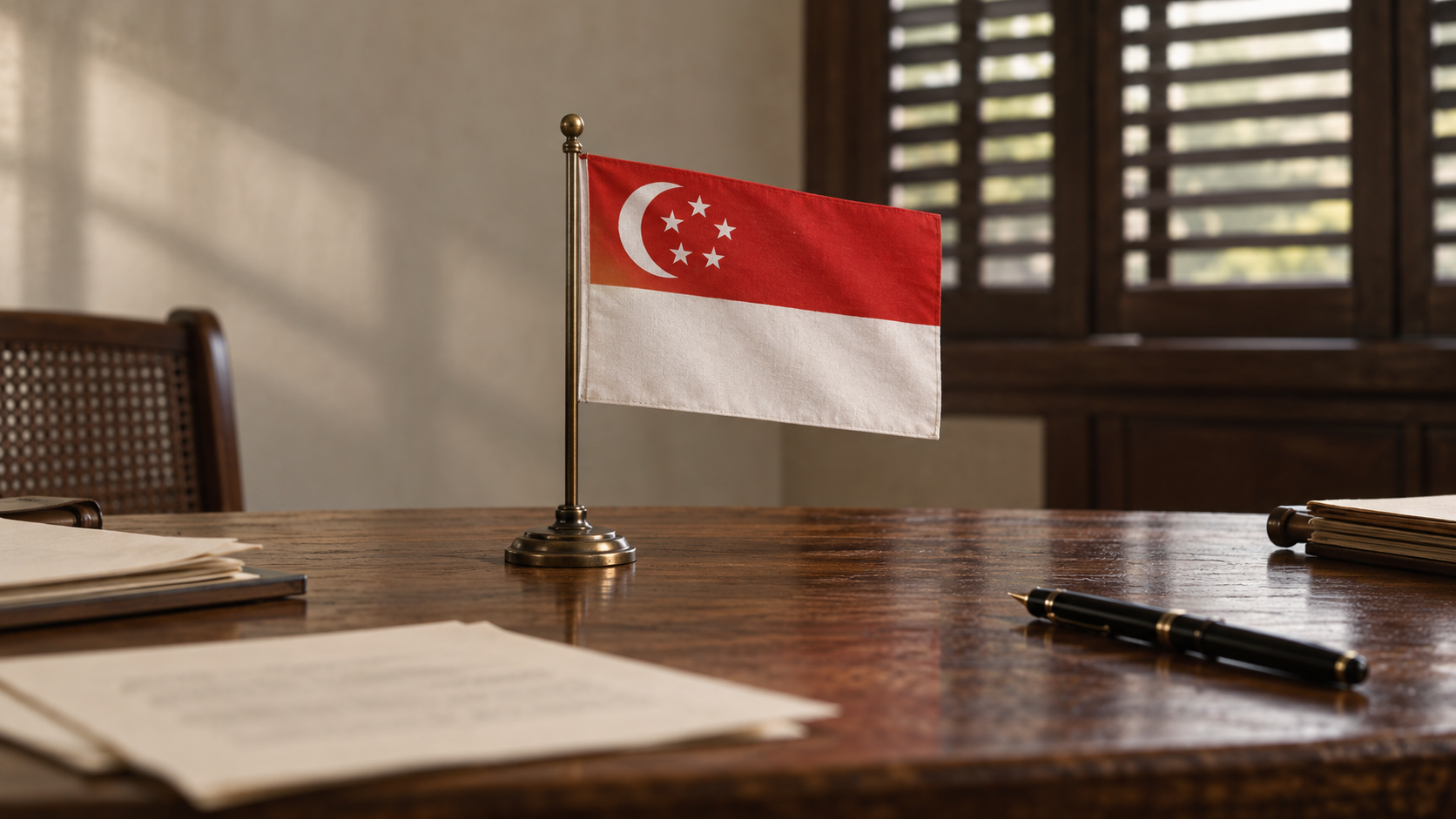
On This Day in Politics: August 9, 1965
On August 9, 1965, Singapore became an independent and sovereign nation following its separation from Malaysia. Prime Minister Lee Kuan Yew signed the Proclamation of Singapore, and Radio Singapura announced the change at 10 a.m. The document declared that Singapore had ceased to be a Malaysian state and would govern itself as an independent country. What had been a constituent part of a federation now had responsibility for its own international standing. The moment was a constitutional transformation as well as a political shock. Independence arrived through a negotiated separation, leaving the existing Singapore government to address the immediate demands of national sovereignty.
Singapore had joined Malaysia in September 1963, alongside the former Federation of Malaya, Sabah, and Sarawak. The union had been presented as a lasting national arrangement, but disputes between the governments undermined it. By mid-1965, preparations for separation were being handled in secrecy. Lee asked Law Minister E. W. Barker to prepare the necessary documents. Barker researched precedents, including the breakup of the West Indies federation, and drafted an agreement, a constitutional amendment, and a proclamation. The legal work was essential because Malaysia's constitutional framework provided for admission of states but did not already supply the required route for Singapore to leave. Political agreement therefore had to be accompanied by documents that could give separation legal effect.
The separation agreement was made on August 7, two days before the public announcement. On August 9, the Malaysian government's proclamation recognized Singapore's new status, and Singapore's own proclamation confirmed it on behalf of its people and government. The transfer placed sovereignty and jurisdiction over Singapore in the hands of the Singapore government. The surviving document is strikingly plain: typed on ordinary official letterhead, it reflects the hurried and confidential preparations more than a planned ceremonial celebration. The public broadcast and government gazette made the decision known. These steps established independence on the anniversary itself, while additional constitutional and institutional arrangements continued to be worked out afterward.
A sovereign state had to manage defense, external relations, and its legal framework while maintaining daily administration. The Republic of Singapore Independence Act later supplied important provisions for the new order, with commencement deemed to have taken effect on August 9. Singapore's legislature also developed into the parliament of an independent republic. The transition did not itself guarantee prosperity, resolve every regional difficulty, or remove domestic political disagreement. Those were challenges for subsequent governments and citizens. The date nevertheless became the country's National Day because it marked the decisive transfer from membership in a federation to national independence. Its lasting significance is visible in the responsibilities assumed that morning: Singapore would henceforth make its own sovereign decisions, negotiate relationships with other countries, and build institutions answerable for the future of the new nation.
The 1963 merger and the 1965 separation were different constitutional events. Singapore's participation in Malaysia lasted less than two years before independence changed its status again.
E. W. Barker's drafting helped turn a political settlement into a workable legal transition. The package included more than a proclamation because separation required an agreement and constitutional changes.
The agreement preceded independence by two days. The August 9 anniversary concerns the effective separation and public proclamations, not the earlier private signing of the settlement.
Radio Singapura's 10 a.m. announcement communicated the change to the public. The government gazette issued at the same time provided another official record of the new status.
Later legislation was given effect from Singapore Day, August 9, 1965. That retrospective commencement should not be confused with every law having been passed on independence morning.
The plain surviving proclamation captures the practical character of the transition. Its ordinary letterhead contrasts with the much more elaborate document associated with Singapore's earlier entry into Malaysia.
Explore more of "On This Day ..."
Discover more events from the same date across news, politics, technology, sports, and other fields. Each link highlights significant moments that shaped history on different fronts.