

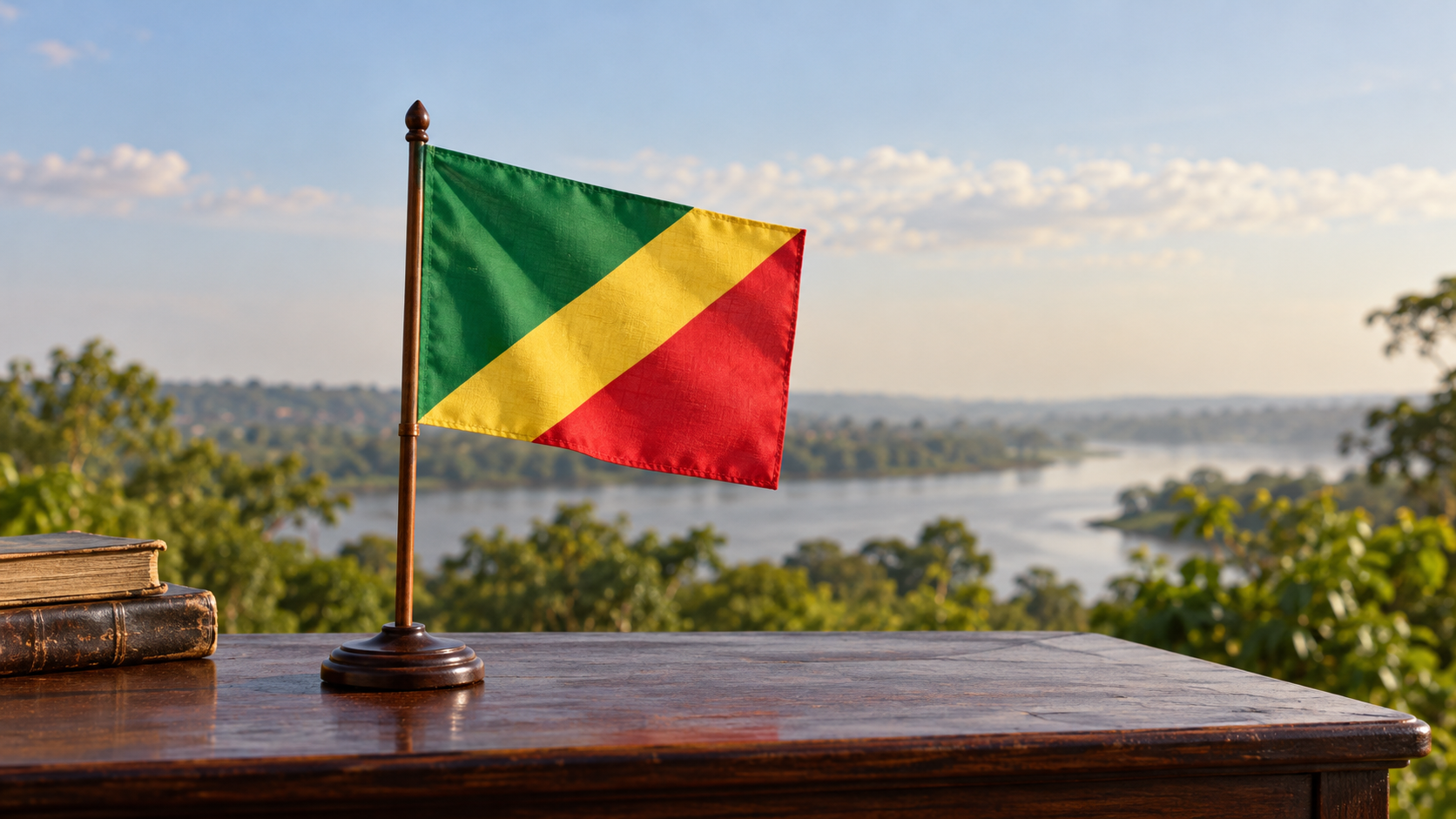
On This Day in Politics: August 15, 1960
On August 15, 1960, the Republic of the Congo became independent from France, with Brazzaville as its capital and Fulbert Youlou as president. The transition formed part of the rapid dismantling of colonial rule across Africa that year. The United States recognized the new republic on the same day, and its embassy in Brazzaville began operating under charge d'affaires Alan W. Lukens. This anniversary concerns Congo-Brazzaville, the former French territory. The neighboring country that is now the Democratic Republic of the Congo had become independent from Belgium on June 30, a separate event involving a different colonial government and capital.
The territory had belonged to French Equatorial Africa, a colonial federation administered through Brazzaville. During the Second World War, the city also served as an important center of Free French activity. Those connections gave it a prominent place in French imperial history without removing the unequal political relationship on which colonial rule rested. As France's constitutional arrangements changed in the late 1950s, the territory moved toward greater self-government. A republic was proclaimed in November 1958 within the French Community. That development preceded full independence and should be understood as a stage in the transfer of authority rather than the end of the process.
Youlou, a Catholic priest who had become a political leader, stood at the head of the new state when independence arrived. The change established sovereignty and enabled diplomatic relations conducted in the republic's own name. Recognition and the opening of an embassy supplied concrete evidence of that new international standing. Yet independence did not instantly settle domestic competition or determine the country's future political system. Institutions inherited from colonial administration had to operate within a new national framework, and leaders faced the task of building authority beyond the formal transfer. The ceremonial date identified a change in legal and diplomatic status, not the completion of every social or political transformation.
The years that followed underline that distinction. Youlou's presidency ended in 1963, and the republic subsequently experienced further changes of government and political direction. These later struggles should not be projected backward as though they were decided on August 15, 1960. The anniversary belongs to a wider African history of sovereign states emerging from colonial territories, each with its own negotiations, leadership, and difficulties. It also demands care with names: the two Congos share a river and neighboring capitals but have distinct colonial histories. Remembering which Congo gained independence on which date makes the diplomatic achievement more precise and allows the new republic's subsequent history to be understood on its own terms.
Brazzaville's colonial importance came from its role in French Equatorial Africa. Its Free French wartime history was an earlier chapter, not the independence event itself.
The proclamation of a republic in 1958 established a stage of self-government within the French Community. Full sovereignty followed in August 1960.
American recognition and the embassy's opening occurred on independence day. These diplomatic acts reflected the republic's new international status.
Formal sovereignty did not guarantee stable government. Domestic political disputes continued after the transfer of authority from France.
Youlou's departure in 1963 marked a later change of leadership. Subsequent political developments belong to the republic's post-independence history.
Congo-Brazzaville and the Democratic Republic of the Congo are separate states. Their different colonial relationships produced different independence dates in 1960.
Explore more of "On This Day ..."
Discover more events from the same date across news, politics, technology, sports, and other fields. Each link highlights significant moments that shaped history on different fronts.