

On This Day in Politics: October 9, 1962
On October 9, 1962, Uganda became independent from Britain, with Milton Obote leading the government as prime minister and Kampala serving as the national capital. The handover ended the protectorate and placed the country's government on a sovereign constitutional footing. It followed a period of electoral competition and negotiations about how different regions and political institutions would fit within a common state. The independence settlement combined parliamentary government with special arrangements for Buganda. It therefore represented both an end to colonial authority and an attempt to manage disagreements about the distribution of power inside Uganda, disagreements that independence itself did not remove.
The road to the handover had changed the composition and authority of the colonial legislature. African representation expanded over time, and direct general elections in 1961 gave the Democratic Party a majority under Ben Kiwanuka. Constitutional negotiations in London then addressed the framework for self-government and independence. A further election in 1962 produced a different balance. Obote's Uganda People's Congress formed an alliance with Kabaka Yekka, whose support was rooted in Buganda. Representatives from Buganda entered the National Assembly through an indirect arrangement involving the kingdom's legislature. The coalition supplied the parliamentary strength needed to form the government that would receive the instruments of independence.
The new constitution did not place every part of Uganda in an identical relationship with the center. Buganda retained considerable autonomy, while the central government held most legislative powers. The National Assembly included members chosen through different methods, reflecting the negotiated character of the settlement. Beyond the constitution, sovereignty also changed Uganda's international standing. The United States recognized independence on October 9 in a message from President John F. Kennedy to Obote and established diplomatic relations that day. Its consulate general in Kampala became an embassy. Such steps translated the ceremonial transfer into direct relations between governments, giving the new state a means to represent its interests outside the former colonial relationship.
The first years after independence revealed how fragile the internal compromise could be. Conflict between Obote's central government and Buganda intensified, and the constitutional arrangements were overturned during the 1960s. A later constitution concentrated power at the center, while the 1971 military coup interrupted parliamentary government altogether. Those developments came after the independence transfer and should not be presented as provisions or inevitable results of the 1962 settlement. They demonstrate the difference between acquiring sovereignty and sustaining institutions capable of managing disagreement. October 9 remains the founding anniversary of independent Uganda, marking a transfer of authority whose promise depended on how national leaders and communities would subsequently share, contest and exercise that power.
Self-government preceded full independence. The October 9 handover changed Uganda's international status rather than starting every governmental institution from scratch.
Obote's governing coalition depended on cooperation between the Uganda People's Congress and Kabaka Yekka. The relationship linked national party politics with Buganda's institutional interests.
The independence legislature included indirect representation from Buganda. Describing it simply as a uniformly elected national chamber would miss an important part of the compromise.
American recognition and diplomatic relations date to October 9. The change from consulate general to embassy illustrates the practical operation of newly acquired sovereignty.
The later conflict over Buganda's autonomy exposed tensions within the settlement. Subsequent constitutional changes should be kept separate from what was agreed at independence.
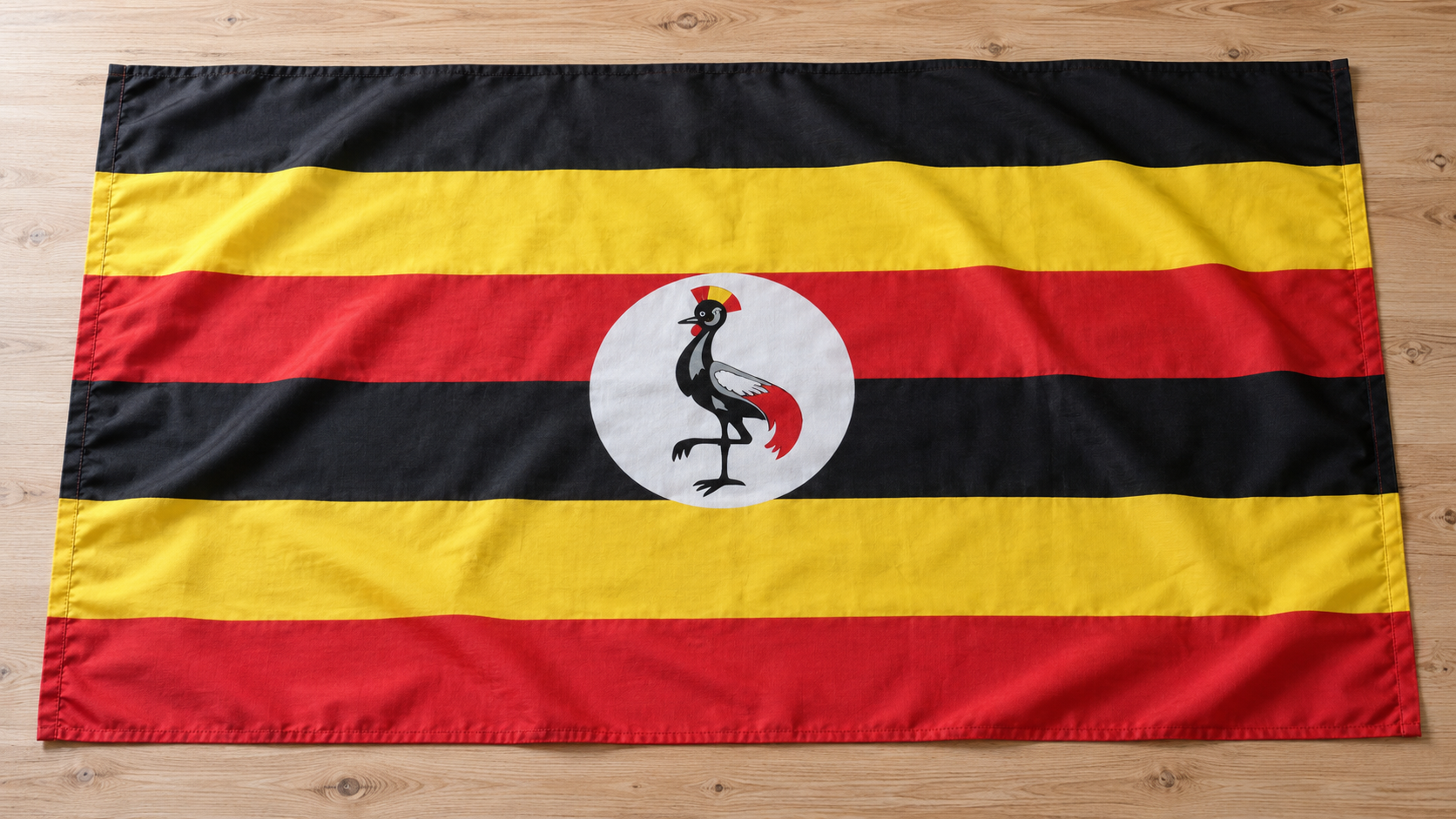
The flag's six horizontal bands and central crowned crane became national symbols at independence. The generated cloth is an interpretive object, not the flag photographed at the ceremony.
Explore more of "On This Day ..."
Discover more events from the same date across news, politics, technology, sports, and other fields. Each link highlights significant moments that shaped history on different fronts.