

On This Day in Politics: October 10, 1970
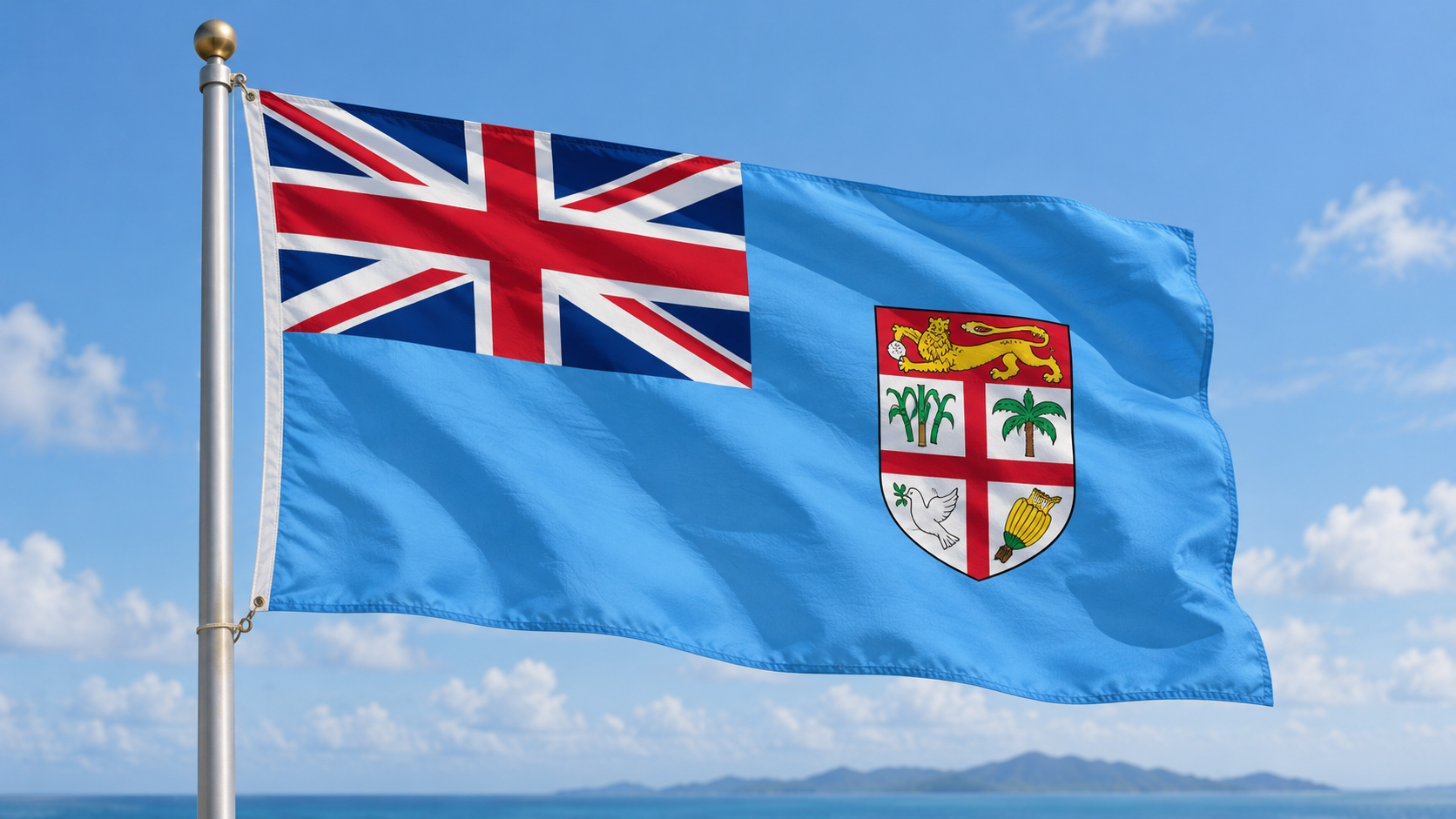
On October 10, 1970, Fiji became independent from Britain, with Ratu Sir Kamisese Mara becoming the country's first prime minister. The transfer in Suva ended colonial rule and introduced an independent parliamentary system under a new constitution. Fiji initially retained the British monarch as head of state, represented locally by a governor-general, rather than becoming a republic on independence day. Its new light-blue national flag combined references to the British connection with a shield associated with Fiji. The constitutional arrangements and symbols reflected a negotiated transition, one intended to establish sovereign government while preserving institutions and relationships carried forward from the colonial period.
Britain had acquired Fiji in 1874, and representative institutions developed gradually during the colonial era. Steps toward a ministerial system and party competition in the 1960s gave local political leaders greater responsibility. A constitutional conference in London in 1965 considered further movement toward self-government, and elections in 1966 brought Mara's Alliance Party to power. A second conference in 1970 produced an agreement between the principal political parties on the independence framework. These negotiations mattered because the future state's political arrangements had to address a society with different communities and competing views about representation. Independence was not simply a change in the nationality of the officials at the top of an otherwise unchanged system.
The 1970 constitution created a bicameral legislature with a House of Representatives and a Senate. Members of the former Legislative Council became members of the new parliament, while Mara's government continued with a cabinet and the National Federation Party formed the opposition under Siddiq Koya. The first formal opening of the independent parliament followed in November, and the first general election after independence took place in 1972. Neither event should be assigned to October 10 itself. International relations also developed in stages. The United States recognized Fiji's independence on the founding day, but diplomatic relations were established in 1971, followed later that year by an American embassy in Suva. Recognition, parliamentary procedure and diplomatic representation each had their own timetable.
The constitutional settlement provided a framework for government but did not permanently resolve conflicts over political power and communal representation. Military intervention in 1987 disrupted parliamentary democracy, and later constitutional changes altered the institutions established at independence. Fiji's subsequent republican status therefore belongs to a later phase of its political history. Those developments qualify any account that treats the 1970 handover as the completion of a settled democratic order. The anniversary instead marks the beginning of national responsibility for that order. October 10 identifies when colonial rule ended and sovereign government began, leaving the effectiveness, fairness and durability of the new political arrangements to be tested through the choices and conflicts that followed.
Fiji's cession to Britain and its independence share the same calendar date but occurred in 1874 and 1970. They were opposite changes in political status, separated by almost a century.
Ministerial government and party competition developed before independence. The handover built on earlier reforms and negotiations rather than creating political organization from nothing.
The independent parliament's first formal opening followed in November 1970. The first post-independence general election came in 1972, not on the handover date.
American recognition came immediately, while diplomatic relations and an embassy followed in 1971. These were distinct steps in establishing international relationships.
The original legislature had two chambers. Today's parliamentary arrangements should not be projected backward onto the independence constitution.
The flag first flew at independence and retained the Union Jack alongside Fiji's shield. Its British element did not mean Fiji remained a colony after the handover.
Explore more of "On This Day ..."
Discover more events from the same date across news, politics, technology, sports, and other fields. Each link highlights significant moments that shaped history on different fronts.